

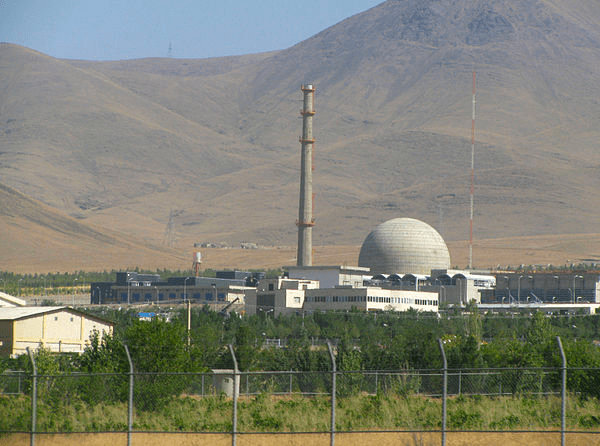
Lecture delivered at Jerusalem Conference on Middle East nuclear programmes, 9th May 2010
At the present time, the world is going through challenging times. The global economic recession, the ongoing wars in Iraq, Afghanistan, Pakistan, Somalia and Yemen, and the scourge of international terrorism have produced a situation more dangerous than at any time since the Second World War.
Since the 9/11 terrorist attacks, the Middle East has been the focus of tension and hostility even more than ever before. At the heart of these tensions is not only the Arab-Israeli conflict, but perhaps a more urgent and more dangerous issue is the tension between Iran and Israel. After a relatively long period since the establishment of Israel, when Iran and Israel had very close links under the former Shah Mohammad Reza Pahlavi, with the victory of the Islamic revolution, those relations turned to hostility and mutual demonisation. They have even paved the way unwittingly for a possible full-blown conflict between the two countries. Such an outcome would be most dangerous to both countries, as well as to the peace and stability of the Middle East and the wider world. This is why everything should be done to prevent such an outcome, so that if the two countries cannot become close friends – something that seems remote at the present time – they can at least learn to co-exist with one another.
The hostility between Iran and Israel is very unfortunate, because of all the nations in the Middle East, the Persians have had the closest and longest links with the Jewish people. Not only do historical texts confirm the close bonds between Jews and Iranians, but even the Hebrew Bible itself is the most eloquent testimony to the millennia-old relations between the two peoples. The Bible does not contain such warm references to any other non-Jewish people as it does to the Persians. Fourteen books of the Bible either directly deal with an event that has happened in Iran or have references to Iran. Half of these are in the form of memoirs of Jews in the courts of the Medes and the Achaemenids, while others refer to some events that have happened in Iran. The books of Esther, Ezekiel, Ezra, Isaiah, Nehemiah, and Zechariah contain many references to Iran, the rebuilding of the temple, etc.[1]
The Jewish people have had a long and inseparable connection and association with Iranian history. Iran has the oldest Jewish community in the world outside the Holy Land. The first group of Jews was transferred to Iran by the Assyrian King Shalmaneser in the 8th century BC. During nearly three millennia of contact and coexistence with the Iranians, Iranian Jews have been influenced by Persian culture and, in turn, have contributed greatly to that culture. There exists an extensive Judeo-Persian literature, which is written in the Persian language but in Hebrew script. Iranian Jews played a big role in translating many texts from Hebrew, Aramaic and Assyrian sources into Arabic and Persian, thus enriching the fund of knowledge in Islam. Jewish musicians played a big role in keeping Persian classical music alive during periods of fanaticism when hard-line clerics frowned upon music-making. Iran still has the largest Jewish minority in the Middle East outside Israel, even though tens of thousands of Iranian Jews have left Iran since the Islamic revolution (alongside some four million other Iranians), who still manage to maintain their links with the Persian language and culture. Many of them have achieved prominent positions in Israel.
As someone who was born in Iran but who has spent most of his life abroad, I believe that we must strive to achieve two goals. The first one is to make sure that Iran will not acquire nuclear weapons. A nuclear-armed Iran will be detrimental to the cause of non-proliferation, and it will not, in fact, increase Iran’s security either. On the contrary, it will give rise to greater Western and Israeli nervousness and hostility. President Barack Obama’s “Nuclear Posture Review” released at the beginning of April 2010, which made just about every non-nuclear state immune from any threat of nuclear retaliation by the United States, singled out Iran and North Korea as the two countries that might be targeted with nuclear weapons.[2]
This policy is particularly outrageous in the case of Iran, which is a member of the NPT. It would discourage other countries from joining the NPT if they could still be subjected to nuclear blackmail. During the Cold War, nuclear weapons were regarded as a form of deterrence based on the MAD concept. To envisage the use of such weapons after the end of the Cold War is irresponsible and reprehensible and makes a mockery of the claim that the United States would like to move towards the total elimination of nuclear weapons. Nevertheless, at a time when the whole world is moving towards the reduction of nuclear weapons, it would be folly for Iran to try to buck the trend and move towards such weapons.
The second goal that must be avoided at all costs is the use of force to achieve Iran’s continued compliance with the NPT. Although US officials still repeat the mantra that all options are on the table, and although some are even actively encouraging an attack on Iran’s enrichment facilities, they seem to ignore the fact that no military action would be limited to a simple strike on a few targets. Any attack on Iran’s facilities can lead to Iranian retaliation that would not be limited to the country that launches such an attack and could engulf the entire Middle East.
We do not seem to learn from our mistakes. Despite the initial successes in Iraq and Afghanistan, wars are still continuing in those countries, many years after the initial invasion, with thousands of Westerners and hundreds of thousands of Iraqis and Afghans having perished as a result of those illegal wars. Iran, with a population of more than 70 million and with much greater military and strategic capabilities than either Iraq or Afghanistan, would put up a stiff resistance. Although such a war would devastate Iran, no country in the region – including Israel – will remain immune from the ensuing conflagration. The outcome will be even worse if Israel were to carry out such an attack, as it often threatens.
Last month, Russian President Dmitry Medvedev warned that the region would witness “a comprehensive catastrophe” if Israel carries out a military strike on Iran. In a statement posted on the Russian presidential website, Medvedev said that an Israeli attack on Iran would lead to an unprecedented deterioration of regional conditions and a full-scale disaster.[3] He added that such an eventuality would also result in uncalculated actions such as the employment of nuclear arms, resulting in the death of thousands of people and making millions of others homeless.
Therefore, it is important to analyse the situation dispassionately and separate facts from fiction. Before the Iraq War, there was a great deal of propaganda about Iraq’s possession of weapons of mass destruction. In a series of articles in the New York Times, Michael Gordon and Judith Miller repeatedly wrote, without any trace of doubt or equivocation, about Iraq’s alleged weapons of mass destruction. In one such article that was published on 8 September 2002 they authoritatively stated: “More than a decade after Saddam Hussein agreed to give up weapons of mass destruction, Iraq has stepped up its quest for nuclear weapons and has embarked on a worldwide hunt for materials to make an atomic bomb, Bush administration officials said today.” In the same article, they claimed that Saddam was trying to purchase aluminium tubes to be used in Iraq’s uranium enrichment program.[4] Since then, Ms Miller and others like her have been totally discredited and her lies have been exposed.[5]
Such propaganda was not limited to a few journalists with a political agenda, but they found their way into presidential speeches as well. For example, in a speech in Cincinnati on 7 October 2002, former President George W. Bush said:
“The evidence indicates that Iraq is reconstituting its nuclear weapons program … Iraq has attempted to purchase high-strength aluminum tubes and other equipment needed for gas centrifuges, which are used to enrich uranium for nuclear weapons.”
As far as Iran is concerned, similar allegations have been made for nearly 30 years. As early as June 1984, Minority Whip of the United States Senate Alan Cranston asserted that the Islamic Republic of Iran was seven years away from being able to build its own nuclear weapon.[6] In 1992 the present Israeli President Shimon Peres predicted that Iran would have a nuclear bomb by 1999. The present Israeli defence minister, Ehud Barak, said in 1996 that Iran would be producing nuclear weapons by 2004.[7]
These are just a few examples out of many. Of course, the fact that they have been falsely crying wolf in the past does not mean that one has to dismiss their claim this time too. However, there are certain known facts which indicate that this time too these fears are exaggerated. On the one hand, the IAEA has repeatedly stated that it has not seen any sign of deviation from a peaceful program. The NIE report in December 2007 said with “moderate-to-high confidence” that Iran currently did not have a nuclear weapon program. It stated that Iran had stopped its nuclear weapons program in 2003. The document estimated that the very earliest Iran could produce enough highly-enriched uranium (HEU) for a weapon, even if it intended to go down that route, would be late 2009, but some time between 2010 and 2015 is more likely.[8]
On 17 April 2010 New York Times reported a Senate hearing in which two leading US generals associated with defence intelligence also said that Iran was some way away from the ability to manufacture nuclear weapons:
At the same hearing before the Senate Armed Services Committee, Lt. Gen. Ronald L. Burgess Jr., director of the Defense Intelligence Agency, and Gen. James E. Cartwright, the vice chairman of the Joint Chiefs of Staff and one of the military’s most experienced officers on nuclear matters, said that “Iran could produce bomb-grade fuel for at least one nuclear weapon within a year, but that it would probably need two to five years to manufacture a workable atomic bomb.”[9]
When at the beginning of February 2010, President Mahmud Ahmadinezhad told the world that if the West refused to provide Iran fuel for Iran’s U.S.-built research reactor, Iran would be able to enrich uranium to 20 per cent herself, White House Press Secretary Robert Gibbs scoffed: “He [Ahmadinezhad] says many things, and many of them turn out to be untrue. We do not believe they can enrich to the degree to which they now say they are enriching.”[10] So what is it? Is Iran not even capable of enriching uranium to 20 per cent, or is it on the verge of producing highly enriched uranium (more than 90 per cent density) required for a nuclear bomb?
The opening session of the United Nations conference to strengthen the NPT that started on 3 May 2010 was dominated by Iran’s president denouncing the West, but also again stressing that Iran was not interested in nuclear weapons. Uranium enrichment is legal under the Nuclear Nonproliferation Treaty (NPT), but of course, steps must be taken to ensure that Iran’s exercise of its legal right to enrich uranium does not lead to the manufacturing of weapons. The fact that Iran tries to place its enrichment facilities under hardened shelters is no indication of any attempt to manufacture weapons. The United States has frequently hinted at the possibility of destroying Iran’s enrichment facilities. Israel has also threatened the same and has shown that it is capable of carrying out that task with the help of U.S.-supplied aircraft and weapons. She carried out such an attack on Iraq’s Osirak plant. Israel also destroyed an alleged nuclear reactor that was being built in Syria with the help of North Korea.
In the face of these realities, it is not only understandable that the new enrichment facilities are placed in hardened underground sites, but it would be stupid to have it any other way. After the latest publicity about Iran’s new enrichment plant in Fordo near Qom, the IAEA inspectors who inspected it said that it was merely a big hole in the mountain and nothing to worry about.
But let us, for the sake of argument, accept that the alarmists are right, and that Iran successfully enriches uranium to weapons grade. Only a couple of such devices have exploded, and the current stockpiles of modern weapons use plutonium. Deliverable weapons are plutonium bombs, which are light enough for missile delivery, either singly or in multiples. There is nothing in the Iranian program to indicate that they are moving toward plutonium production for manufacturing nuclear weapons. Enriching uranium to the density required for nuclear weapons cannot be done in secret, and the IAEA is bound to discover it. Furthermore, to manufacture the bomb, Iran would need to test such a weapon as has been done by any country that has succeeded in manufacturing nuclear weapons. She has to leave the NPT before being able to go down that road. So, there would be many signs that would alert the world to such a policy.
Last year, Iran and six major powers discussed swapping more than two-thirds of Iran’s enriched uranium in exchange for fuel rods, which cannot be used for manufacturing weapons, as a way of easing international concern about Tehran’s nuclear ambitions. However, so far they have failed to agree on how to implement the plan. In a televised speech, Ahmadinezhad said: “We had told them (the West) to come and have a swap, although we could produce the 20 per cent enriched fuel ourselves.” He continued: “We gave them two-to-three months’ time for such a deal. They started a new game and now I (ask) Dr Salehi to start work on the production of 20 per cent fuel using centrifuges,” he said, referring to atomic energy chief Ali Akbar Salehi. But he added at a ceremony marking Iran’s laser technology achievements: “The doors for interaction are still open.”[11]
In fact, the speed with which Ahmadinezhad agreed to send the biggest part of Iran’s enriched uranium abroad seems to indicate that they do not have a hidden agenda. The plan failed mainly due to point scoring among Iran’s divided leadership. Even the leaders of the Green Movement accused Ahmadinezhad that if he went ahead with the plan, he would have wasted the achievement of many Iranian scientists who had succeeded in enriching uranium despite foreign sanctions and constant threats. Some in Iran pointed out that it would not be wise to trust the word of foreign governments that had broken their promises many times in the past. They argued that they would take Iran’s enriched uranium out of the country, but they would use Security Council sanctions as an excuse not to return higher enriched uranium and fuel rods to Iran.
It was because of such opposition and such misgivings that the Iranian government decided to demand that the swap should take place on Iranian territory or in an Iranian island in the Persian Gulf. They stated that they would put a tonne of Iran’s enriched uranium under the supervision of the IAEA, and when they received the fuel rods, the IAEA could transfer that amount to the country that had provided the fuel. Another Iranian proposal was that instead of sending the bulk of her enriched uranium abroad, it could be done in batches. As she received fuel rods in return for one batch of its enriched uranium, she would send another batch abroad. However, the United States and other Western countries dismissed those Iranian counter-proposals out of hand, saying that they did not meet their initial demands that the greater part of Iranian enriched uranium should be taken out of Iranian territory immediately.
Recently, Brazil and Turkey have tried to mediate to find a way out of the impasse. Turkey has suggested that the swap could be carried out on its territory, and Iran has welcomed those efforts. Iranian Foreign Minister Manouchehr Mottaki has welcomed a proposal for new talks with Western powers with the Turkish and Brazilian mediation.[12] There are certainly more possibilities regarding the swap that can be explored. If the aim is to reach a mutually satisfactory outcome and avoid confrontation, sanctions and maybe war, more creative alternatives must be found for taking the greater part of Iranian enriched uranium out of Iran in return for fuel rods. This would ensure that Iran does not possess enough quantities of enriched uranium that could be used for manufacturing even a single bomb.
The main problem between Iran and the West revolves around the issue of trust, as neither side trusts the motives of the other side. Many Iranians believe that the nuclear issue is a mere excuse to put pressure on Iran to bring about regime change. They argue that even if Iran did exactly as the West demanded on this issue, the West would find other excuses for pressuring Iran.
Of course, it is possible that the main aim of Western efforts is to bring about regime change. If that is so, they are going about it the wrong way. The real change should come from within. After a violent revolution and an eight-year war that killed hundreds of thousands of Iranians, the Iranian people are not in favour of violence or of staging another revolution. The last presidential election in June 2009 showed that the majority of Iranians are opposed to the clerical regime and would like to replace it with a more democratic government. However, they wish to do it through the ballot box and through passive resistance.
This hopeful scenario could yet be subverted as the result of imposing crippling sanctions that would mainly affect the ordinary people or through the use of military means to attack Iran’s nuclear sites, which would unite the nation behind the rulers. It would be in Western and Israeli interests to allow the events in Iran to follow their natural course and change the regime through democratic means. The best thing that the West can do is to help the Iranians in their democratic quest and persuade the Iranian masses that their uprising against their unpopular government would not result in Western-engineered chaos or destabilisation.
It is time to turn a new page, to think outside the box, to give up any idea of the use of force and to adopt peaceful means for change. Shlomo ben-Ami, a former Israeli foreign minister, in an article in Haaretz, wrote:
“Israel’s approach to the conflict with its neighbors has too frequently been characterized by mental fixation: It has generally veered away from diplomatic paths in favor of fighting them and ‘explaining’ to the world how dangerous these enemies are to it, as well as to Israel. The question today is not when Iran will have nuclear power, but how to integrate it into a policy of regional stability before it obtains such power. Iran is not driven by an obsession to destroy Israel, but by its determination to preserve its regime and establish itself as a strategic regional power, vis-a-vis both Israel and the Sunni Arab states. The Sunnis are Iran’s natural foe, not Israel. The answer to the Iranian threat is a policy of detente, which would change the Iranian elite’s pattern of conduct.”[13]
The best way to change the Iranian elite’s pattern of behaviour is to initiate change from within. The mass uprising in Iran since the last presidential election has marked a significant turning point in the history of Iran since the revolution. The government has indeed tried to suppress people’s protests, but the regime has lost its legitimacy, and the protestors have not gone away. They are still there, and if anything, they are more furious and more determined than ever before. Iran’s growing economic problems, its international isolation, the growing suppression of the reform movement and the international support that the reformers are receiving will seal the fate of the fundamentalist regime.
Iran’s nuclear programme provides ample proof for Colin S. Grey’s contentions that “weapons don’t make wars”[14]. If the nature of the Iranian regime is changed, even Iran’s possession of nuclear weapons, which is a remote possibility, would not pose an existential threat to any country.
In another article in Haaretz newspaper, Gabrielle Rifkind, Human Security Consultant to Oxford Research Group, advocated a conversation of equals between the US, Israel and Iran. She wrote:
“From a wider perspective and in the longer term, there are no profound reasons for hostility between Iran and Israel. Iran has never been invaded, threatened, or had its population expelled by the Israelis. The Iranians’ real quarrel is with successive US administrations over the last 27 years. Israel is used as a pawn because of its very close relationship with the US.
The great void in the Iranian-American-Israel relationships is one of the most dangerous anomalies in international relations at present. Distorted megaphone diplomacy has done a great deal of damage, and what is currently needed is a conversation of equals behind closed doors to shift the current dangerous rhetoric to communication. Ultimately, there is much to talk about.”[15]
Because of the long historical links between the Jewish and Iranian people and the incalculable and unpredictable consequences of a violent encounter between them, it is in everybody’s interest to cool the rhetoric and try to resolve the problems through diplomatic and peaceful means. Meanwhile, the most important step that can be taken to ensure the security of all the countries in the region is to move towards a nuclear-free zone in the Middle East, as demanded by most countries in the region. Even if during the Cold War some countries imagined that nuclear weapons could be used as a deterrent, today most political and even military strategists have come to the conclusion that nuclear weapons make no political or military sense and have no place in the new world. Nuclear weapons cannot be used under any conceivable scenario that would comply with just war theories or result in international peace and security. The sooner mankind can get rid of those ghastly weapons, the better.
Footnotes:
[1] See Shaul Shaked, Irano Judaica: v. 3: Studies Relating to Jewish Contacts with Persian Culture Throughout the Ages, Amnon Netzer, and Amnon Netler (Hardcover – 31 Dec 1999)
[2] See: “Obama’s Nuclear Strategy Intended as a Message”, by David E. Sanger and Thom Shanker, New York Times, April 6, 2010, http://www.nytimes.com/2010/04/07/world/07arms.html?th&emc=th
[3] See NAM News Network, April 13th, 2010, http://news.brunei.fm/2010/04/13/egypt-rejects-any-military-action-against-iran/
[4] See “U.S. Says Hussein Intensifies Quest for A-Bomb Parts” By Michael R. Gordon and Judith Miller, New York Times, September 8, 2002
[5] See, for example, A. Cockburn, “Judy Miller’s war”, http://www.counterpunch.org/cockburn08182003.html or Professor Juan Cole, “Judy Miller and the neocons”, salon.com. The article can be retrieved from fairuse.1accesshost.com/news2/salon62.html
[6] See “Senator says Iran, Iraq seek N-Bomb”, June 27, 1984, The Age, p. 7
[7] See Roger Cohen, “Israel Cries Wolf” http://www.nytimes.com/2009/04/09/opinion/09iht-edcohen.html?th&emc=th
[8] See “Iran report frustrates US hawks”, BBC News, 3 December 2007, http://news.bbc.co.uk/1/hi/world/americas/7126117.stm
[9] See “Gates Says U.S. Lacks a Policy to Thwart Iran” by David E. Sanger and Thom Shanker, New York Times, April 17, 2010, http://www.nytimes.com/2010/04/18/world/middleeast/18iran.html
[10] See “Is Iran Running a Bluff? by Patrick J. Buchanan, February 16, 2010, antiwar.com, http://original.antiwar.com/buchanan/2010/02/15/is-iran-running-a-bluff/
[11] See Yahoo News, 22 February 2010, http://uk.news.yahoo.com/22/20100207/tts-uk-iran-nuclear-fuel-ca02f96.html
[12] See “Iran positive on fresh nuclear talks with West”, AFP, May 8, 2010, http://www.google.com/hostednews/afp/article/ALeqM5jVosYXrBQarrbjzxI5_z8XAGwaqg
[13] See Shlomo Ben-Ami, “The Basis for Iran’s Belligerence”, Haaretz (16 September 2006), http://mfp.hostwindsor.com/nph-index.cgi/010110A/687474703a2f2f7777772e6861617265747a2e636f6d2f686173656e2f7370616765732f3735393733312e68746d6c
[14] See: The International Institute for Strategic Studies, Iran’s Strategic Weapons Programmes: A Net Assessment (London: Routledge, 2005)]
[15] Gabrielle Rifkind, “What Lies Beneath the Rhetoric”, Haaretz (26 December 2006), http://www.haaretz.com/hasen/spages/802749.html

