

British-Iranian academic Dr Farhang Jahanpour analyses the extraordinary protests that have been sweeping Iran for the past month.
Since the protests were triggered by the death of Mahsa Amini, a 22-year-old Iranian woman who died while in the custody of the morality police for being “inappropriately” dressed – an incident that highlighted the status of women in the Islamic Republic of Iran – Dr Jahanpour talks about what Islam actually says about women and the hijab, and how this compares with the status of women in other religions and cultures.
Dr Mohammed El-Doufani (Host): Welcome to Five Minutes to Midnight. My name is Mohammed El-Doufani, and in this episode, Iranian academic, Dr Farhang Jahanpour, analyses the extraordinary protests that have been sweeping around for the past months.
The protests were triggered by the death of Mahsa Amini, a 22-year-old Iranian woman who died while in the custody of the Iranian morality police for being, so-called, inappropriately dressed. In his analysis, Dr Jahanpour views the status of women in Islam as compared with other religions and cultures. He also says it’s important for the protesters to have clear demands and that, rather than calling for an end to the regime, to focus on clear and achievable objectives, such as the abolition of laws that discriminate against women.
Welcome to Five Minutes to Midnight, Dr Jahanpour. Since the protests were triggered by an incident that highlighted the status of women in the Islamic Republic of Iran, let’s start by talking about what Islam actually says about women and the hijab, or face covering, and how this compares to the status of women in other religions and cultures.
Dr Farhang Jahanpour (Guest): Thank you very much for having me again to talk about this very important issue. As you know, sometimes little sparks can ignite a major conflagration. The self-immolation of Mohamed Bouazizi on 17th December 2010 was the spark that led to a nationwide uprising in Tunisia, which in time toppled not only a Tunisian dictator, Zine El Abidine Ben Ali, but also a number of other Arab dictators. And of course, many people are asking whether the present demonstrations, which have gone on now for nearly a month and far from subsiding, they are spreading wider, would act as that kind of a spark for a major change in the country.
As to your question about the status of women, one has to admit that unfortunately, discrimination against women has existed in all ages and in all countries and cultures. It has been a feature of paternalistic societies when human civilisation was less developed, and brute force had the upper hand. And therefore, men dominated women and acted very badly towards them.
I remember many years ago when the late Benazir Bhutto was still living in England before going back to resume her job as Prime Minister—where unfortunately, she was killed—she was at a conference with me at Oxford. She was talking about the status of women in Islam. I don’t forget the way that she started her speech. She said that the treatment of women in Islam, relatively speaking to other cultures, has been much better and more superior to many other cultures and religions.
She referred to the Hindu practice of sati, which is an ancient Indian practice in which a widow would get herself burnt to ashes on the funeral pyre of her late husband. Unfortunately, this practice continued for a very, very long time. In fact, Mughals tried to ban it, but it still continued. A British Christian evangelist in 1803 wrote that in that year alone, there were more than 438 incidents of sati in a 30-mile radius of Calcutta.
If you come to another ancient civilisation, the Chinese civilisation, they had this horrible practice of foot binding, because they believed that women’s feet, if they were small, were more attractive to men. And so for nearly 1,000 years—it started in the 10th century by some dancers, but then it continued right up to the 20th century. It has been estimated that even up to the 19th century, 40 to 50% of Chinese women bound their feet, and the number rose to nearly 100% among the upper classes.
In ancient religions, again, the same discrimination existed. For example, in the Old Testament, women had a completely inferior position to men. We know the story of Adam and Eve: God first created Adam in the Garden of Eden. And then God took Adam’s rib and created Eve to create a companion for him. And this really showed that, in fact, Eve was only a derivative and ripped from Adam.
A woman, according to the Old Testament, was someone who was almost owned by a master. She was always under the authority of a man: her father, her brothers, her husband. And since she did not inherit, eventually, even her son. The practice of polygamy was quite widespread among the early Hebrews. In fact, all biblical patriarchs, David, Solomon, Joshua, etc., had multiple wives. King David is reputed to have had only 8 wives, but Solomon had some 700 wives and 300 concubines.
The question of, for example, divorce: women have no right. According to Deuteronomy, when a man takes a wife and marries her, if then she finds no favour in his eyes, he stops liking her. He gives her what’s called a bill of divorcement, a certificate of divorce, and puts it in her hand and sends her out of the house. And then if she goes to another man, and again, he doesn’t like her, he can also give her a certificate of divorce, and off she goes. At least in Islam, there is the mehrieh (the money that the husband must give to his wife in case of divorce), which gives some protection and some form of insurance to women, so that if they were divorced, they were entitled to this.
Sadly, even in Christianity, we have some forms of discrimination. According to the New Testament, especially in the writings of St. Paul, wives were almost subject to their husbands as they were to God, because it says the husband is the head of the wife, as Christ is the head of the church, his body, and is himself its saviour. Which is incredible, comparing a man or husband almost to the same relationship as Christ has with the church and with the community, so it gives a man a kind of spiritual, divine position vis-à-vis women, as the church is subject to Christ. “So let the wives also be subject in everything to their husbands.” So, the position was not at all equal.
In fact, in later centuries, we have this incredible practice of what has come to be called the European witch craze. I remember when I was at Oxford, there was Professor Hugh Trevor-Roper, who in fact wrote a very fascinating book about the European Witch Craze, where between 1450 and 1750, a large number of women in Europe and in Britain were arrested and killed as witches. In Europe, they used to burn them at the stake; in Britain, they used to hang them. Believe it or not, Encyclopaedia Britannica estimates that between 40,000 and 60,000 women were killed as witches. And sadly, they were mainly more adventurous women who put their heads above the parapet and attracted the attention of men. And this terrible practice continued, as I said, up to about 1750, the middle of the 18th century.
Relatively speaking, I think Benazir Bhutto was right to say that Islam, at least the Quran, is better and more advanced than these earlier faiths regarding women. As you know—better than I do—the Quranic verse:
يَـٰٓأَيُّهَا ٱلنَّاسُ إِنَّا خَلَقْنَـٰكُم مِّن ذَكَرٍۢ وَأُنثَىٰ وَجَعَلْنَـٰكُمْ شُعُوبًۭا وَقَبَآئِلَ لِتَعَارَفُوٓا۟ ۚ إِنَّ أَكْرَمَكُمْ عِندَ ٱللَّهِ أَتْقَىٰكُمْ ۚ إِنَّ ٱللَّهَ عَلِيمٌ خَبِيرٌۭ ١٣
“O people, we have created you from men and women.” So it’s no question of women being a derivative of men. “We have created you, men and women, and we have divided you into various groups and tribes and people, so that you may get to know each other, or interact with one another. The greatest of you in the sight of God is the most pious one.”
But, as I will show later on, even in the Quran, unfortunately, you have got many verses which discriminate against women. But this issue of hijab, which is taken to mean a headscarf or, in some Arab countries, more than that, covering the entire body, really has no Quranic authority. In fact, in the Quran, we have only seven references to the word hijab. And in the Quran, hijab is always referred to as a sort of fence or a barrier between one area and another. It is never used in the form of a headscarf or a head covering.
Besides that, we have verses in the Quran which tell women to dress modestly. But in fact, the verse which they quote most often, which refers to some sort of hijab, is addressed to the Prophet’s wives. It’s not a general injunction, because of course, Muhammad lived next to a mosque, and his house was the centre of attraction to many people. Strange men used to come and go, and so Muhammad told his wives to cover themselves modestly so that other people would not be able to see them.
There is a verse in the Quran: “O you who believe, do not enter the houses of the Prophet except when you are permitted for a meal, and when you ask his wives for something, ask them from behind…” and that’s the word hijab—behind, not a veil on the head, but a sort of partition. So that’s because the wives are in the interior of their house, and all these men come and go, so when you want to ask them for something, ask them from behind a hijab.
There is another verse which talks about modesty and tells believing women to guard their private parts and not to expose their adornment, “illa ma zahara minha” (except what is apparent), so it’s not just covering themselves completely. There are many stories, in fact, from the time of the Prophet, and even later on, Western travellers in Egypt and other places say that many women used to work or appear in public without covering their upper part. And so I think the Quranic verse refers to when you see other people, to draw a portion of their head covering or shawl, “juyubihinna”, over their chests. So, all that it really says is cover your breasts when you see strange men.
But having said all that, as I said, the Quranic verses give women a sort of legal status. They inherit. The number of wives that men can marry is limited to four, and it also says only if you can be sure that you can treat all your wives equally, which is almost impossible. So, one can say that there are quite a large number of enlightened, or at least more progressive, verses in the Quran compared to what had gone before. But it would be wrong to say that the Quran and Islam believe in female-male equality.
There is this very important, famous verse in the Women’s chapter of the Quran (al-Nisa’). You can probably tell me a better translation of it: “
الرِّجَالُ قَوَّامُونَ عَلَی النِّسَاءِ بِمَا فَضَّلَ الله بَعْضَهُمْ عَلَیٰ بَعْضٍ وَبِمَا أَنفَقُوا مِنْ أَمْوَالِهِمْ ۚ فَالصَّالِحَاتُ قَانِتَاتٌ حَافِظَاتٌ لِّلْغَیبِ بِمَا حَفِظَ اللهُ ۚ وَاللَّاتِی تَخَافُونَ نُشُوزَهُنَّ فَعِظُوهُنَّ وَاهْجُرُوهُنَّ فِی الْمَضَاجِعِ وَاضْرِبُوهُنَّ ۖ فَإِنْ أَطَعْنَکمْ فَلَا تَبْغُوا عَلَیهِنَّ سَبِیلًا ۗ إِنَّ اللهَ کانَ عَلِیا کبِیرًا ﴿۳۴
آیه ۳۴ سوره نساء
“God has made men qawwamun over women”. I have looked at a number of translations, both in Persian and English, to see how they translate qawwamun. Pickthall, whose translation was very famous, says, “Men are in charge of women,” because God has made one of them excel the other, “bima faddala Allahu ba’dahum ‘ala ba’d”. A.J. Arberry, who was my tutor at Cambridge and wrote his famous The Koran Interpreted, translates this: “Men are the managers of the affairs of women, for that God has preferred in bounty one of them over another.”
So, the idea that the Quran gives total equality is not right. In inheritance, they get half of what men get, for example. Or if a man is killed, the amount of blood money, so-called, that his relatives receive is twice that of a woman who is killed. The testimony of two women is equal to the testimony of one man, and so on. Although it is much more progressive compared to the previous times, nevertheless, it certainly is not what we regard as 21st-century equality of men and women.
The difference between the followers of Islam and other faiths, which I referred to, which have some very discriminatory verses in them, is that nearly all of them have given up those ideas. Due to the Renaissance, Reformation, the changes which have happened—both in Judaism in Israel, for instance, or among many Christian countries—those verses are not being adhered to anymore.
Sadly, in Islamic countries, many people still abide by them. And I think the time has come for people to realise that verses, even if they were revelations—if they believe in revelations—were given for the time that they were revealed. And now we live in a completely different world, in a world of equality. All these Islamic countries have accepted the United Nations Charter, whose first principle is the equality of all people regardless of sex, of nationality, of race, of religion, and so on. So, you really can’t say, “I’m a member of the United Nations, but women should cover themselves, their rights are half of the rights of men,” and so on.
Dr Mohammed El-Doufani (Host): Now, if we can go to the present situation in Iran. The discussion is often about the status of women in Iran and in other Muslim-majority countries. So, it’s very useful to put this in context, and it’s also very useful to remind us that these things which came in the Bible, in the Old Testament, and then the Quran, are actually specific to their times. And I’ve often reminded some people that basically, the difference between us and other societies, say in Europe and the United States and elsewhere, is that they have swept under the carpet aspects of the religion which are no longer consistent with contemporary society. Whereas, sadly, we take the whole package, and we do not consider the time context, the historical context of matters.
It’s even worse than that, because as I said, really, the Quranic verses are much more enlightened than previous scriptures. They don’t say women must cover themselves. They give them certain legal rights. Clearly, they are incompatible with modern ideas of sexual equality. And it’s counterproductive, because by not bringing the scriptures to contemporary times, what’s happening is that in many aspects where the Quran was more progressive than its predecessors, these are forgotten about because people focus on what’s happening now.
And I think Iran is a prime example of what’s happening now. It is not the worst—there are worse countries than Iran as far as the treatment of women is concerned, you only have to look at Saudi Arabia and some other Gulf countries—but Iran is in the news at the moment. So, let’s talk about Iran. Let’s talk about how these protests are different from previous ones, where they might lead to, and how they should really proceed if they are to succeed.
Dr Farhang Jahanpour (Guest): The sad point is that women in Iran started that emancipation, or at least that uprising for their rights, from a very, very long time ago. Iranian women in the court of the Qajars in the 18th and 19th centuries played a very prominent role. Some of them actually dominated the men and ran the country. In ancient Iran, we even had empresses, two very famous empresses who were women and became very powerful.
But the recent uprising and the movement of women for equality started with the Constitutional Revolution, and women were always in the forefront of these social changes. From 1905 to 1911, when the Constitutional Revolution took place—which brought a new constitution, limited the power of the king, and brought in a parliament—women were given much higher positions. And they were, as I said, in the forefront of change.
This situation continued until Reza Shah went even further. In 1936, he actually banned women from wearing a headscarf, much earlier than France under President Macron. If anybody appeared in public with a headscarf, the police would pull it off their head, which, of course, was wrong, because it forced many women who did not want to appear like that—they regarded it as being like being naked—to stay at home and stay away. It was rescinded as soon as the last Shah came to power, and women were given the right either to wear a hijab or not to wear a hijab. Before the Islamic Revolution, when I was in Iran, the vast majority of women did not wear any form of hijab. The traditional ones sometimes used to come out with the chador. In fact, before the revolution, covering their heads became a uniform; it became a way of protest against the secularisation and westernisation imposed by the Shah.
Now in Iran, of course, we have had a large number of protests: the Islamic Revolution itself, which changed the government. We had the so-called Green Movement in 2009, when millions of people came to the streets opposing what they called a rigged election for the second term of President Mahmoud Ahmadinejad. In 2017 and 2019, we had, again, major demonstrations over economic problems.
The problem in Iran is that, as you know, nowadays many people in the West have risen in support of Iranian women, which, if sincere, is a very good thing. But, of course, Iran has been under Western, especially American, sanctions. So, a part of the problem is that Iran has been totally impoverished because of these sanctions, and also many Western countries and some regional countries are intending to split the country and practically make the regime collapse, so not all the support for the women’s uprising is sincere.
But I think the situation has reached a point that something has to give, and something has to be done. I had always supported peaceful, gradual, evolutionary change. But unfortunately, after Mr Ebrahim Raisi’s election as president—because they really stopped all the reformists from taking part—his election had the smallest number of participants in Iran. As you know, in Iranian elections, normally a large number of people take part, over 60% or 70% sometimes. But in Raisi’s case, there was only just over 40% of the population. He was given free rein to become the president. So, it really was not a proper election, but a selection. And because he comes from the right wing of the Iranian political spectrum, when he came to power, he again tried to impose greater restrictions on women. And, of course, the tragic death of Mahsa Amini was really the last straw which started this great movement.
I think the current movement has a number of characteristics which make it different from previous ones. The first one is, as opposed to the 2009 uprising—which was mainly political and an internal regime competition, where some people favoured the reformists, and some favoured the so-called principalists or fundamentalists—the recent uprising is nationwide, involving all spectrums of society, and has nothing to do with politics. It has now gone to more than 80 towns and cities in all of Iran’s 31 provinces.
And the demands now have gone beyond just the issue of women’s rights. They make very radical demands and slogans: “Death to the dictator,” “Marg bar Raisi” (Death to Raisi). The president went to a very traditional and conservative Islamic college, Al-Zahra University in Tehran, to speak. Believe it or not, the students there chased him out, followed him, and shouted, “Raisi, get lost!”
What is also important is that many people in the West try to emphasise the fact that Mahsa Amini was from a Kurdish area. Well, of course, Kurds are more discriminated against in Iran, being a minority, but I think that is only a side issue. The present movement has become not an ethnic one or a sectarian one, but a nationwide movement for female equality and the emancipation of the whole nation, basically. I was very heartened to hear some of the slogans which people in Sanandaj and Saqqez in the Kurdish areas—where Mahsa Amini came from—were chanting: “Ma as Iran namirim, Iran ro pas migirim” (We will not leave Iran, we will take Iran back). They will not leave Iran; they will take Iran back.
Another characteristic of this movement, as opposed to 2017 and 2019, is that it has nothing to do with economics. Of course, a lot of people have joined because of the economic problems of the country, which is part of the dissatisfaction of the people with the current regime. But again, as I said, it has now targeted not only the economic policies of the system or corruption, but the deep state itself, because the slogans are aiming for the toppling of the entire regime.
The other factor is that while in the past, like 2009, most of those who took part were middle-class, educated university people, or in 2017, mainly the poorer people suffering from economic hardships, these demonstrations have gone beyond class structure. We see people from the north of Tehran, from the south of Tehran, from relatively prosperous parts of the country, and from poorer parts. So again, it has become a more important protest, including people from all walks of life.
And of course, the last thing which distinguishes this from the others is that most of them were short-lived. When the government, say after 2017 or 2019, used brute force as they do, the demonstrations subsided. This one is now in its fifth week, and it’s still going and getting stronger. So, I think some people are right to think that this has gone beyond earlier protests and is unprecedented.
At the same time, I think they should be careful that their demands are logical and do not go beyond a certain limit which is unattainable. Of course, many people may want to see the regime gone, but I think at this present juncture, with the number of people who are now in the streets, that is a rather tall order. I think if they can clarify their demands, because again, a problem about this movement, as opposed to previous movements, is that it has no leadership. It has no known figurehead. And as a result, it has no proper set of demands or clear goals of what they want to achieve. But I think if they could summarise some achievable demands, this would be a major step forward for later demands.
For example, the first demand they should have is that this wretched Guidance Patrol, or the morality police as it is popularly known, should be disbanded. There is no room for it in Iran at the present time for men or women to go and tell young girls or middle-aged women how to cover their heads. This is nonsensical and must be disbanded.
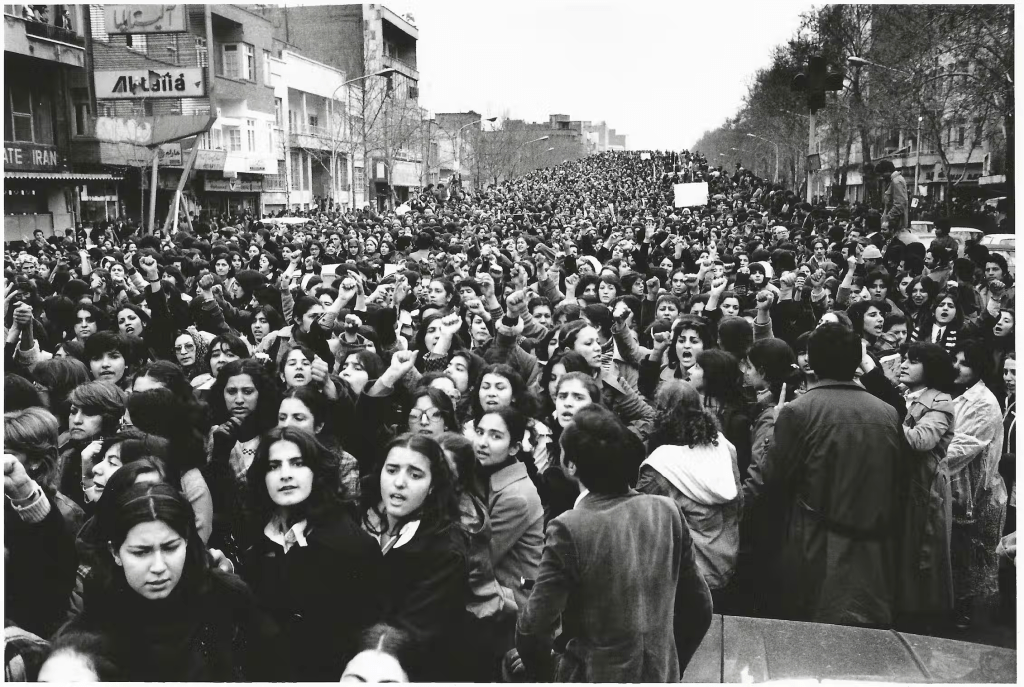
The second demand involves the law. In 1983, under Khomeini, he insisted—in fact, shortly after the revolution, I remember a big banner went up in front of the University of Tehran that read: “The measure of the freedom of a society depends on the measure of freedom that women enjoy in that society.” When Khomeini said that women cannot go to work without covering their heads, there were massive demonstrations, and hundreds of thousands of people took part in the demonstrations. There are videos of them. You can see women from all parts of Tehran, all ages, and all backgrounds, who came to these demonstrations without any headscarf and said they were not going to put up with it.
But, as I said, in 1983, the Iranian parliament (Majlis), under Khomeini’s instigation, passed a law that the headscarf is mandatory. Unfortunately, they have been enforcing it, and under Raisi, they have been going even further to enforce it. So, the second demand should be that this law is rescinded, and there should be no law on mandatory hijab.
The third demand should be regarding security forces. In Iran, we had a law that security forces, the police, were not allowed to go inside university campuses. If they had any problem with students, it had to be resolved through the university hierarchy. But now, of course, these days they go in and start beating up the students. So, I think the third demand should be that police and security forces are completely banned from entering places of education—schools, colleges, universities—and suppressing young people.
The fourth, and probably the most important demand they can make at this time, is regarding the laws which discriminate against women. For example, in child custody, employment, or leaving the country. If a woman wants to leave the country, she has to have the permission of her husband. Also in education, women were banned from certain subjects. Although strangely enough, at the moment in Iran, believe it or not, for the past 15 to 20 years, the majority—nearly 60%—of university students have been women. Because we have this wonderful system of entrance examination (Konkur), and nobody knows who takes part, you are just a number. The exams are graded, and the ones with the highest grades go to the universities they want. This has meant that some 60% of university students are women; there are more women graduates than men graduates, doctors, and so on. But in certain areas, they have been stopped. I think these laws must be rescinded, and they should demand that parliament pass laws which provide full legal, scientific, and economic equality for men and women in society.
And what is so encouraging is that a very large number of doctors, professionals, university lecturers, and, believe it or not, even religious seminarians—students and teachers in some religious seminaries—have said that coercion is against Islam. Forcing women to behave in a certain way is not Islamic, and they have risen up in support of women.
A few days ago, I saw a statement by the rather conservative Ali Larijani, who, for two terms, was the Speaker of the Iranian Parliament, who came out strongly saying that these discriminations against women must stop. Former Foreign Minister Javad Zarif was speaking alongside another right-wing speaker at a conference, and he said the Iranian people, including Iranian women, will not put up with discrimination.
So, there are more and more people coming out. The former Prime Minister, Mir Hossein Mousavi, who stood for election as president during the 2009 rigged election which brought Ahmadinejad to power for a second term, has issued a statement which is really brave. He calls on the armed forces, including the army and the military forces, to take the side of the people. He says, “You have sworn an oath to serve the nation, not rulers. And therefore, I call on you to stop shooting at the people, and in fact, take the side of the people against the oppressors and the tyrants.”
So, there are many good signs that the country, or at least a large part of it, is coming together, and I hope they can tip the balance against the security forces and the right-wing elements in the government. Once that has been achieved, the road will be paved for much more meaningful developments later on, hopefully leading to a proper democracy.
Dr Mohammed El-Doufani (Host): Thank you. That’s very important because we’ve seen where there’s been dramatic change, not just with the events in the Arab world from 2011 onwards, but also earlier on when the Soviet Union collapsed. Unless you actually have a positive programme to replace whatever is being undone, then what happens is chaos and worse. As we’ve seen in the Middle East, you might have civil war. Or, as some people in the case of Iran have expressed concerns, the country might split up along ethnic lines and become a failed state, like so many others in the Middle East. Just one last question: How likely is it that Iran, in the worst circumstances, might split along ethnic lines?
Dr Farhang Jahanpour (Guest): Well, one remarkably major factor about Iran has been that in its long multi-millennial history, it has always been a mosaic of different ethnicities and groups. The majority of people, probably more than 50% of the population, are Persians. Persian means those who came initially from the province of Pars and started the Persian Empire, which is why the Greeks called the whole country Persia or Persis.
But out of a population of 85 to 86 million, we have probably about 20 million Azeris. I was born in Shiraz, I’m mainly a Parsi (Persian), but my great-grandfather was from Tabriz. According to my grandmother, her mother was a Kurd. So, I seem to have Kurdish, Turkish, and Persian elements in me. But throughout all these centuries, they have lived together very well, and all the attempts to try to split them have failed.
Of course, now we are at a very difficult time. There’s a huge attempt by certain elements in the West and in the region to try to split the country. That was a plan a few decades ago, and they actually mentioned that the goal was to split Saudi Arabia, turn Iraq into a Shia state separate from the Kurdish area. They even had a plan for Iran to make a Turkish area, a Kurdish area, a Baluchi area, and there are also about 5 million people in the South-West, in Khuzestan, who speak Arabic. So, it is a mosaic of very many ethnicities.
As I’ve said, so far, all the enemies of Iran have failed to incite them to separate themselves from the country. And as I mentioned, in one of the slogans in the Kurdish areas: “Ma az Iran namirim, Iran ro pas migirim” (We will not leave Iran, we will take Iran back). So, I hope they will have the maturity to realise that all of them are in the same boat. They sink or swim together. Therefore, unity is very important. They should maintain their unity and move forward towards greater democracy, which will benefit all of them.
Dr Mohammed El-Doufani (Host): Thank you very much for this extremely interesting and insightful analysis of events that are taking place in Iran now, and also for the extremely useful broader context of the status of women in different cultures and different religions.
That was Iranian academic Dr Farhang Jahanpour talking to me, Mohammed El-Doufani, on Five Minutes to Midnight about the protests and the general situation in Iran.

