

Lecture given at Wilton Park Conference, 12 February 1998
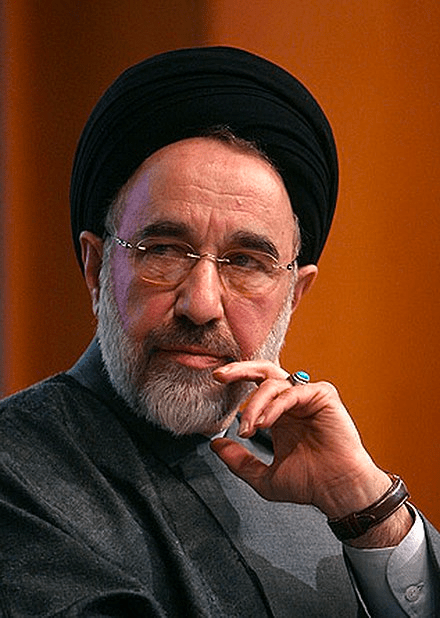
Hojjat ol-Eslam Seyyed Mohammad Khatami’s landslide victory in the presidential election on 23rd May 1997 (the hand-over took place in August) was as unexpected to himself as it was to most Iranians and to many foreign observers. A soft-spoken, mild-mannered, moderate cleric who had avoided the limelight and, consequently, was not very well known until recently by the public in Iran, managed to win the largest number of votes in any presidential election since the beginning of the Islamic revolution.
There is no doubt that the election of Khatami was the most important event since Ayatollah Ruhollah Khomeini’s death in 1989. Some foreign observers have spoken about the dawn of a new era in Iranian politics, and have even described Khatami as a new Gandhi, which is definitely a little premature; while others have said that nothing has changed in Iran and that the clerical regime cannot be reformed from within. Some Western analysts have even alleged that he is a kind of a decoy to confuse the West, and that there is no difference between him and the rest of the mullahs. After President Khatami’s CNN interview on 7th January 1997, many people in the West asked “Is this a new fold in the Iranian revolution, or is it a Thermidor?”[1]
The truth lies somewhere between the two. He definitely is not an outsider to the regime. He was closely associated with the revolution since the beginning and served as minister of Culture and Islamic Guidance in the eighties. However, there is no doubt that the policies which he is advocating and the emphasis which he puts on certain key concepts such as “civil society”, “the rule of law” and greater social and political freedom are quite new and distinct, if not revolutionary. The “global context” of the democratic reform in Iran which Khatami’s election represents has been rather neglected by journalists and academics in the West.
The notion that the Iranian election was a protest vote by the young, by women and by the discontented Iranians is only half the truth. The election, while definitely representing a protest vote, as in most countries in the West, against the former government in power, was more than that. It was a protest vote not merely against the conservative elements within the Islamic Republic, but against the extremism and excesses of the Islamic revolution as a whole. The message of the people who voted for Khatami was that they wanted freedom and democracy at home and peace abroad.
There were two major differences with the past. The first difference involved the content of the message and its implementation, i.e. gradual and evolutionary change, rather than violent and revolutionary overthrow of the regime. The second difference concerns the source of the reform. This time, in contrast to the past, forces favouring democracy and reform in Iran did not come from top down as with the White Revolution under the late Shah or even the Islamic Revolution. The latter, although it did achieve massive public participation, was basically dominated by the ideas and personality of Ayatollah Khomeini. This time, the desire for change and for greater political and democratic reforms has bubbled up from below. There is a groundswell for a change of direction after some 19 years of puritanical rule at home and cultural and diplomatic isolation abroad. The reformist leaders are now trailing the intellectuals, the university students and the public at large.
To give an idea of the scale of Khatami’s triumph, it should be pointed out that the number of votes received by the four presidential candidates were as follows: Mohammad Khatami 20,078,187 votes; Ali Akbar Nateq-Nuri, the establishment candidate who was widely expected to win the election, received only 7,242,859; the Hezbollahi candidate, Mohammad Mohammadi-Reyshahri, received the smallest number of votes at 742,598, even below the number of votes cast for the little known independent candidate Seyyed Reza Zavare’i who received 771,400 votes. The percentage of the eligible voters who took part in this election stood at 80.16 per cent (29,076,070 out of 36,271,000 of total voters) compared to 75.41 per cent of those who even took part in the Referendum on the establishment of the Islamic Republic (15,680,000 out of 20,896,000), and only 50.76 per cent (16,789,000) in the sixth presidential election in 1993 which re-elected Hashemi-Rafsanjani for a second term.
Out of 29,076,000 votes cast in the seventh round of the presidential election, Khatami received 20,078,187 or 69.05 per cent of the votes, which was nearly twice the number of votes cast for Hashemi-Rafsanjani in the last election (10,555,000). Khatami’s percentage of the eligible votes (55.35%, compared to only 31.92% in the last presidential election) was higher than that of any other presidential election since 1981 when Hojjat ol-Eslam Ali Khamene’i received 70.96% of the vote after the tragic double assassination of President Raja’i and Prime Minister Bahonar when the Iran-Iraq war was at its height.[2]
When one speaks about the democratic nature of these elections, one has to bear in mind that, compared to Western democracies, there are a number of differences which, according to some Iranian opposition groups, have weakened the legitimacy of the elections. For instance, out of the 238 candidates, including nine women candidates, who had been nominated by various groups, the Guardian Council, which supervises the elections, approved the suitability of only four men; without giving any reason for the rejection of all women candidates, although some of them were Majlis deputies. It was not made clear whether the rejection of women candidates was due to the blanket rejection of women running for presidency, or whether the Guardian Council had simply not found any of the available female candidates suitable for the job.[3] Some prominent candidates from among the liberal opposition, like Habibollah Peyman, Ezatollah Sahabi, Ali Akbar Mo’infar and Dr Ebrahim Yazdi, were also rejected without providing any reason for their exclusion.[4]
A UNIQUE ELECTION
This selection persuaded many that the candidate favoured by the establishment was the Majlis Speaker Ali Akbar Nateq-Nuri, the most prominent of the four candidates. Nevertheless, the seventh presidential election was different from earlier ones in many ways:
1- The candidates represented real rival groups: Hojjat ol-Eslam Ali Akbar Nateq-Nuri represented the conservative right and the traditional middle class and bazaari supporters of Ayatollah Khomeini’s revolution; Hojjat ol-Eslam Mohammad Khatami was chosen by a coalition of the left of the centre groups; Hojjat ol-Eslam Mohammad Mohammadi Reyshahri was the head of the Iranian Hezbollah and represented the ultra-militant faction closely associated with the worst excesses of the revolution; and Seyyed Reza Zavare’i was an independent candidate, member of a right-wing Coalition Group supporting Hashemi-Rafsanjani and moderate reformists.
2- The votes of the people could not have been predicted. Indeed, up to the eve of the election, many Iranian and foreign commentators predicted that Nateq-Nuri would win or, at best, none of the candidates would receive more than 50 percent of the votes, and the election would go to a second round.
3- Unlike previous elections, when most opposition parties boycotted the election, this time the independent, non-establishment parties and even opposition groups who had either been banned or had boycotted previous elections, such as the members of the Freedom Movement who follow the policies of the late Mehdi Bazargan, had announced that they would take the election seriously, and declared some candidates of their own.
4- Only the candidacy of Nateq-Nuri was known well in advance, while the candidates of other factions were not selected till the last few months. Khatami joined the race only three months before the election and his campaign gained momentum less than a month before the election
5- In contrast to previous rounds, when Khamene’i and Rafsanjani — who were among the most prominent figures since the early days of the revolution — were elected, this time none of the candidates possessed the same prominence.
Yet, in view of the greater pre-eminence of Nateq-Nuri and the relative obscurity of Khatami, many people at home and abroad assumed that the result of the election was a foregone conclusion and that Nateq-Nuri was the favourite, establishment candidate. There were a number of reasons for this assumption:
1- The name of Nateq-Nuri was first on the list announced by the Guardian Council, and the name of Khatami was third, contrary to the accepted practice and procedure used in previous rounds when names were given alphabetically.
2- The Guardian Council’s explanation for this was that the order of the names on the list was based on the number of votes each candidate had received in the Guardian Council. This assertion made it clear that the Guardian Council favoured Nateq-Nuri over the other candidates.
3- Two speeches by the spiritual leader, Ayatollah Ali Khamene’i, to the clerics who were leaving to take part in Muharram mourning ceremonies and to the staff of radio and television about the election, implicitly supported Nateq-Nuri’s candidacy. In a campaign speech, Khatami had said that the spiritual leader would not have a personal preference among the candidates and would support whoever was elected. Ayatollah Khamene’i, however, in his speech to the staff of radio and television, went out of his way to openly contradict Khatami. He said that, of course, he had a definite preference and, without mentioning any names, he made it clear that he preferred the election of Nateq-Nuri. Indeed, Khamene’i’s position was made abundantly clear through leaks by the supporters of Nateq-Nuri.
4- The professors of Qom religious seminary, the Association of Militant Clergy and the Friday imams of most cities issued statements formally announcing their support for Nateq-Nuri. In other words, nearly all senior religious establishments who had in the past assumed the right of guiding the people in these matters had explicitly called on them to vote for Nateq-Nuri.
5- There was a great deal of direct and indirect propaganda by radio and television in favour of Nateq-Nuri who, as Majlis Speaker, received much publicity during his trips to various provinces. Some said that the amount of attention paid to him by the media went well beyond his status as the Majlis Speaker. He was already treated as a president in-waiting. This was contrasted with hardly any publicity in favour of Khatami. However, one event which probably helped Khatami’s cause more than any other, was the series of an hour long campaign speeches and interviews with various candidates during the election campaign. In these public appearances, Khatami’s smiling and youthful appearance and fresh and vigorous ideas came across as being in sharp contrast with Nateq-Nuri’s stern, austere and establishment posture.
6- There were widespread rumours about the intervention of the guards corps in favour of Nateq-Nuri and against Khatami, including a speech by the Guards Corps Commander, Mohsen Reza’i, urging the revolutionary guards to vote for Nateq-Nuri.
7- Most sources of emulation (maraje’-e taqlid, or the highest religious authorities in Shi’ism), whose words are to be obeyed by those who emulate them, expressed their support for Nateq-Nuri.
8- Khatami’s opponents openly stated that he was against the concept of velayat-e faqih, the cornerstone of the Islamic government in Iran, while Nateq-Nuri represented the true legacy of Ayatollah Khomeini and was a supporter of the vali-ye faqih. Two of the campaign speeches by Khatami in Mashhad and Isfahan were disrupted by Hezbollahi hooligans who chanted slogans of “death to the enemies of the velayat-e faqih“, and he was prevented from speaking.
Therefore, the massive and unprecedented vote for Khatami was as much a vote of no-confidence in the conservative and traditional religious establishment who backed Nateq-Nuri, as it was an endorsement of Khatami’s declared policies. This vote posed a major challenge not only to senior religious figures who supported Nateq-Nuri, but also seriously undermined the position of the non-elected Ayatollah Khamene’i as the spiritual leader of the country.[5]
Khatami’s election campaign was conducted around a number of key issues, the most prominent of which were the establishment of a civil society, the rule of law, pluralism, greater political, social and cultural freedom, equality of the rights of men and women with promises that he would appoint some women to his cabinet for the first time since the beginning of the revolution, greater cultural and educational opportunities for the young, economic development accompanied by greater social justice, and conducting a foreign policy on the basis of the elimination of international tension.
For many people in the West, terms such as pluralism, civil society, the rule of law or social justice may not sound very exciting or novel. However, for many Iranians who daily have to contend with the interference of various vigilantes and Hezbollahi groups about every aspect of their lives, including what they wear, what they read, where they go and whom they are going with, terms such as the rule of law assume enormous importance.
Khatami has argued that those who call themselves the supporters of the revolution and the Islamic system are duty-bound to abide by the laws of the Islamic government. He pointed out that if those who are opposed to the Islamic system disrupt society and interfere in people’s lives outside the judicial framework, that could be understood. But those who call themselves the friends of the revolution could not and should not take the law into their own hands and disrupt the lives of the people. If they have a grievance against certain individuals or organizations they should address them through legal channels. Consequently, a large number of people who had been fed up with the excesses of some over-zealous officials and self-styled guardians of public morality, especially women and young people, were attracted to Khatami’s platform and voted for him in droves.
A QUIET REVOLUTION
The general feeling of apathy and cynicism was replaced with a new realization that this time people’s vote could make a real difference. This is why the number of the eligible voters who did not take part in the election at 13.7% was well below the usual 30-40% in previous elections. Consequently, the election of Khatami was a kind of quiet revolution, and marked a turning point in recent Iranian history. Not since the start of the Iranian Constitutional Movement at the beginning of this century had the people elected their ruler independently and in a peaceful manner against the wishes of the political and religious establishment.
In view of the above factors, many people in Iran have great — and maybe excessive — expectations of their new president. Equally, some people in the West are also anxious to find out what President Khatami stands for and what will be Iran’s future direction under his leadership. With such a popular mandate, a president in any other country would be able to carry out any policies he wishes, or at least the main policies over which he has fought the election. However, in the case of Iran, the situation is not quite as simple.
For a start, under the Iranian constitution, Ayatollah Ali Khamene’i, the unelected “supreme leader” of the Islamic Republic, is more important than the elected president, with control over the armed forces and the security services, the judiciary, intelligence and broadcasting services, as well as in the field of foreign policy. On many issues, the two men have sharply different views. The judiciary is independent of the president, and in the present Majlis there is a majority for the supporters of Nateq-Nuri, the Majlis Speaker, who was Khatami’s chief rival during the election.
Furthermore, the former President, Akbar Hashemi-Rafsanjani, has been appointed Chairman of the powerful Expediency Council, with the former Revolution Guards commander, Mohsen Reza’i, as its secretary. Under Hashemi-Rafsanjani, the Expediency Council is setting itself up as above the president and as the body which formulates major national policies. In an interview with CBS television network in April 1997, Hashemi-Rafsanjani was asked whether the policies of the country would become more extreme after the end of his presidency. He replied: “I do not think so, because I will be present in the Expediency Council in a new responsibility, and Iran’s general policies will be studied and formulated there. Even at the moment, the policies do not depend upon me alone. There are many people who play a role in making policies. Above all of us is the esteemed leader of the revolution [Ayatollah Khamene’i] who decides the general policies.”[6]
HASHEMI-RAFSANJANI’S SUCCESSES AND FAILURES
The election of Akbar Hashemi-Rafsanjani as the first executive president after Khomeini’s death, with new powers given to him by the new Constitution which had been drawn up, definitely marked a kind of turning point in the fortunes of the Islamic Republic. A leading Iranian expert has described his tenure as the “second republic”.[7] His presidency also gave rise to a great deal of hope among many Iranians, and probably more so among some foreign observers of Iran, for some fundamental changes in the course of events in Iran. After all, the architect of the revolution who had cast a long shadow over all aspects of life in Iran had just died. The devastating eight-year-long war with Iraq, which had cost hundreds of thousands of lives and enormous destruction and hardship had come to an end, and the era of reconstruction had started. It became popular for a time to refer to Hashemi-Rafsanjani as Iran’s Gorbachev, especially after his successful visit to Moscow.
Hashemi-Rafsanjani’s tenure did not live up to all the expectations which it had aroused. To be fair to him, his presidency achieved some positive results, at least in the field of domestic policy. Probably the most important achievement was that he managed to hold the country together at a very difficult time, while many people believed — or hoped — that after Khomeini’s death the clerical system would either collapse or would be greatly weakened. Yet, the speedy appointment of Ayatollah Ali Khamene’i as the new spiritual leader to succeed Khomeini — which owed a great deal to the backing and influence of Hashemi-Rafsanjani — resulted in an unexpectedly smooth transition to the post-Khomeini era. Shortly after the appointment of Ayatollah Khamene’i as the new spiritual leader, Hashemi-Rafsanjani was elected president, and with both the new leader and the new president in place the course of the consolidation of the republic continued.
Hashemi-Rafsanjani’s government also achieved some success in the field of reconstruction. Over one million members of the armed forces, the revolutionary guards and the Basij popular mobilization forces were demobilized from the armed forces and were engaged in constructive activity. For a time, the economy did very well and productivity and the volume of non-oil exports increased. However, with the eruption of the Second Gulf War, the situation became very difficult. There was a high level of inflation and the burden of foreign debt which had amounted to 30 billion dollars constituted a drain on the economy.
Apart from domestic problems, there were a large number of foreign policy issues which the regime had to contend with. The failures in foreign policy and the diplomatic isolation of Iran also had a negative impact upon the domestic situation. Again, in the foreign policy field not everything was negative. Efforts such as trying to establish peace in Tajikistan; to adopt an active diplomatic effort towards the issue of Afghanistan after the victory of the Taleban over Kabul; persuading the Lebanese Hezbollah to join the Lebanese parliament, which has led to a split between the more moderate wing supported by Iran and the hard-line followers of Subhi Tufayli who were involved in clashes with the Lebanese forces; an effective participation in international discussions concerning the cease-fire after Israel’s 17-day war against Lebanon; and not inciting opposition activity in the southern littoral states of the Persian Gulf, are some of the positive measures taken by Rafsanjani’s government.
On the other hand, one can make a longer list of the failures of Iranian foreign policy. One of the main reasons behind the foreign policy failures of Rafsanjani’s government was the lack of response from foreign opponents of Iran. Hashemi-Rafsanjani had made every effort to resolve the Lebanese hostage crisis. He even sent his own brother as a special envoy to negotiate with the Lebanese Hezbollah, which resulted in the releasing of all foreign hostages. It was anticipated that his efforts would meet with some easing of pressure on Iran. There were even a number of tacit agreements with some mediators that the releasing of the Western hostages would result in the unblocking of Iranian assets by Washington. However, nothing was done to reciprocate that goodwill gesture. During the Persian Gulf War, against a great deal of provocation by Iranian hard-liners, both Rafsanjani and Ayatollah Khamene’i maintained Iran’s neutrality in the conflict. Again, it was anticipated that Iranian support for the efforts of the anti-Iraqi coalition would result in better relations with the West. Most Arab states who had helped the coalition were rewarded with massive Western aid, but the response to Iran was the imposition of the “dual containment” policy. In order to separate politics from economics and continue economic cooperation with the West, Iran signed a contract for over one billion dollars with Conoco for the development of Siri oil and gas fields in the Persian Gulf. However, the American administration put pressure on Conoco to cancel the deal which was subsequently given to the French company Total. Thus, a clear initiative by Iran to normalize economic relations with America received a negative response in Washington.
Although some of the foreign policy setbacks were due to a lack of response from the West, there were a number of domestic factors which aggravated Iran’s problems with the outside world. One of the main criticisms against Iranian foreign policy ever since the revolution, which was also allowed to continue under Hashemi-Rafsanjani’s presidency, is that it was driven more by revolutionary rhetoric and ideology than by pragmatism and pursuing national interests. The unnecessary verbal attacks on a number of neighbouring Arab leaders, the support provided for the Shi’is in Afghanistan who constitute a small minority of that country’s population rather than for the Afghan government, the intense anti-Israeli policies and the support provided for militant groups in Lebanon and Palestine are some of the examples of the policies which were pursued not in keeping with Iran’s national interests, but more in line with religious or sectarian considerations.
A second major criticism against Iranian foreign policy is that it was not quite clear who was in charge of the foreign policy. The ministry of foreign affairs was powerless due to the interference, not only of the president and other members of the government but, even more so, by the constant interference of the supreme leader Ayatollah Ali Khamene’i. His Friday sermons or speeches to various state or revolutionary bodies often set the tone for the foreign policy which had to be pursued by those who were given the task of conducting it. This precedent was set by the late Ayatollah Khomeini who, for instance, issued a decree calling on the government to sever relations with Egypt. His fatwa on Salman Rushdie led to counter-measures being taken not only by Britain, but by the entire European Union and the West as a whole. That issue is still poisoning and complicating the relations between Iran and the West. The same example of dictating the foreign policy of the country over the heads of those who have been put in charge of the country’s foreign policy has continued unabated.
The third criticism must be directed at those irresponsible clerics, individuals or unofficial revolutionary organizations which regard it as their right to meddle in the key areas of foreign policy, thus making it impossible for the government to adopt a coherent foreign policy. The decision of the Fifteenth Khordad Foundation to put a bounty on Salman Rushdie’s head and increasing the sum on subsequent occasions, the sermons delivered by some Friday imams whose views are taken seriously abroad as constituting the foreign policy of the country, the involvement of Iran’s secret services in alleged terrorist activities in foreign countries which cause a great deal of harm to Iran’s image abroad and greatly complicate the work of the ministry of foreign affairs, are some of the examples of the confused nature of Iran’s foreign policy. Such individuals or revolutionary organizations should either be required to coordinate their activities with the ministry of foreign affairs if they are regarded as speaking authoritatively for the government, or their state funding and their activities should be curbed if they claim to be independent organizations unconnected with the government.
The fourth criticism which can be levelled against Rafsanjani’s foreign policy team is that they were either lacking in expertise, or their expertise was not in the field of diplomacy. This led to a number of confused policies which harmed the image of the Iranian regime abroad. The people entrusted with Iranian foreign policy were trying to learn on the job, through a process of trial and error. Consequently, they made many errors. For all the above reasons, Iranian foreign policy was confused and contradictory and often had to be reactive, instead of being proactive. This meant that the country had to stumble from one foreign policy disaster to another.
One can cite many examples of the failures and confusions in Iranian foreign policy. For instance, on the eve of the fall of Ceausescu, the former dictator of Romania, arrangements were made for his highly publicized visit to Iran and then, all of a sudden, in order to make up for their mistake, all the propaganda agencies of the system were mobilized against their guest of the previous days. For many years Europe was described as the opposite pole to the United States of America with which Iran should cultivate friendly relations and then, in the twinkling of an eye, over the Salman Rushdie issue and subsequently over the Mykonos trial, Europe was described as the servant and lackey of America.
One day Russia was described as the supporter of the Serbs in Bosnia, and then that position was bestowed upon America. Although Russia provided the greatest material and moral support for the Serbs and America and the West provided the only decisive support for the Bosnian Muslims, the Iranian rhetoric continued praising Russia and blaming the West for all the hardships suffered by the Bosnians. Iran’s relations with Russia were described as “strategic”, while the president of that country signed the anti-Iranian resolution issued by the summit conference of the seven industrialized countries. Syria responded to Iran’s unstinting support and hundreds of millions of dollars’ worth of cheap oil by making demands which go against the territorial integrity of the country, supporting UAE’s stance over the two Tumbs and Abu-Musa.
As far as Iran’s immediate neighbours were concerned, on Iran’s Western borders the Taleban came to power with the massive support of Iran’s ECO ally Pakistan, while the Ministry of Foreign Affairs was busy in a futile mediation effort between Uganda and Sudan. On the one hand, the territorial integrity of Iraq was stressed, while at the same time Iran supported the Kurdish groups who were fighting to secede from the Iraqi government. Iran’s relations with Turkey were formulated on the basis of support for the Welfare party, and as soon as that party fell from power all the bridges of trust between the two countries also collapsed and, in fact, the two neighbouring countries which are members of the ECO withdrew their ambassadors from each other’s capitals. One can add many more instances to the above list.
As a result, when Khatami took office, Iran was faced with a hostile force in Afghanistan, had strained relations with Turkey, was regarded with suspicion in the Gulf, was at loggerheads with Azerbaijan and with most of Central Asia, was subjected to the dual containment policy by America, and all EU countries had withdrawn their ambassadors from Iran over the Mykonos affair.
THE OIC SUMMIT CONFERENCE
When President Khatami stood up to welcome the emirs, crown princes, presidents, prime ministers and foreign ministers from 54 Islamic countries who attended the 8th OIC summit conference in Tehran (9th-11th December 1997), he wondered whether he should begin his speech “with a statement of woes and misfortunes that are, or with the joy and happiness that ought to be”. Whatever the woes and misfortunes of the Islamic world as a whole may be, for Iran and for President Khatami the OIC conference was a complete success. Not only was it attended by a larger number of high-ranking delegates from Islamic countries than in any previous summit conference (54 countries represented as opposed to 40 who attended the seventh OIC summit conference in Casablanca from 13th-15th December 1994), it was described by many foreign delegates and commentators as the most successful and the least acrimonious summit. Above all for Iran, an allegedly pariah state, the conference resulted in greater acceptance by its neighbours, and it became the chairman of the OIC for the next three years.
Iran’s relations with Saudi Arabia, which had been strained ever since the start of the Islamic revolution in 1979, became cordial. Iran and Bahrain and Iran and Turkey, which had severed their diplomatic relations, agreed to exchange ambassadors, Iran’s dispute with the UAE was greatly eased by both countries agreeing to resolve the matter through dialogue. Although President Mubarak stayed away from the summit meeting, sending his foreign minister Amr Musa to Iran, the two countries decided to improve their relations and, subsequently, there have been more diplomatic contacts between them. Even the relations with Iraq, which was represented by its deputy president at the conference, began to show signs of progress. Furthermore, the West has decided that it cannot ignore and isolate Iran. The EU ambassadors returned to Iran and there were even some signs of a thaw in the relations with the United States, after President Khatami’s interview calling for dialogue with “the great American people,” adding that the American government was elected by the American people and as such deserved Iran’s respect.
Another important feature of the OIC summit which has not received due attention, was Khatami’s call for the establishment of an “Islamic civil society” throughout the Muslim world. Although he was careful to distinguish between what he called an “Islamic civil society” and the civil society that is rooted in the Greek philosophical thinking and Roman political tradition, Khatami asserted: “The two, however, are not necessarily in conflict and contradiction in all their manifestations and consequences. This is exactly why we should never be oblivious to judicious acquisition of the positive accomplishments of Western civil society.” That is a profound statement from a Muslim political leader, which is in stark contrast to the revolutionary rhetoric of Iranian leaders who regarded the West as evil and who advocated constant vigilance against “Western cultural onslaught.”
In contrast to them, Khatami boldly asserted: “Our civil society… recognizes the right of other nations to self-determination.” He urged the OIC members to work towards the objectives of “participation, dialogue, security and development.” Pointing out that “The relations between the Islamic world and others suffer from mistrust, misunderstanding and misconceived perceptions”, he went on: “In this connection, through providing the necessary grounds for dialogue among civilisations and cultures — with the people of intellect taking a pivotal role — we should open the way towards a fundamental understanding which lies at the very foundation of genuine peace… and thus neutralize the influence of negative propaganda in the public opinion.”[8]
Khatami’s address to the OIC summit meeting was in marked contrast to the opening speech delivered by Ayatollah Khamene’i, who again repeated Iran’s known stances towards the West and Israel. The two speeches clearly demonstrated the gulf which exists between the world view of the two Iranian leaders, and the mood of those attending the conference. While Khamene’i’s address was listened to in silence, Khatami’s speech received warm applause.
THE CNN INTERVIEW
In his CNN interview, broadcast on 7th January, President Khatami spoke favourably about the American civilization and the “great American people.” He praised the combination of liberty and religious faith which the early settlers and founding fathers represented. At the same time, partly in order to defuse domestic hostility to his bold initiative, he strongly criticized America’s past policies towards Iran and said that the American leaders still lived in the past and continued their Cold War mentality. He said that Iran did not need America and that the time was not yet ripe for the resumption of diplomatic relations.
In an unprecedented move, Khatami expressed regret for the hurt caused as the result of the taking of 52 American hostages in November 1979, and he spoke warmly about the need for a dialogue between civilizations in order to bring about a “crack in the wall of mutual mistrust” which exists between the two nations. He called for greater contacts between the two countries’ academics, writers, artists and journalists. His remarks stirred speculation about a thaw in relations with Washington. However, his interview produced conflicting reactions in both Iran and the United States. Clearly, there are hard-liners in both countries who are against the normalization of relations.
Shortly after the interview, Ayatollah Ali Khamene’i, preaching the Friday prayers in Tehran, strongly rejected any dialogue with America and said that the resumption of relations with America, not only would not serve any purpose, it would even be harmful. The resumption of relations with the US would alienate the Muslims from Iran and would dash their faith in the revolutionary credentials of Iran to confront America. Ayatollah Khamene’i spoke about America’s hostility towards Iran, the freezing of the Iranian assets, the assistance to Iraq during the Iran-Iraq War and attempts to block all Iranian efforts to normalize relations with its neighbours. For all these reasons, he argued that unless there was a fundamental change in American stance towards Iran, any initiative by Iran for the resumption of ties would be unwise. In another address to the members of the powerful Assembly of Experts on 3rd February 1998, indirectly referring to Khatami’s call for a dialogue between civilizations, Khamene’i said that “Political talks with America would be harmful to our politics and culture, to our people’s morale, and to the strategic reach of our government abroad. We have therefore rejected talks from the start and still do so.” He said that Iran should raise a “solid and high wall” to keep out US influences.[9]
The Islamic revolution guards corps, which according to the Islamic Constitution is barred from taking part in politics, issued a statement strongly condemning Khatami’s apology for the taking of American hostages and the efforts to downplay the importance of the action of the Students Following the Imam’s Line who had taken over the American embassy in Tehran on 4th November 1979. The statement described the holding of the hostages “a spontaneous, popular and revolutionary action, an action which complemented the first revolution. Without this action, the roots of the tyrannical monarchical regime and the global arrogance would have remained intact.” It praised the importance of the action taken by the students and criticized the interviewer for raising the matter. It went on to say: “The reason why nearly two decades after that important event we are still witnessing efforts by the American ruling circles to question the legitimacy of that action is the magnitude and severity of the blow that was delivered at the CIA and the American espionage apparatus in general; a blow that in effect led to America’s supposedly mighty image to be shattered before the eyes of the oppressed and the downtrodden nations of the world.” The statement even called for a clarification of the government stand about the seizure of the American embassy, adding: “Undoubtedly, a firm and prompt reply to clarify the nature of the action will restore national pride and integrity and will pay homage to a move which the great founder of the Islamic Revolution called ‘the second revolution.”‘[10]
On 17th January 1997, 130 Majlis deputies commended President Khatami for his message to the American people. In their letter to the President they said that his message to the American people was “comparable to the message by the Prophet Muhammad (pbuh) to the arrogant emperors and sultans of early Islamic era.” They also praised his initiative as a bold gesture which would promote a more peaceful world and added: “Mutual respect for civilizations and peoples’ traditions offered a sound intellectual background for inter-cultural dialogue between the nations.”[11]
On the following day, however, a majority of deputies in Iran’s 270-seat parliament issued another statement supporting the supreme leader Ayatollah Khamene’i’s rejection of any ties or talks with the United States.[12] More than 200 members of parliament had signed a statement “in support of the uncompromising position of the leader of the Islamic revolution, Ayatollah Seyyed Ali Khamene’i, in dealing with the US.” Far from having any benefit for the people of Iran, the Majlis deputies said, “talks, dialogue and relations with the United States would be detrimental to Islam and Moslems.” The interesting point is that as there are only 270 members in the Iranian Majlis, quite a large number of the deputies must have signed both contradictory statements.
The Iranian official news agency, IRNA, quoted parliament’s Speaker, Ali Akbar Nateq-Nuri, as saying that Ayatollah Khamene’i’s remarks had left no doubt in people’s minds on the issue of relations with the United States: “Reiterating the leader’s remarks that ties with the US are harmful and not the only solution to the problems, the Majlis speaker expressed hope that both the people and the officials will always heed to the leader [sic] in an effort to build a developed Iran.”[13]
Not only have President Khatami’s foreign initiatives been opposed by his hard-line opponents in Iran, there has been a concerted campaign to undermine his domestic policies for initiating some democratic reforms and the establishment of a civil society. Soon after his election, a major judicial crackdown was started on some of his supporters, including the very active and successful mayor of Tehran, Gholam Hoseyn Karbaschi, on charges of corruption. Many mayors of different districts of Tehran were arrested and jailed and some of them were allegedly tortured. These lawsuits are still continuing and their aim is to weaken the moral standing of Khatami and some of his supporters.
Taking advantage of the new climate of greater openness, Ayatollah Hoseyn Ali Montazeri made speeches critical of the supreme leader Ayatollah Khamene’i. Montazeri had been initially appointed by Ayatollah Khomeini as his successor, but when Montazeri openly criticized a large number of executions of imprisoned Mojahedin-e Khalq supporters which were carried out in the aftermath of the Iran-Iraq War, he was dropped by Khomeini as his successor shortly before the latter’s death. In his attack on Ayatollah Khamene’i, Montazeri argued that the powers envisaged in the Constitution for vali-ye faqih (which, incidentally had been the brainchild of Montazeri himself who was the chairman of the Assembly of Experts which drew up the Islamic Constitution) were misused and exceeded by Ayatollah Khamene’i. Montazeri argued that the role of the vali-ye faqih is purely a supervisory role, and is mainly concerned with the spiritual and moral direction of the society, while Ayatollah Khamene’i had concentrated all the military, judicial and executive powers in his own hands, and was setting himself up as being above the law.
These remarks were seized upon by the hard-liners who organized marches and protests against Ayatollah Montazeri. His house and offices were attacked and ransacked, and there were even calls for him to be tried on charges of treason. Both Montazeri and Ayatollah Azari-Qomi, another critic of Ayatollah Khamene’i, have been put under house arrest and are prevented from continuing their lectures at Qom religious seminary.
The judiciary, led by Ayatollah Mohammad Yazdi, is taking a leading role in opposing Khatami and his reforms. A number of reformist figures who had supported Khatami’s campaign were arrested and detained for a time. Dr Ebrahim Yazdi, foreign minister under Mehdi Bazargan who succeeded him as the head of the Freedom Movement, was one of those arrested for insulting Ayatollah Khamene’i and making comments in support of Ayatollah Montazeri. Heshmatollah Tabarzadi and Dr Habibollah Peyman, two other well-known activists, were also arrested and interrogated on trumped up charges. A court in Tehran sentenced a German businessman to death for allegedly having a sexual relationship with an Iranian woman, again aimed at embarrassing Khatami and his policy of greater openness to the West. This sentence has again strained relations with Germany which had recently sent back its ambassador to Tehran after the Mykonos affair.
All these and many other instances of opposition to Khatami show that the differences between Khatami and his opponents are not mere cosmetics, but that a serious battle is going on between those who desire to see a more liberal and democratic Iran with a new foreign policy based on openness and friendly relations with Iran’s neighbours and with the West, and the more conservative and obscurantist elements who want to turn the clock back and perpetuate Khomeini’s legacy.
Apart from the judiciary, some hard-line clerics also continue to undermine Khatami and prevent his reforms. Although in the past it has been customary for the president to be declared the main Friday imam of Tehran, Khatami has not yet been asked even to preach a single Friday prayer sermon. The Iranian radio and television continue to adopt a cold and unfriendly tone towards Khatami as compared to both previous presidents and other leading members of the regime. Although the Majlis has remained quiet so far, it can be expected that as Khatami starts implementing some of his policies, he will face greater opposition in having his bills ratified by the Majlis.
Despite all this opposition, Khatami has had a number of successes since his election, too. First of all, he managed to receive a vote of confidence for all the members of his cabinet, despite many predictions that at least three of his nominees — ministers of Culture and Islamic Guidance, Foreign Affairs and Interior — would be rejected by the Majlis for being too liberal. The Majlis felt that in view of Khatami’s massive electoral mandate, it would be unwise to oppose his cabinet from the start. Khatami also managed to replace Ali Akbar Fallahian, the notorious Minister of Intelligence, who had been allegedly responsible for a number of terrorist attacks on Iranian dissidents abroad, as well as Mohsen Reza’i, the powerful head of the Islamic revolution guards corps, who had commanded that force since the early days of the revolution and who had been appointed personally by the late Ayatollah Khomeini.
Many Iranian observers believed that the Islamic revolution guards corps was the real power behind the throne and its powerful commander could not be dismissed without causing a major backlash. Although the new appointments were ostensibly made by Ayatollah Khamene’i as the Commander in Chief of the Armed Forces, they represented a triumph for Khatami who wanted to dissociate himself from the past activities of the Ministry of Intelligence and the Commander of the Islamic revolution guards corps who had openly called for the election of Nateq-Nuri and had even threatened that the Islamic revolution guards corps, as the guardian of the revolution, would not remain idle if the gains of the revolution and Khomeini’s legacy were under threat.
For the first time since the revolution, a number of female judges have been appointed to the courts dealing with family and marital affairs. Khatami has also appointed a female deputy president in charge of the environment, and there are two deputy ministers. Despite his earlier promises that he would appoint a woman minister, Khatami felt that such an appointment would not be approved by the Majlis. However, the most interesting development since the election is that there has been much greater openness in the Iranian press, with the exception of radio and television, and the quality and quantity of open debates which are carried out in the press are quite impressive. Formerly taboo subjects, such as the position and powers of the spiritual leader, the role of Guardian Council and the Expediency Council, as well as Iran’s relations with the West are vigorously debated. Some newspapers have suggested that the powers of the spiritual leader and relations with America should be put to a referendum.
IRAN AND THE WEST
Khatami’s election as president has aroused a great deal of interest in the West and there are signs of a new approach towards Iran. Not only the EU ambassadors who had been withdrawn from Tehran when the judge at the Mykonos trial had implicated leading Iranian figures in that terrorist act, returned to their post, the EU foreign ministers even decided to end their policy of “critical dialogue” with Iran and to resume normal relations. In a meeting between the Iranian Foreign Minister Kamal Kharrazi and the French Foreign Minister Hubert Vedrine in Geneva at the end of January, it was announced that the policy of “critical dialogue” with Iran was defunct and that it would be replaced with a so-called “constructive dialogue”.[14] Earlier on, during his visit to Washington, British Foreign Secretary Robin Cook urged the United States to take a more flexible line towards Tehran. He also raised the European objection to American sanctions against French oil firm Total SA, and any other European firm which wishes to engage in business with Iran.
There were even signs of a thaw in Iranian relations with the United States. President Khatami’s CNN interview initially met with a positive gesture by President Bill Clinton and other US officials. “The United States regrets the estrangement of our two nations. Iran is an important country, with a rich and ancient cultural heritage of which Iranians are justly proud,” President Clinton said. “We have real differences with some Iranian policies, but I believe these are not insurmountable. I hope that we have more exchanges between our peoples and the day will soon come when we can enjoy once again good relations with Iran,” he added.[15] President Clinton also sent a goodwill message to Iran to mark the end of Ramadan, saying that he looked forward to early reconciliation between the United States and Iran after nearly twenty years of mistrust. The message was broadcast on the Persian programme of the Voice of America and Worldnet Television and was warmly received in Iran.
However, other US officials were less forthcoming. US Secretary of State Madeleine Albright, while welcoming some positive aspects in Khatami’s message, said that words were not enough and that the United States was looking for action. She again repeated America’s usual grievances against Iran and also confirmed that the American government was duty-bound to observe the D’Amato Law and would continue with economic sanctions against Iran. However, she stressed that: “We have real differences with some Iranian policies but they are not insurmountable.” She also expressed the hope that exchanges between the two countries would continue.[16] The American Energy Secretary, during a visit to Turkey, again warned his hosts that America was against any oil or gas pipelines from Central Asia passing through Iran.
The main reasons given by the United States’ government for imposing the dual containment policy on Iran and Iraq is that both governments pose a major threat to the security of the region and should be subjected to stringent economic measures. The United States is actively engaged in preventing Russia, China, Central Asia or any European country from having major economic relations with Iran. The US Congress in what has come to be known as D’Amato Law, has even passed legislation to impose economic punishment on any foreign country which invests more than 40 million dollars in Iran’s oil or gas industry. After the election of President Khatami, instead of making a goodwill gesture, the Congress even reduced the amount which can be invested in Iran from 40 to 20 million dollars. It has even authorized an additional 20 million dollar fund to the CIA with the explicit intention of toppling the Iranian regime. The imposition of punishment on foreign companies dealing with Iran has angered a number of European countries, that regard the American interference into their domestic affairs as unacceptable.
The Dual Containment policy has been criticized by many people, both inside and outside America. Even before Khatami’s election, in an article published in May/June 1977 issue of ‘Foreign Affairs’, Zbigniew Brzezinski, US National Security chief in the Carter Administration; Brent Scowcroft, US National Security Chief in the Bush Administration; and Richard Murphy, US special ambassador to the Middle East in Reagan Administration and currently director of Task Force on Stability and Security in the Gulf at the Council on Foreign Relations, argued: “The policy of unilateral US sanctions against Iran has been ineffectual, and the attempt to coerce others into following America’s lead has been a mistake.” They pointed out that “One negative consequence of current policy is the damage inflicted on America’s interest in gaining greater access to the energy sources of Central Asia.” They concluded that America should adopt a new policy towards Iran, based on mutual interest, and should consider the possibilities of creative trade-offs.
Even moderate Arabs who are supposed to be the main beneficiaries of the American legislation are opposed to the sanctions and the reasons given for their imposition. Mahmud Awadh, the editor of the Egyptian semi-official daily ‘Akhbar al Yawm’, writing in ‘al-Hayat’ on 21 January 1998, commented:
“That takes us back to Iran and the Arabs today. Simple logic would make Iran one of the countries closest to the Arab world. But the US veto keeps the two sides far apart. That American veto, if we are to accept it at face value, is based on three specific grievances against Iran: that it is trying to acquire weapons of mass destruction; that it sponsors terrorism; that it opposes the Arab-Israeli peace process.
Starting with the last charge, Iran has every right to oppose the current peace process. In fact, it has a duty to oppose it, because what is on offer is a Pax Israelica based on an Israeli concept of security that is truly imperial in nature and implies no security for the Arab side. As for the issue of Iranian sponsorship of terrorism, that is more propaganda than reality. There has never been any credible evidence linking Iran directly to any terrorist situation in the region. Which takes us back to the first excuse, Iran’s quest to acquire weapons of mass destruction. Here we ought to note that Iran is entitled to feel threatened by the huge US military presence in the Gulf in the light of Washington’s declared policy of seeking to isolate and besiege the country. Iran has signed the Nuclear Non-Proliferation Treaty, and its nuclear facilities are all subject to IAEA inspection. In any case, any bid by Iran to develop nuclear weapons might justifiably worry nearby Russia, but surely not the US on the other side of the globe.
The reasons cited by the US for its veto on Iran therefore lack credibility. They are merely pretexts to ensuring that the American door is the only one the Arabs can use to establish healthy relations with Iran. As long as that is the case, healthy relations will not be established. Is it time to let the voice of geography and history rise above that of international machinations with regard to the normalization of Arab-Iranian relations? That is an Arab question which the Arabs must answer.”[17]
In view of the dismal record of economic sanctions, there seems to be much greater chance of resolving areas of American concern by a constructive dialogue, rather than by blanket condemnation and unilateral sanctions. Even those Iranians who are against the present clerical system and would like to see major political change in their country would close ranks with the present rulers if they see that the interests of the country are at stake or if the country is under foreign threat. The sanctions would also provide the regime with an excuse for its own failures and a pretext for greater domestic repression. On the contrary, the lack of foreign threats could lead to a period of liberalization which would pave the way for greater democratic reforms.
Even on the Iranian-Israeli front, there have been some initial changes which might prove to lead to greater relaxation of tension between the two countries. The ‘Yedioth Ahronoth’ daily said that its correspondent spoke to the only female Iranian Vice-President Masoumeh Ebtekar in Davos, Switzerland, in “the first interview by an Iranian political figure with an Israeli newspaper.” The newspaper quoted Ebtekar as saying that although the time was not yet ripe for formal relations between the Iranian and Israeli governments, she supported a dialogue between Iranians and Israelis. Subsequently, Iran has granted visa to a leading Israeli rabbi to visit Iran. During the OIC summit, Iran implicitly dropped its objection to the continued existence of Israel, and went along with the resolution calling for the implementation of the Oslo accord. Yasir Arafat said that Khatami had told him that Iran would be happy with any arrangement which the Palestinians could reach with the Israelis.
Iran has no conceivable political differences with Israel, or any national interest in opposing the Middle East peace process. She is not in a position to veto the agreements reached by Israel and its Arab neighbours. The problem with the moribund status of the Arab-Israeli peace process does not emanate from Iran, but from the inability of the Israelis and the Palestinians to resolve their differences on some key issues. Iranian verbal attacks on Israel are partly the result of similar attacks by Israeli leaders on Iran, as well as being part of the greater battle of wills with America. If Iran could reach an accommodation with the United States, it is bound to affect Iran’s relations with Israel as well.
OPTIONS OPEN TO PRESIDENT KHATAMI
The first option is to adopt Hashemi-Rafsanjani’s model and join forces with the conservative faction. Although Khatami’s programmes and views have many points of divergence from the views of the hard-liners, yet many people believe that, under extreme pressure from the rival faction and in order to safeguard and consolidate the opportunities which have been achieved, he might change direction and might follow the policies of those who have gone before him. It is clear that under those conditions he would lose the support of a large part of those who voted for him. The despair and disappointment which would result from such a turn-about would be turned into a silent volcano which wouild erupt after remaining dormant for only a short time.
Both Khatami and his supporters, as well as the rival faction, should listen to the main message of this quiet revolution, and should make a fundamental review of the former policies of the revolutionary regime. The message of the election was a loud cry for change. Iran will change, with or without the Mullahs. Khatami probably provides the regime with the last chance for a peaceful transition to a more democratic future. If he fails, the entire clerical system will fail with him.
The second option is that Khatami adopts the position of the leadership of a political movement which was active during the election; and, in this way, he would enter the field of a powerful and stormy struggle against the monopolistic and totalitarian rival factions. The outcome of this unequal contest could be predicted from now. As it happens, the rival faction is quite ready to join in such a battle; because that faction has all the political, economic and even military levers under its control. The result of such a contest would be to move the society towards a new era of challenge, crisis and insecurity which would pave the way once again for the domination of the totalitarian and monopolistic factions. However, that option would only postpone the inevitable and would not be a substitute for real reforms which must come about.
The third option, adopting a cautious and conciliatory approach, which is difficult and which requires a great deal of vigilance and wisdom, will ultimately pave the way for a gradual change in the prevailing conditions and will lead to the institutionalization of the principles of a civil society and the establishment of law and security.
The realization of the third option is dependent upon certain factors:
1- That the senior members of the regime realize the need for change and help to bring it about in a peaceful manner. The alternative will be violence and public uprising which will sweep away the regime with it.
2- If that group of Iranians, especially young people, who support Khatami develop a proper understanding of the existing conditions, and if they forego the comprehensive realization of all their wishes in the short term. They should realize that they have to be patient but, at the same time, determined to ensure that the momentum for change will not be lost.
3- If groups and individuals who support Khatami do not regard his success as the success of their own particular faction. At the moment, Khatami is supported by a wide coalition of divergent factions, ranging from religious intellectuals, led by Abdol-Karim Sorush; to the liberals represented by those who were in favour of Bazargan’s policies; to reformers who wish to engage in economic reconstruction of the country, like the supporters of former President Rafsanjani; to the statists who followed the centralized policies of the former Prime Minister Mir Hoseyn Musavi; to radical leftist forces who were involved in the American hostage crisis, like Kho’iniha and Behzad Nabavi; to the university students who are anxious to see rapid change in the direction of greater social and intellectual freedom; to women who wish to see some of the medieval anti-feminine policies are swept away.
The realization of all these contradictory aims requires time and patience. If all of these factions try to push for the implementation of their own agenda, long-term reforms which require the institutionalization of the principles of a civil society will be sacrificed for the sake of short-term benefits which can be easily reversed.
4- While Khatami can for the time being count on public support for gradual and slow change, nevertheless, some reforms need to be implemented in the short term in order to satisfy the least demands of the electorate. By relying upon the massive electoral support which he received, Khatami and his government should make use of this unique opportunity and should start establishing the institutions needed for a civil society, such as political parties, local councils, a truly independent judiciary, curbing the power of radical and extremist factions, etc. The implementation of these ideals do not require a basic change in the political culture of the country; because most of them have been specified, at least in name, in the Islamic Constitution. Khatami should call for the implementation of the Constitution in letter and in spirit.
5- In trying to establish stability at home and a more open and peaceful policy abroad, Khatami needs the support of the West. The West should appreciate the problems which he is facing and should not push him too far too quickly. Above all, the West should respect the votes of 20 million Iranians who opted for change and for a more humane face of Islam. A constructive dialogue with Iran, will not only be helpful to Iran, but will also ease tension in the Middle East, and will facilitate the utilisation of the wealth of Central Asia for the benefit of the people there, as well as of the Western companies. It is definitely to the West’s and Iran’s interest that President Khatami’s democratic reforms succeed, and that Iran joins the fold of democratic nations. The time has come for a new phase in relations between Iran and the West, and the initiative lies as much with the West as it does with Iran.
Appendix
Table one
Table one show the number of the population, the number of eligible voters and the percentage of the
eligible voters who voted.
Year Constitution Voting age Population Eligible Percentage of
presidential in 1,000 voters eligible voters
election
1 1979 Constitution 16 37814 20898 55
2 1979 round 1 16 37814 20898 55
3 1981 round 2 15 40825 22557 55
4 1981 round 3 15 40825 22557 55
5 1985 round 4 15 47586 26428 55
6 1989 round 5 15 53186 29381 55
7 1993 round 6 15 56450 33069 55
8 1997 round 6 15 59972 36271 60
Table Two
The second table shows the number of those who voted and the percentage of voters out of the total number of eligible voters, as follows:
Event Number of Percentage of
votes eligible voters
1- Constitution: 15758 75.41
2- First round of election 14146 67.69
3- Second round 14722 65.26
4- Third round 16847 74.68
5- Fourth round 14244 53.89
6- Fifth round 16439 55.95
7- Sixth round 16789 50.76
8- Seventh round 29076 80.16
Table Three
Table three shows the number of votes cast for the winning candidate in the different rounds which shows that Khatami has received the largest number of votes in all presidential elections. The table is as follows:
Year Elections Votes in Name of % of votes % of % of non-
Referendum 1,000 winning of winner eligible voters
presidential candidate voters
1 l979 Referendum 15680 99.5 75.3 24.47
2 1979 round 1 10709 Bani-Sadr 75.7 51.25 24.45
3 1981 round 2 12900 Raja’i 87.62 57.19 30.43
4 1981 round 3 16008 Khamene’i 95.19 70.96 24.23
5 1985 round 4 12203 Khamene’i 85.67 46.17 39.5
6 1989 round 5 15537 Hashemi 94.51 52.88 41.63
7 1993 round 6 10555 Hashemi 62,86 31.92 30.94
8 1997 round 7 20078 Khatami 69.05 55.35 13.7
Source: ‘Iran-e Farda’, No 34, Tir 1376 (21 June – 22 July 1997), pp 8-12, in an article entitled “The [presidential] elections, of the seventh round variety” written by Mahmud Omrani and Sa’id Madani.
[1] See articled by Nora Boustany, “Assessing a New Iran”, ‘International Herald Tribune’, February 5, 1998.
[2] See the tables analysing the results of Iran’s elections in the Appendix.
[3] This gave rise to a heated debate in the Iranian media about the meaning of the term “rijal” in the Islamic Constitution when it refers to the qualifications of presidents. The term could mean “men”, as well as “prominent personalities”.
[4] A few hours after the decision of the Guardian Council was announced, Ms A’zam Taleqani, the leading woman candidate, and Dr Ebrahim Yazdi, the leader of the Freedom Movement and successor to the first revolutionary prime minister, the late Mehdi Bazargan, were interviewed by the BBC’s Persian Service. Both of them strongly criticized the decision of the Guardian Council and said that it reduced the legitimacy of the election. Dr Yazdi compared it to the elections in the Communist Bloc before the collapse of the Soviet Union.
[5] After Ayatollah Khomeyni’s death, the Assembly of Experts selects the spiritual leader. However, although the members of the Assembly of Experts are elected by the public, they are elected from among a limited group of religious experts, and their appointment of the Leader is for life, unless the Leader has to be removed through incapacity or grave misdemeanour.
[6] Quoted from ‘Ettela’at’ 17/01/1376, 5 April 1997, which had reported the text of the interview.
[7] See Anoush Ehteshami, Iran after Khomeini, the Second Republic, (Routledge, London, 1995).
[8] See: BBC Monitoring, “Summary of World Broadcasts”, Part 4, 10th December 1997.
[9] See: BBC Monitoring, “Summary of World Broadcasts”, Part 4, 4 February 1998, IRNA, 3 February 1998.
[10] ‘Jomhuri-ye Eslami’, 12th January 1988.
[11] IRNA in English, 17th January 1998.
[12] IRNA in English, 17th January 1998.
[13] IRNA in English, 18th January 1998.
[14] Reuters, 31 January 1998.
[15] Reuters, 28 January 1998.
[16] Reuters, 30 January 1998.
[17] Quoted in ‘Middle East International’, No 567, 30th January 1988, p 20.

