

Interview with Tehran Times, Feb 12, 2015
https://en.irna.ir/news/81503887/Arab-revolutions-lack-charismatic-leader-like-Iran-in-1979-Farhang
Tehran, Feb 12, IRNA – Farhang Jahanpour of Oxford University’s Faculty of Oriental Studies says that “one difference between the Iranian revolution and recent revolutions in various Arab countries has been that the Iranian revolution benefited from charismatic leadership that managed to unite the people around a certain cause.”
Jahanpour made the statement in an exclusive interview with Thursday’s edition of ‘Tehran Times’, adding that ‘most Arab revolutions have lacked a charismatic leader, and this may be one reason for their failure so far.”
Jahanpour, a former dean of the Faculty of Foreign Languages at the University of Isfahan, also says, “With recent developments in the world and in the region, and especially the flowering of democracies in many East European countries after the fall of the Soviet Union, as well as the example of the Iranian revolution, these factors have encouraged the Arab masses to rise up against the autocratic regimes and military dictatorships that ruled over them and to call for greater freedom, democracy, pluralism, and social equality.”
Following is the full text of the interview:
Q: What were the main reasons behind the Iranian revolution?
A: Ever since the middle of the 19th century many Iranians had tried to modernize and develop their country in order to save it from weakness and Western domination. In fact, the modernization in military fields had started under Abbas Mirza shortly after the disastrous wars with Russia, which resulted in the Gulistan Treaty in 1813 and the Turkmenchay Treaty in 1828, as a result of which Iran lost a huge chunk of its territory to the Russian Empire. However, Abbas Mirza died young and his reformist dreams remained unfulfilled. More comprehensive reforms were started by Amir Kabir in the middle of the 19th century, but he too fell victim to the envy of his rivals and anti-reform conservatives. He was deposed and killed in the Fin Garden in Kashan on the orders of Nasir al-Din Shah.
The century-old struggle of Iranians for reform and democracy came to fruition with the Constitutional Revolution in 1905, but shortly afterwards with Mozaffar ad-Din Shah’s death only 40 days after granting the Constitutional Law, his autocratic son Mohammad Ali Shah succeeded him, and the first phase of the constitutional movement came to an end. With the help of the Russian Colonel Vladimir Liakhov, the commander of the Cossack Brigade, he bombarded the Majles and executed several leaders of the Constitutional Revolution.
However, many valiant Iranians from all over the country rose up against him and marched to Tehran and, against all odds, managed to re-establish the constitution in 1909. When one reads the literature of the period before and after the Constitutional Revolution one sees the strength and the depth of the desire for change and the Iranian longing for freedom and independence.
However, before Iranians were able to enjoy the benefits of their hard-won freedom, the First World War broke out and British and Russian forces attacked Iran despite Iran’s declared neutrality. The same story was repeated during the Second World War. Of course, the main aim of the occupation was to control Iranian oil and to prevent Germany from gaining access to it. It was again the control of oil that led to the 1953 coup organized by the MI6 and the CIA, after the Iranian oil industry had been nationalized by the Iranian Parliament and by the reformist Prime Minister Dr Mohammad Mosaddeq.
Although during the 20th century, Iran had made a great deal of progress in many fields, especially in health, education, light industries and standard of life, most people felt that they had not achieved the political freedom or complete independence that they had been fighting for. The desire for freedom, independence and social justice were the three main motives behind the Iranian revolution.
Of course, a revolution is merely a means for achieving an end, just as a ladder is used in order to climb to a higher floor…. What is necessary, especially now that Iran is celebrating the 36th anniversary of the revolution, is to make sure that the goals of the revolution, which were freedom, independence, social justice and the comprehensive development of the country, will be realized.
These goals are achievable. Iran has a young, educated and capable population. Iran also enjoys a unique geopolitical position and is blessed with vast natural resources. All that is needed is to remember the main goals of the revolution and to try to achieve them. The chaos in the region and the tragic experiences that most regional countries have gone through make it imperative for Iranians to try to avoid those pitfalls…
Q: Some argue that the recent Arab revolts have demonstrated what the people of the region want. They have indicated a post-modern moment away from grand ideologies, religious totalitarianism and other experiments of modernity. The Arab revolts were de-centralized, pluralistic, and hybrid and they were geared towards the ideals of social equality, democracy and human rights. Hence the Arab revolts are not like the Iranian revolution in 1979. Do you agree?
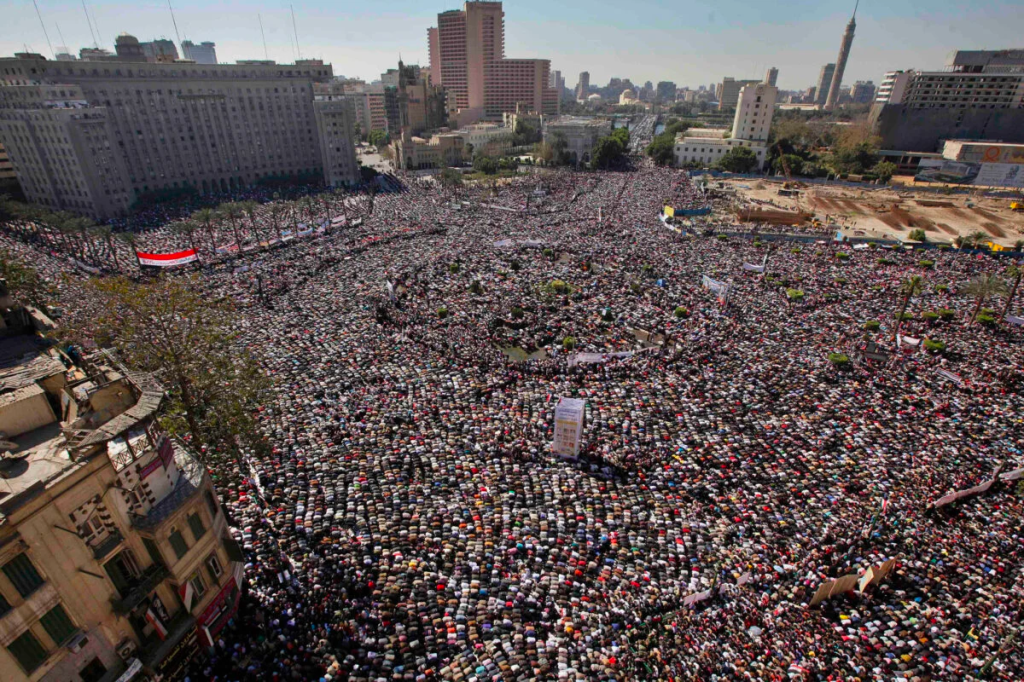
A: I believe that it is correct to say that most Arab uprisings had moved beyond grand ideologies and were mainly concerned with putting an end to despotism and religious totalitarianism, as well as achieving economic development. It should be borne in mind that Iran and Turkey were the two pioneers of modernization and democratization in the Middle East. Most Arab countries had not achieved the same level of democratic reform. Although there had been some stirrings of democratic reform in Egypt towards the end of the 19th and the beginning of the 20th centuries, nevertheless, the rise of religious totalitarianism and Arab nationalism prevented the full flowering of democratic sentiments in that country. The rest of the regional countries were even far behind Egypt.
However, with recent developments in the world and in the region, and especially the flowering of democracies in many East European states after the fall of the Soviet Union, as well as the example of the Iranian revolution, these factors have encouraged the Arab masses to rise up against the autocratic regimes and military dictatorships that ruled over them and to call for greater freedom, democracy, pluralism, and social equality.
Although, unfortunately, some of those movements in a number of Arab countries, especially in Libya, Syria and Egypt, have not achieved the desired results, nevertheless, it is inconceivable that after their awakening the people in those countries could be suppressed forever. Consequently, it is only a matter of time before they will rise up again, and will try to move in step with the rest of the world towards greater democracy and development.
Q: How much did the Iranian revolution in 1979 inspire liberation movements in the world?
A: Without a doubt, the Iranian revolution was one of the most important developments in the past century, and it can only be compared with the Russian and French revolutions in the sense of the change that it brought about. The Iranian revolution proved that if people rise up in large numbers to achieve a great goal, they can overcome the overwhelming force of the military and the paraphernalia of despotism.
What was more important about it was that it was a regional revolution and was largely home-grown. Consequently, it had a great impact on regional countries and inspired the liberation movements in the region and perhaps in the world. It can even achieve greater status and influence if it can live up to the dreams of the people who supported the revolution and realize the ideals that they held dear, namely greater democracy, freedom, independence and social justice.
Q: What was the role of Ayatollah Khomeini in the victory of the revolution?
A: One difference between the Iranian revolution and recent revolutions in various Arab countries has been that the Iranian revolution benefited from charismatic leadership that managed to unite the people around a certain cause. Most Arab revolutions have lacked a charismatic leader, and this may be one reason for their failure so far.

