

Lecture given at a Day School at Rewley House, Oxford University, 25 January 2016
The latest developments in the Arab world have unsettled many observers in the West, and many Western governments are trying to manage these events as best they can and to minimise the harm, as they see it. These days, one can often hear the term “managed democracy” used by many Western commentators.
What is most annoying to the Arab masses is to hear some Western politicians who have supported their despotic rulers for decades telling them what they should do and how they should establish “democracy and freedom” in their countries.
The current Middle East is mainly the product of two centuries of Western colonialism and the lines that were drawn in the sand by some Western leaders sitting in London, Paris or Moscow, following the collapse of the Ottoman Empire, setting the boundaries of modern Arab countries.
After the formal end of Western colonialism, Western influence in Arab countries did not end. After the end of the Second World War, more and more Arab and Middle Eastern countries achieved their independence, but the influence of Western powers over their governments continued.
During the Cold War, the West and the former Soviet Union vied with each other for influence in Arab countries, both for access to their oil and gas resources and their markets, as well as using them as geopolitical assets in their conflicts against their rivals.
The collapse of the Soviet Union in 1989 took one superpower out of the Middle East equation, but greatly strengthened the American position as the sole superpower. In the same way that the dropping of the two nuclear bombs on Hiroshima and Nagasaki was the key event at the start of the Cold War and in the battle for supremacy between the two super-powers, the US invasion of Iraq and the launching of the First Gulf War in 1991 were clear signals of the end of the Cold War.
With her direct involvement in the most strategic place in the world, despite Russian objections and Gorbachev’s attempts to find a face-saving formula for Saddam Hussein to withdraw his forces from Kuwait, something that he had agreed to do, America invaded Kuwait to evict Iraqi troops. By ignoring Russian objections, America signalled that it was now the boss and the uncontested superpower. That event marked the beginning of a unipolar world and inaugurated two decades of US supremacy.
The era of the US’s global hegemony was shattered with the terrorist attacks on New York and Washington on 9/11. Those terrible events showed that, despite her unparalleled military might, America was still vulnerable to non-state actors. That event marked a turning point in America’s relations with the world, especially with the Middle East. The invasions of Afghanistan and Iraq were aimed at creating a new Middle East more in tune with US interests. The so-called “war on terror” was supposed to eradicate terrorism, topple what US President George Bush called “rogue states,” and bring to power rulers and regimes that were in tune with the US vision of the world.
The slogans about the “Axis of Evil”, “you are either with us or with the terrorists”, or “we won’t go only after the terrorists but also after the regimes that harbour the terrorists” were all meant to convey the message that there was only one acceptable system of government in the world, and those who did not conform to it would face the might of the US military.
That policy advocated by the so-called Neoconservatives (neocons) was based on three mantras.
The first one was “preeminence”. According to this doctrine, from now on, the United States will not allow a single country or even a group of countries to get into a position where they could challenge US supremacy. This gave rise to the doctrine of “full-spectrum dominance”, “shock and awe”, and maintaining military preeminence. For the first time since the end of the Cold War, US military spending increased dramatically, NATO began to expand into former Soviet territories, and the US military presence in the Persian Gulf became absolute.
The second mantra was “preemption”. As used by the neocons in the Bush Administration, this term did not merely mean that if a danger was imminent, it was permissible for the government to preempt it. It went way beyond that concept and advocated using force to prevent or preempt any danger that might conceivably emerge at any time in the future.
Of course, the US Administration would be the sole judge of whether a country or a group of countries might pose a danger to US interests in the future. It was also quite clear that this luxury was only the prerogative of the US government, and other countries’ perception of possible danger to their national security would not count.
The third mantra was “unilateralism”. According to this doctrine, the US government was entitled to take military action and invade other countries without the need to get international approval for its action. This doctrine totally undermined the role of the United Nations, which was mandated to prevent the scourge of war. As unilateralism was against international law and the will of the international community, the Bush Administration invented the concept of “the coalition of the willing”. Therefore, as long as the US government could persuade a few other countries to go along with its illegal invasions, then it was right.
However, the setbacks in Iraq and Afghanistan have shown that even US power has its limits and that events cannot be dictated through military might alone. For many decades, US policies had hindered democracy in the Arab world and had tolerated – even supported and encouraged – authoritarian governments to remain in power for the sake of preserving political stability.
Those policies hindered democracy without bringing security to the United States or establishing stability under those authoritarian governments. It is now clear that even if such governments could remain in power for a few years or decades, thanks to Western support and a security apparatus that suppresses the people with impunity, it is only a matter of time before they come to a humiliating end, plunging their nations into chaos as well as harming Western interests.
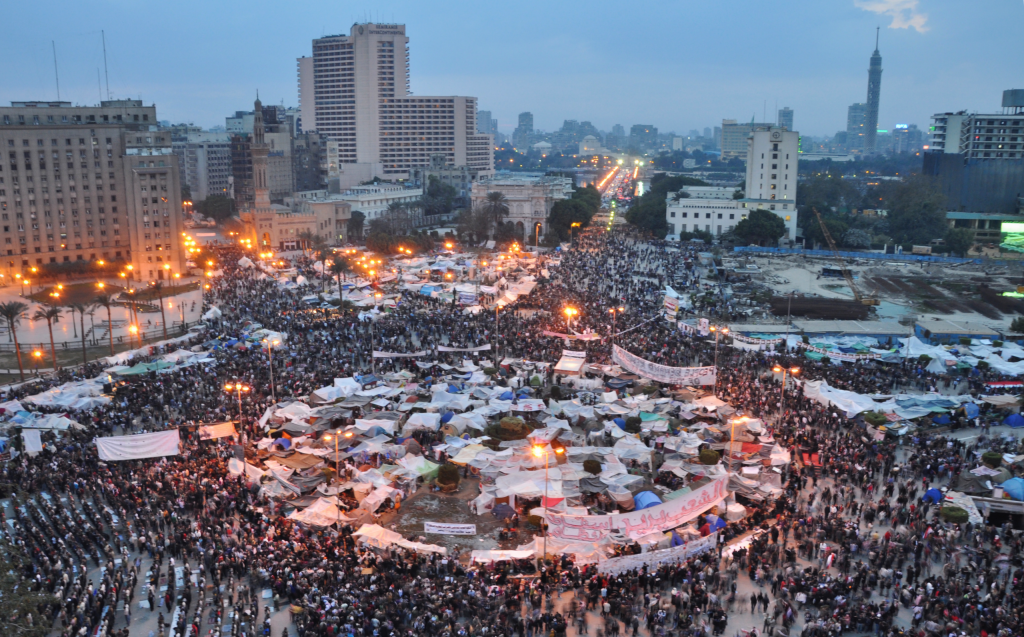
What we are witnessing in the Arab world, and in the Middle East as a whole, is the removal of the debris that has been left behind from colonialism, the era of seemingly independent but in reality subservient regimes, the legacy of the Cold War, the collapse of the Soviet Union, the end of the period of US ascendancy, the decline of US influence, and finally the uprising of the masses in the Arab world and in the Middle East as a whole to achieve freedom, independence and democracy.
If handled well, these movements could develop in a way that would serve the long-term interests of the West. However, suppose the West, and particularly the United States, decides to suppress these movements for short-term gains. In that case, it will pay a much heavier price in the future when the wave of violent revolutions can no longer be halted.
Therefore, even as a matter of self-interest, it is incumbent upon the West to change course and adopt a new set of policies towards the Middle East. It should deal with the new Middle East on equal terms, should regard the emerging governments as partners in global management rather than as satellites and should allow the people to determine their own way of life and form of government in keeping with their traditions and beliefs, rather than being carbon-copies of the West. Some of the measures that the West can take to help create a more democratic and more stable Middle East are as follows:
1- Encouraging moderate Muslims
The West should not be afraid of moderate Islam. The best way to ensure the success of militant Islam is either to impose strict secularism or to try to undermine moderate Muslim regimes. For better or worse, Islamic movements and political parties are likely to play a prominent role in a more democratic Middle East. The West must oppose terrorist organisations and Muslim radicals, but it should not equate any anti-Western movement with terrorism. Turkey is a good example.
Moderate Islamic governments would be the best bulwarks against radicalism and extremism. The change in the Islamic world towards a more moderate and pluralistic form of Islam must come from within, in the same way that the Reformation and the Age of Enlightenment emerged within Christianity and moderated the excesses of the Medieval Church. Greater dialogue in good faith with Islamic scholars and greater interaction with the Muslim masses would be as effective in creating a more moderate and outward-looking Islam as the demonisation of Islam and the use of force and violence against moderate Muslims would be a recipe for greater radicalism and militancy.
2- Spreading democracy
The West should promote genuine political, economic and social change in the Arab world. It may already be a little too late for that, as there is great suspicion of the West throughout the Middle East due to its past policies and illegal invasions, but better late than never. The lack of constitutional legitimacy of most governments and the pervading influence of the military in political matters, non-democratic governments that do not provide for any checks and balances, and weak and non-institutionalised means for succession are some of the problems from which most Arab regimes suffer. With its much longer experience of democracy and the creation of systems with checks and balances, the West can act as a good model for Arab countries without imposing a Western formula on them.
People in the Middle East would welcome such reforms if they were convinced that they were genuine and were not part of a neo-colonial design. The absurd and racist notion that democracy is good only for some people and others are destined to live under autocratic and despotic systems must be rejected.
During the heyday of the Islamic civilisation and even in the early part of the twentieth century, Muslim governments were more forward-looking and democratic than they became after the new means of coercion and the establishment of totalitarian power. The recent events in the Middle East have shown that the Arab masses are ready and eager to welcome democracy and freedom while preserving their independence and national identity.
3- Human rights
In addition to democracy, the West should emphasise some basic principles, including human rights, tolerance, the rule of law, women’s rights, and transparency of decision-making as inseparable prerequisites for the proper functioning of democracy. The people in the Middle East must learn that taking part in elections and casting ballots every few years is not in itself sufficient for the establishment of a liberal and representative government. Respect for minorities, allowing freedom of belief and expression, equality of the sexes, tolerance of differences and respect for the law are indeed more important than going through the mechanistic aspects of democracy.
4- Economic and social reforms
The West should encourage new Arab leaders to develop detailed pathways to economic and social reform that respond to the specific demands for change made by the citizens within their countries. Because of rising populations, Arab economies must grow faster than the rate of population growth to provide for the new generations and must cater for a time when they can no longer depend on plentiful oil and gas. The gap between the rich and the poor in Arab countries must be bridged to prevent mass resentment and rebellion. This requires a certain degree of European-style Welfare systems that provide a minimum of livelihood and dignity, as well as universal health and education for all, rather than unbridled free enterprise capitalism.
What the world needs to do if the new Arab regimes are not going to fall prey to Islamism, anarchy, new militarism or becoming failed states is to initiate a new “Marshall Plan”, this time supported by the entire international community and the wealth of oil-rich Arab countries, to encourage economic growth and bring those hundreds of millions of Arab and other Middle Eastern people to the level of the developed world. Not only would this be a great service to the people of the region, but also to the stability and long-term interest of the world. It would be an act of enlightened self-interest.
5- Independent media
The West should encourage independent Arab media, such as Al Jazeera, even though they may reveal some inconvenient truths about us. Overall, the development of alternative Arab media is a positive development. One of the reasons why Western intelligence organisations and politicians have failed to detect some epoch-making developments, such as the Iranian Revolution or the present revolutions sweeping through the Middle East, is that they are fooled by their own propaganda and are totally ignorant of what people in the Middle East really believe and what is happening behind the scenes. The emergence of an independent Arab media would help Western policy-makers to become more aware of the real developments in that part of the world and to prepare better for them.
The other advantage of an independent Arab media is that it acts as a safety valve, allowing the people there to express themselves and speak about their concerns and aspirations. One of the main reasons for cynicism towards the West is that many people in the Middle East believe, with good reason, that most mainstream Western media often distort the news when it applies to them and do not act with fairness and impartiality towards the countries in the region. The development of independent media will provide an outlet that the people can trust and will also show them the complexity of the issues.
Another advantage of the development of independent Arab, Iranian or Turkish media is that they also shine a light on the real developments and many shortcomings in those countries and will make politics more transparent and their rulers more accountable. Judging by the performance of more independent Arab, Iranian or Turkish media over the past few years, it is clear that many local rulers have been brought under the spotlight in a way that the Western media has never been able to accomplish, and this has forced those leaders to sit up and take notice of public reaction to their policies.
6- Fighting corruption
Corruption is a widespread curse in many Arab and Middle Eastern countries. A large part of the national wealth of those countries has been siphoned off by powerful rulers and their cronies, and this corruption from the top also sets a very bad example for ordinary people who will follow those practices to a smaller degree. Consequently, in addition to wasting a large part of national assets that should belong to all the citizens, widespread corruption also has a corrosive effect on the whole fabric of society.
Although most of this corruption is homegrown and is the responsibility of local rulers, the West often encourages it for the sake of making a quick sale or to inflate the price of the goods that it sells to those countries. In the same way that corruption, bribery and embezzlement are punished severely when committed in the West, similar practices by Western individuals or companies must also be harshly dealt with when they are committed abroad.
Yet, there are many stories of huge cases of corruption and bribery, especially associated with lucrative arms deals involving Western corporations or even governments, that are swept under the carpet and go unpunished. The West must adopt a consistent policy regarding corruption at home and abroad and root it out by not bribing various foreign leaders to make a quick buck.
7- Reforming the educational systems
Arab educational systems have generally lagged behind the rest of the world. Not a single university in the Arab world can compete with the best universities in developed countries. The best way to develop Arab societies and encourage a questioning and inquisitive attitude among Arabs is to help set up educational institutions with high standards. In addition to helping develop universities of international quality in the Arab world, the West should also open the doors of its universities to students from the Middle East.
Greater academic and scientific contacts between the West and the Middle East can give rise to greater mutual understanding and respect. After all, sciences, arts and learning are the most glorious heritage of humanity as a whole and the most effective means for removing the barriers of ignorance and mistrust. One should not allow these universal values to be subjected to political considerations. Scientists, doctors, artists, writers and musicians throughout the world belong to a fraternity that is above any political affiliation. Let us celebrate humanity’s most glorious heritage without the considerations of race, religion, nationality or political orientation.
8- Banning military aid
The West should provide its financial aid to Arab countries not in the form of military aid, as is often the case, but as true development aid. The greater part of the so-called aid that is provided to Middle Eastern countries consists of either military equipment for crowd control and for use in situations of torture against the citizens, or in the form of military weapons that will encourage more conflict and militarisation.
The problem with such aid is that it strengthens the tyrants and oppresses the citizens. The result is that most people in the Middle East see their military forces almost as a fifth column in the service of foreign powers, either to keep them in their place or to engage them in futile and barbaric wars with their neighbours, often for the sake of serving Western interests. The legacy of massive sales of arms to various dictators and military governments in the Middle East and elsewhere is an eloquent testimony to this vile practice. The most lucrative deals between Western governments and oil-rich Middle Eastern tyrants have been for the sale of sophisticated military equipment at inflated prices.
9- Independent judiciary
Another major shortcoming in the Middle East, which also allows the unchecked power of the rulers, is the lack of an independent judiciary. In most Arab countries, the ministries of justice are arms of the government establishment, and consequently, courts and judges are beholden to their political masters and lack independence. One of the most important safeguards for the rights of the citizens and the accountability of the rulers is the separation of powers. An independent judiciary is the main pillar of civil society and is the major guarantor of the rights of citizens.
Another contributing factor to the miscarriages of justice in most Islamic countries is the varied and subjective interpretations of the Shari’a by the courts. While many Islamic teachings might have been progressive in seventh-century Arabia, they are certainly at variance with the Human Rights Charter, which is formally accepted by nearly all countries in the Middle East. Many reformist Muslim jurists have made a distinction between the spiritual and devotional teachings of Islam, which provide a benchmark for the believers at all times, and specific laws and injunctions, including the Hudud (corporal punishments), that were time-bound and applied to particular societies in the past. They argue that in the same way that many Koranic verses about slavery are no longer valid and applicable, many harsh punishments, such as flogging, cutting off of limbs or executions, or some social teachings, such as those dealing with women’s rights or non-believers or apostasy, should also be set aside as their time is past.
Although many reformists and more educated Muslim jurists believe that a distinction should be made between the spiritual and social laws of Islam, many Muslim fundamentalists not only insist on carrying them out, but they also interpret them in the narrowest and most restricted form. The West should encourage a dialogue between the more traditional and the more reformist Muslim jurists and theologians to allow Muslims to reach a more rational agreement about those laws. In any case, the West should insist that, as far as public practices and laws are concerned, Muslim countries must abide by the provisions of the Human Rights Charter or be sanctioned by the international community and be accountable to the International Criminal Court.
10- Resolve the Arab-Israeli conflict
Above all, the West must try to resolve the Arab-Israeli conflict. This is not a conflict merely over a piece of real estate, but has many political and religious implications and is at the root of many other conflicts in the Middle East and beyond. In the past, some extreme Palestinians demanded that the entire Palestine must be liberated and the state of Israel must be dismantled. Fortunately, nearly all regional countries have now come to terms with the existence of the state of Israel as a state established by law in the Middle East. According to the Arab Peace Initiative, presented by Saudi Arabia in he Arab League summit in Beirut in 2002, the entire Arab world unanimously approved the normalisation of relations by the Arab world with Israel, in return for a full withdrawal by Israel from the occupied territories (including the West Bank, Gaza, the Golan Heights and Lebanon), a “just settlement” of the Palestinian refugee problem based on UN Resolution 194, and the establishment of a Palestinian state with Easgt Jerusalem as its capital. That initiative was later discussed at an Islamic Conference Organisation in Saudi Arabia, all Islamic countries, including Iran, which was represented by President Mahmud Ahmadinejad, unanimously approved it too.
The Palestinian Authority, led by Yasser Arafat, immediately embraced the initiative. His successor, Mahmoud Abbas, also supported the plan and officially asked U.S. President Barack Obama to adopt it as part of his Middle East policy. Contrary to Israeli propaganda, even HAMAS leaders who were initially deeply divided accepted the peace initiative and are no longer calling for the destruction of Israel. They have publicly stated that they would accept the outcome of a Palestinian referendum about the future form of their state. These ideas, based on many UN resolutions, formed the basis of the Oslo Accords, which recognised the establishment of a Palestinian state next to Israel, with equal rights for both.
However, the Israeli government under Ariel Sharon rejected the initiative as a “non-starter” because it required Israel to withdraw to pre-June 1967 borders. The rejection of the initiative by the Israelis has continued ever since. Extreme Zionists claim that God promised Palestine in its entirety to the Jews, and they have dreamed of establishing a Jewish state from the Nile to the Euphrates. Fortunately, many Israeli leaders and most Israeli citizens have rejected such claims and have spoken in favour of the establishment of an independent Palestinian state in a part of Palestine. The main issue is to decide the boundaries of such a state and its relationship with Israel. Both sides should realise that their extreme demands cannot be met, and decades of conflict have not made the situation any better for either of them.
After the loss of Turkey as a strong ally after the rise of Islamic parties in Turkey, many Israelis are now worried that the possible collapse of friendly regimes in Egypt and Jordan will make them more isolated and will make their future more uncertain. This is one of the reasons why the resolution to the conflict is more urgent now than ever before. The minutes of meetings recently leaked by Al-Jazeera show that the Palestinian Authority had made many generous offers in their negotiations with the Israelis, only to be rebuffed by the Israeli side. The time for serious negotiation is now, as any delay is not in either side’s interest.
The Arab League proposal for the recognition of Israel by all Arab states provided that it relinquish most of the territory that it had conquered during the 1967 War is the best offer on the table. The Israelis and their Western backers must seize the opportunity and accept the broad outlines of that proposal before it is withdrawn. The dream of holding on to all the conquered territories and continuing to build more illegal settlements on Palestinian land is unrealistic and unjust, and will only make the situation worse by encouraging greater radicalism in the Arab world. The international community will not accept the dislocation and removal of the remaining five or six million Palestinians in Gaza, Jerusalem and the West Bank. The sooner the Israeli officials come to terms with this, the better.
The United Nations and the European powers must take the initiative in pushing for a settlement because further conflicts in the Middle East would affect Europe more than the United States. It should be admitted that due to the inordinate power and influence of the Jewish Lobby in the United States, it is not realistic to expect any US Administration to act as an honest broker in the conflict, as has been proved time and time again, and as the failure of the Obama Administration, despite its early promise to force Israeli leaders to stop further encroachment into Palestinian, clearly demonstrates. At the same time, this conflict cannot be allowed to continue and be intensified.
This is why the European Union, with the help of some emerging powers, acting under the auspices of the United Nations, must take the initiative and try to reach an outcome that would guarantee Israeli security within its pre-1967 borders and would establish a viable Palestinian state living in peace with its Israeli neighbour. The initiative of some Latin American countries to recognise a Palestinian state within those parameters is a positive development that must be supported by others, and the United States must be persuaded not to use its veto when the issue comes to a vote at the Security Council. After all, Israel owes its existence to a United Nations resolution, and the same United Nations must be used to delineate the new boundaries of the two states.
Conclusion
The uprisings in several Arab countries have not yet reached their conclusion, and their ultimate outcome is unknown, but one thing is clear: the Middle Eastern kaleidoscope has been thoroughly shaken, and the Arab world is not going to be the same again. The West could help ensure that the way things finally settle in the Middle East benefits the region and the world in the long term.
It can either try to shape the new Middle East in such a way that it serves its short-term interests by repeating what it has done so many times in the past and trying to dominate the region, or it can take a long-term view and remain true to its confessed aspirations of wishing to spread freedom and democracy throughout the world. The latter option requires leaders with vision, both in the Arab world and in the West. Let us hope that both local and Western leaders will rise to the challenge and open a new chapter in that crucial and strategic part of the world. The outcome of these revolutions will decide whether the future is one of greater hostility, terrorism and conflict or one of cooperation, co-existence and peace.

