

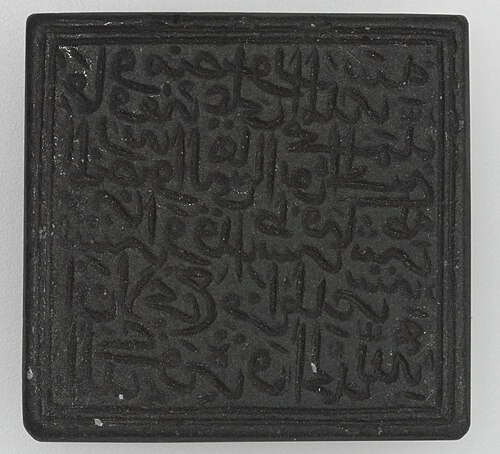
This is the translation of a short epistle called Akhlaq-i Mansuri, (Mansurian Ethics),” by Ghiyath al-Din Mansur Dashtaki (1461–1542), on Islamic philosophy and mysticism, published in a series of books, called Anthology of Philosophy in Persia, eds. Seyyed Hossein Nasr and M. Aminrazavi, vol. 4. London: Institute of Isma‘ili Studies, forthcoming.
Introduction and Explanation
This book contains the exposition of views and the use of language in order to explain the principles of the science of ethics.
The darkness of attachment to material and physical phenomena will prevent the eye of the heart from observing the beauty of rational secrets and witnessing scientific and practical truths and subtleties, which guarantee eternal happiness and felicity, and will preoccupy one with disjointed preoccupations and affairs of the present life. Without doubt, preoccupation with these concerns and the expenditure of one’s strengths on such issues will result in the denial of the soul that has emanated from sublime worlds and has descended into the lower realms. The attachment to animal pleasures and material life will result in one’s soul being attracted towards the body.
The more one is attached to something and in love with it, the more will be one’s sorrow and pain when one is forced to cut oneself away from what he is tied to. Whatever one pins one’s desire upon, it is most likely that he would achieve it in the best possible way and in the most perfect form, even if others would blame him for pursuing what seems to them to be ugliness and meanness. Whatever one gains, which is contrary to what one has desired, even though it may be full of beauty and value, nevertheless, in his eyes it will not look pleasing and in his mind it would appear repugnant.
The tall cypress is beautiful in its stature
Yet the nightingale only desires the beauty of the rose
What can I do if no other face pleases me?
As these shameless eyes are only fixed on your beauty
Note
Avoiding lasting torment and gaining moderate pleasures is not achievable without bodily equilibrium, which requires easy companionship and partnership. Therefore, in view of these two preliminary statements, great prophets and philosophers who possess insight and knowledge have wisely and correctly set out the rules of ethics. They have discouraged every trait that might result in drawing the soul towards the body or that distracts one from companionship [with God], and they have praised the traits that would produce the opposite results.
The rays of the subtleties and secrets that are manifest in the pearls of words and letters of this statement and in the lofty truths and precious lessons that are inherent in the laws of the Shari’a are not hidden from the eyes of wise and insightful people. They can deduct from the miraculous and novel order of the laws of God the principles of all morality in the most complete and most wonderful manner. God says: “Surely God bids you to justice and good-doing and giving to kinsmen; and He forbids indecency, dishonour, and insolence, admonishing you, so that haply you will remember.” (The Bee, 90)
Reminder
Let it not remain hidden that some of the scholars have quoted the words of the philosophers and have put forward weak objections and have made irrelevant protests regarding their work. However, after quoting their words and making references to them, in order to dispel the doubts and to remove the obscure points we will provide correct answers to false assumptions and imaginings.
The first objection that is made and written about is that “the benefits of such arguments will be realised only if moral principles can be subject to change and transformation.” This assumption is not correct. On the contrary, the opposite will come to mind and to imagination. From the text of the blessed truth “and he [the Prophet] will not talk on the basis of fantasy” we move forward to the words of the Prophet, peace and blessings be upon him, when he said: “If you hear that a mountain has moved from its place, accept it; but if you hear that a man has changed his nature do not believe it, because he will ultimately return to that which forms a part of his traits.”[1] From the above statement, it is abundantly clear that the elimination of the original traits is not possible. According to the rules of philosophy, traits are dependent upon character, and character cannot be changed.
If someone denies the impossibility of the change of character, in view of the differences in the character of an individual at different ages and in different circumstances, we will say: Every individual has a moderate range of characteristics between a certain level and its extremes. Under all circumstances, the character would of necessity be confined within those ranges, and any change in those ranges would require the change of the character, and the continued existence of character would be impossible without those traits. Therefore, any attempt to eliminate one’s character would be futile.
Poem: “A black man will not turn white by washing.”
Therefore, in a Tradition handed down from the Prophet, upon whom be the best of greetings and salutations, it is stated: “People are mines, such as mines of gold and silver; some live in the state of Ignorance, while others in Islam, if they only knew it.”[2]
Therefore, it becomes clear that the principle resides in the purity of character and the clarity of the essence of nature. If one wishes to perfect that which suffers from inherent filth and basic meanness, it is like someone who wishes to polish a glass to turn it into diamond or ruby, or to polish iron and turn it into gold or silver, and that is a futile effort.
Poem:
The cup of Jamshid is made of a different substance,
You vainly seek it from the potters’ clay.
And here is the elucidation of that objection in more detail, and in order to counter that objection we need to have a short introduction. Character is a trait of the soul that facilitates the commissioning of an action without the need of thinking and endeavour; and trait is a quality that is fixed in the soul. In theoretical philosophy it has been established that if the human characteristic is short-lived it will be called state, and if it is long lasting it will be called trait. The reasons for the existence of the traits in the soul are two:
The first reason is nature, in the sense that a person’s character is fixed in a certain way, as the result of which it is more capable of a certain trait and can achieve that trait with little effort. In the same way, a hot and dry nature results in anger, a hot and humid nature results in passion, a cold and humid nature results in forgetfulness, and cold and dry nature results in dullness, as they have been set out in detail in books on philosophy and medicine.
The second reason is habit, in the sense that at the beginning the soul turns to a form of action by choice, which becomes habitual as the result of practice and repetition, to such an extent that without effort he would engage in that form of action, and it becomes almost a part of one’s trait.
Some people believe that all morals are natural and cannot be removed. In other words, they are part of one’s nature and cannot be eliminated, as has been set out in the explanation of different forms.
Others believe that morals are acquired and can be eliminated; while still others believe that they are neither natural, nor opposed to nature. In itself, the soul is capable of contradictory traits, either easily when they are in keeping with one’s nature, or with difficulty when they are contrary to it.
Others believe that in their original creation all people are attracted towards good, but they acquire negative traits and become evil as the result of giving free rein to passions and habitually engaging in mean acts and ignoring higher traits.
Some earlier philosophers have taken the opposite view and have said: By original creation, man is a creature emerging out of nature, and soul in its essence is a light mixed with darkness. Therefore, evil is a part of one’s nature, and the acquisition of virtue is achieved through instruction and training, provided that evil is not in excess in one’s soul and provided that darkness does not predominate over light.
Galen believes: “Some people by nature are inclined towards good, and some are inclined towards evil, and some are capable of both.” In order to prove his point, he has said that in creation all human beings are inclined towards good, and evil is secondary. Consequently, people will acquire evil either by themselves or from others. In the first case, there is a capacity in them that is inclined towards evil, while by nature they are good. However, if they possess the power of both good and evil, when the power of evil is dominant they will turn towards evil. In the second case, when they acquire evil from others, again the same logic applies; because the other person has also been inclined towards evil. Therefore, he has not been good. Some people use the same argument to reject the idea that some people are evil by nature.
After rejecting those two notions, they say: “We clearly see that in some people their nature is inclined towards good and in no way do they turn away from it; and these people are in a minority. In other people, their nature is inclined towards evil and will not accept good under any circumstances; and there are many such people. The rest of the people will choose good as the result of association with good people, or will choose evil as the result of association with evil people.”[3]
This is Galen’s argument as quoted in Akhlaq-e Nasiri, but its weakness is not hidden from intelligent observers, because according to philosophical principles human beings do not have a beginning in time, and only on that assumption can one argue that each person can acquire evil from others. Consequently, this will not result in believing that a person has been evil by nature. Engaging in a circular argument in such cases is not the same as a circular argument in the case of contingent beings [mu’iddat], and it is not rejected by them, but is regarded as the truth. Also the same applies to the second option, that the acquisition of good can be from others in the same way as mentioned above.
However, Abu Ali Sina writes in Shifa: “The most likely reason is that it happens due to storms in major conjunctions [Qiranat Uzma], or due to the conjunction of the two poles or the closeness of the two poles, if it happens, or the movement of the highest and the lowest points or other parts of the earth that are capable of construction and can provide a shelter for animals that breathe. Those places are close to the equator up to the part of the land that is submerged in water. Therefore, the land is divided between the uninhabited part in the sea and the exposed part of the earth that is not capable of construction due to the excess of change. As a result, animals and plants could become extinct, and consequently they have to re-emerge rather than come into being through reproduction. There is no proof that they cannot come into being without reproduction, because in many cases it can be seen that they come into being both as the result of reproduction as well as recreation, such as lice that emerge out of man’s hair, or scorpions that emerge out of figs and cucumbers, or mice that emerge from rubbish or frogs from rain. Just because something has not come into being through regeneration for a long time it does not follow that it cannot happen at all, because it might be dependent on certain circumstances that occur only after a very long time. The most likely case is that such major events have been often repeated in the world over a long period of time, and of course there is the universal resurrection. However, as reproduction and regeneration are due to acts of volition such as copulation, they are not things that happen of necessity by themselves. Therefore, one must believe in the birth of man, so that there is no break in the survival of the species, but it is not necessary for every person or for us as a whole to reproduce.”
He continues: “If anyone pays attention to skills and industries, he would see that all of them are contingent and have come into being as the result of the activities of a particular person. The best sign of their contingent nature is that day by day they increase and move forward. Their existence proves that, apart from man’s involvement, there is an ultimate source, because many of those crafts are such that they are due to a heavenly quality or divine inspiration, sources which are out of the ordinary. They could not come into being without such external factors. Therefore, anyone who has invented them is not needful of it for his own existence, but has invented and created them for the sake of humankind.”[4] Thus far were the words of the master [Abu Ali Sina]
The words of Galen on the issue are also very beautiful, yet even his words are not completely satisfactory and there is much room for debate.
Later philosophers have pointed out that no trait is so by nature, and yet it is not contrary to nature either. However, first of all, as every created being is open to change and whatever is changeable is not natural, therefore, no trait is natural. In brief, we can clearly see that as the result of companionship with good or bad individuals, people can acquire their good or bad traits. In the same way, we see that children, especially those who have been taken into slavery and moved from one place to another, are very susceptible to training; and, in keeping with their capabilities, they can learn morals easily or with some difficulty. If morals were not susceptible to change, the ability to distinguish and observe would have been absent and training and teaching would have been useless. In that case, it would be necessary to reject religions and spiritual teachings. Aristotle has said: “A wicked person can be made virtuous as the result of teaching and training.”
It is clear that anything that is susceptible to change is not natural. It is also clear that one cannot change the nature of water in such a way that if the obstacles on its path are removed it would not flow downwards, and similarly one cannot reverse the nature of fire. As this is obvious, we only mention a few examples for further clarification. In Akhlaq-e Naseri there are a number of proofs in support of this argument, as follows:
“Experts in this field know that this is also a matter of persuasion, because some might say that although one can see that some moral traits might change, nevertheless, the character of some people will never change; especially abstract capabilities and traits, such as imagination, memory, power of understanding and such like. We see that no matter how hard some people try to acquire those qualities they will never succeed. This can be seen in the case of most of the students in our time. Therefore, how on the basis of this proof can one argue that no trait is natural and that all traits are subject to change?
In brief, it is impossible to provide absolute proof, and partial proof will not result in conviction and will not lead to an obvious conclusion. These examples are only some reminders and are open to debate. Stopping the power of reasoning, rejection of instruction and training, and disproving religions would only become necessary if no created thing were ever susceptible to extinction. It is like saying that just because not all diseases are curable, this would prove the rejection of the science of medicine. It is clear that such an argument would be false.
The conclusion is that wicked individuals would be turned virtuous as the result of punishment and training, as Aristotle has said. Although this ruling cannot be applicable to everyone, nevertheless, the repetition of training and punishment would bring about some change in one’s behaviour. Even if evil cannot be totally eradicated in them, its severity can certainly be reduced.
Therefore, it is made clear that in order to prove the benefit of this science there is no need to claim that all traits are susceptible to extinction, but accepting that people have such traits is sufficient in itself. In the same way, if some people reject the science of medicine as a whole, even they would accept the benefit of that science in removing evil [illness]. Therefore, under no circumstances, would it be necessary to reject religious injunctions and prohibitions, because if the medicine does not become effective in the case of some individuals or some diseases, this would not mean the rejection of medicine as a whole.
If they say that on this basis a person’s duty would not be completed by trying to change a negative trait, because it is possible that one cannot change some people’s traits altogether, we shall reply that as the non-acceptance of the elimination [of negative traits] is not certain, therefore, on the basis of both reason and religion, it is necessary to do one’s best to try to remove a negative trait. Also in the veritable words of the Lord of the people [Prophet Muhammad], peace and salutations be upon him and his progeny, there is a reference to this point, when he said: ‘Strive, for everyone is capable of carrying out what he has been created for.”[5]
From these arguments it can be made clear that the author’s words on this issue are based on shortcomings. Later on, we will deal with this issue in more detail, with apologies for having been guilty for these shortcomings.[6] [42] Here comes to an end the words of the learned author.
Removing the doubts and expelling the darkness
The source of the doubt that was referred to above lies in the lack of distinction between what is possible and what is an inherent necessity. It also is due to the lack of awareness regarding the quality and the nature of the soul and what is common among individuals in the essence and reality of the soul as an instinctive source in all the traits and conditions, whether whole or in part. It is also due to the lack of understanding that the secondary aspects of character are possible factors, not inherent necessities. All these introductions have been set out in the principles of philosophy. However, those who raise such doubts have not been fully aware and informed of them, because when one properly understands these introductions there will be no room for those doubts and suspicions.
The explanation of this point is that all human beings share a common identity and the same source of instinctive qualities, which are the basis of human intelligence. Everybody is empty of traits and qualities, and no one is in possession of such [inherent] qualities, as has been pointed out in the principles of philosophy on the basis of proofs. If a trait or quality comes into being, it is due to the requirements and the capabilities of different individuals and characters, and it is not part of inherent necessities. It is like the nature of water, which is liquid if there is no obstacle to it, and when the obstacle is removed it shall return to that state again. It is not like the fact that the figure four is even, a factor that cannot be removed under any circumstances. Those who have entertained a doubt on this issue, their doubt has been due to their ignorance of this fact, or they have exaggerated the extent of their doubt in their writings and expositions.
It is clear that as the result of a deeper investigation and paying attention to the factors that remove the doubts, the falsity of those suspicions becomes clear and manifest. The examples and arguments that they have put forward have been based on exaggerations and extreme statements. The meaning of the text of the tradition is contrary to its apparent meaning. From the phrase “it will return to what has been created as a part of its nature”, one understands that it is not an inherent necessity, but that it can be removed. However, it can be regained after the obstacle has been removed, such as the coldness of water that can be removed by certain means. After those obstacles have been removed it will return to its own natural state. Therefore, if one continues to guard against the obstacles, they will be removed and the desired end will be achieved.
Another mistake that the learned scholar has made regarding the remarks of Galen has been due to an imaginary doubt, while there is no weakness and no doubt in Galen’s words. This has been due to the lack of proper understanding of his point, because he has not argued in favour of a vicious circle and has not made that argument in connection with contingent beings [Mu’iddat].
All ancient and recent philosophers and scholars have stressed the rejection of the circular argument, and what has been understood from the remarks of a few philosophers has been contrary to the truth. Therefore, the master of philosophers[7] in his epistle on proofs has pointed out: “Quoting the acceptance of such circular arguments in the writings of the philosophers is false. They have never supported such arguments, and those who have attributed such remarks to them have not understood their words properly.”
Also, all other objections that this learned scholar has made regarding the words of the master of the philosophers [Ibn Sina] in Shifa are all groundless. Both the philosophers who believe that the world is ancient, and the theologians and followers of religions who believe that the world has been created believe that creation has a definite starting point in time.
All the objections that he has raised regarding the words of the later philosophers are also invalid and have to be rejected. From what has been written and elucidated, the falsity and rejection of all those arguments become clear. The first objection concerns the lack of distinction and differentiation, because the claim in brief is that all moral traits are subject to change, not that all people are liable to change in their moral traits. In any case, after elucidating the possibility of the change of moral traits it will be easy to clarify this position, provided that one does not interpret change as absolute extinction.
This would provide another clear case for rejecting that objection. The rejection of the mistakes that he has made and doubts that he has raised is clear to all enlightened people. It is clear that those objections are based on the rejection of all the clear experimental realities, and none of them is correct and worthy of a response. It is strange that despite his exaggerated claims and haughty views he has not distinguished between experience and deduction, and has rejected experimental realities by rejecting absolute deduction. It is clear that it is possible to doubt and suspect all the details without rejecting the entirety of the argument, because no one has experienced the heat of all fires [combined].
Reminder and Clarification
In the principles of philosophy, it has been made clear and explicit that man’s spiritual powers are limited to rational, emotional and carnal faculties. The perfection of either of those faculties resides in moderation and balance. The perfection of the rational faculty would be philosophy and wisdom. Moderation in emotional faculty would result in chastity, and moderation in carnal desires would be courage. The common perfection of all these traits is moderation. Each of these four traits requires and includes various principles and subsidiaries, and in parallel with each virtue there will be three types of vices, namely going to excess in one direction or in the opposition direction, or total rejection of that principle. Briefly, the main function of morals is to safeguard the virtues and to remove the vices.
It is clear that as the result of perseverance and practice each trait will be made firm and constant, and its opposite will be weakened and will eventually disappear. In all cases, being aware of the benefits and harms of each action and behaviour would assist in the achievement of the virtue and the rejection of the vice.
Note and Reminder
In the eyes of an ignorant and defective person, vices would be confused with virtues. For instance, he would confuse sophistry with philosophy and impetuosity with bravery and torpor with chastity. The source of mistake and confusion rests in the fact that there are certain common traits among evil people and virtuous people. For instance, those engaged in sophistry and fallacy engage in the language of argumentation and disputation, the same as the philosophers do, and deceitful and false people would repeat the words and actions [of philosophers] like monkeys and parrots. Ignorant and simple people who are incapable of understanding subtle truths and meanings fail to appreciate an action that would lead to perfection, and a knowledge that results in moral development. The height of their achievement and the apex of their glory is to put forward certain fake ideas that they have borrowed from others, and distort the truths that have come down to them from those before them. In this way, they try to mislead some blind and ignorant people.
(Poem):
A vile man may steal the words of the mystics
To mislead some simple people through deceit
While boasting of perfection and glory, and suffering from excessive arrogance, and going to excess in claims of wisdom and mysticism, they regard their satanic fancy as the ultimate perfection and the supreme form of discourse. They would portray the poison of doubt and suspicion as the sweet honey of research. The source of such conduct rests in the fact that their preoccupation with meanness and failure has prevented them from acquiring knowledge, and they have confused their ignorance with knowledge and have mixed truth with falsehood.
Note
Some learned scholars of the age have put forward a summary of what has been written in Akhlaq-e Nasiri. They have said: “There are a number of learned people who have safeguarded the principles of sciences and have written down the arguments and proofs that they have borrowed from others. However, some people who lack true intelligence and are deprived of the light of scholarship are amazed at the beauty of their arguments and the extent of their knowledge, while those people are not certain and confident about any issue. Their attempt to pass themselves on as scholars and savants is like the efforts of some animals that imitate the words and deeds of human beings, such as monkeys or parrots, or like children who imitate the deeds of their elders.
There are some who do not clearly confirm any idea, and in debate and discussion they try to lay claim to a knowledge and greatness that they lack, and with false learning they confuse those who are novices in learning. At the same time, they will not be able to get involved in sciences whose truths are certain and in which fantasy has no place. However, they make lofty claims regarding sublime issues, and they dress falsehood in the garb of truth, and portray supposition and fantasy as knowledge and certitude, and they call all that research. As philosophy is the highest form of learning, and as only philosophers are capable of mastering the subtleties of philosophy, most people are incapable of distinguishing between this group of people and the philosophers.”[8]
This is the full text of the remarks of that learned man. Eminent scholars know that at the present time anyone who manifests those states that the author has referred to above would be regarded as the rare scholar and eminent philosopher of the age, and would distinguish himself as a man of high position and lofty status. Some of those who pretend to be learned are even lower than the above-mentioned individuals, and they are not even capable of memorising facts or learning the arguments through imitation. On the contrary, they only utter words that they have not learned through effort or study. Such conditions are limited to some of the [so-called] erudite scholars.
(Hemstitch)
A polytheist imagines that everyone shares his views
Such scholars believe that it is wrong to benefit others with their learning. The extent of the author’s learning is not surprising. What is surprising is what he has described as a shortcoming here and has rejected it in the preface to the Commentary on Hayakil and other books that he has written. He has made claims about his mastery of extensive sciences, without having spent time on them, and has made strange claims about some sublime sciences. In truth, he seems to exemplify the following poem:
They have kept me like a parrot in front of a mirror
I only repeat what the master teaches me.
What he has said here is a repetition of the words of the philosophers that have been recorded in Akhlaq Nasiri and elsewhere.
Warning
In the same way that in abstract sciences sophistry could be confused for philosophy, in practical traits and in the path of self-purification the masters of deceit and hypocrisy could be confused with sincere and pious individuals. In these days, sometimes the masters of deceit and hypocrisy could be regarded higher than the Sufis
(Poem)
O alas at the foolishness of these donkeys without tails and ears
Who have all appeared as masters and the lords of masters.
For a few days they follow an ignorant person
Who is void of religion, intellect, insight and intelligence.
They exhibit no light of guidance outwardly
Nor is there a flame of love inside them.
When they start to talk, the listeners wish
that they would stop all that hallucination.
At the moment, there are no true Sufis to be seen. A group of people who pretend to be Sufis and who make others believe that they are Sufis lack any signs of purity and enlightenment, and their behaviour is dominated by the signs of passions. They turn towards carnal desires and pleasures, while a just person would not engage in tyranny.
A pious man would not turn to the satisfaction of carnal desires, in the same way that a just person would not turn to tyranny.
A discourse on the nature of the descent of the soul and its attachment to the body
Shaykh al-Ra’is [Abu Ali Sina] in the book that we have referred to at the beginning of this epistle [Shifa] says:
God has sent the soul with wisdom,
Hidden even from the understanding of the wise.
Its descent was necessary to inform
those who do not hear, to see it and hear it.
The soul becomes aware of all the truth
in all the world, and its tear cannot be repaired
If it does not strive to improve itself after its fall, then the soul would dwell in the realm of arrogance and would block its own path from achieving its desire:
Time has blocked its path
Until it has disappeared with no hope of return
In other words, time has blocked the path of the soul until it has set without any hope of another rising.
It is like a lightning that has lit up the skies,
Then it disappears as though it has never been.
Rejoice with the answer that I have discovered
The light of knowledge keeps shining.
In his explanation of the secrets of that verse the Sheykh has said that there is nothing in the world but that its reality is greater than what appears in it. The reason why people are separated from their perfect states and their attachment to their bodies is that they would achieve perfection, and I have elaborated on this point is some of my other writings.
Note
As can be understood from the teachings of the greatest scholars, especially the ancient philosophers such as Plato or Aristotle in his Ethics, the reason for the attachment of the soul to the body is to achieve perfection. What the present unworthy writer understands is that each soul has the potential for a certain degree of perfection, and cannot go beyond that limit. It achieves whatever perfection it is capable of as the result of its attachment to the body. This does not mean that everyone would achieve the highest degree of perfection that is possible for man. However, by making use of certain means the soul achieves the highest degree of perfection that it is capable of achieving. Learned and intelligent people realise that achieving that level of perfection is not contrary to possessing a certain degree of vices either. This is part of what can be understood from their answers.
A warning
The majority of infidels and ignorant people, who outwardly deny the existence of the Ultimate Source, inwardly admit and testify to searching for the Truth and trying to prove His existence. Consequently, no rational person can deny the existence of an Ultimate Source. The explanation of this assertion is that both on the basis of faith and reason, and sustained by both proof and tradition, the exalted and sanctified Lord is higher and greater than anyone’s ability to fully understand the essence of His being. However, as the result of certain links that exist between the Master and the slave, and due to His unbounded mercy and grace that constantly flow through the channels of knowledge and wisdom, the inner reality of all created things testifies to and accepts the existence of the Creator.
This is why when unpleasant events take place and worry and anxiety envelop the soul, it automatically turns to the Creator for help and succour. This is a natural occurrence that takes place without any compulsion or hesitation. This is why that state by itself is conducive to one’s prayers being answered, and the holy text testifies: “Who is He who comes to the rescue of the needy when he calls unto Him?” (Namal, 62). The natural reaction among the animals when they face a threat and fleeing from danger and when overcome by fear and trepidation is also another indication of the same truth.
Therefore, different groups and conflicting nations in all ages, regardless of whatever religion they follow, have never condoned the denial of the Ultimate Source by any rational being. On the contrary, they have described the denial of the Ultimate Source contrary to sanity and rationality. This is why the first injunction by the prophets and God’s messengers, God’s peace and blessings be upon all of them, and the first prerequisite of their mission has been the belief in an Ultimate Source. This is also the correct interpretation of the following tradition: “I was a hidden treasure. I desired to be known. Therefore, I created human beings to know me.”[9] That tradition provides another interpretation for that question, because the very basis of creation is awareness of and attraction towards the Beloved, and the strong desire for the love of God is the best proof of this argument.
(quatrain)
The lamentation of the mystic is due to the pain of your separation
The shouting of the wine seller is also the sign of the same sorrow
The roaring of the drunkard is due to separation from you
The bleeding hearts of the lovers testify to their longings for you
Love permeates everything and rules over everything. He is the beginning and He is the end. Thus comes to the end the first book. God knows what is the best and to Him everyone returns.
Book Two on Ethics
and it is in three chapters
Chapter One: The principles of ethics
Men of learning are aware that scholars have studied and defined the principles of ethics, and have distinguished between virtues and vices, and have elucidated the boundaries between them.
Some contemporary scholars have quoted those views and have made unwarranted criticisms and weak objections to them, although people of learning and insight reject those criticisms. Nevertheless, they might become the source of imitation by some who do not have deep roots in knowledge. Therefore, after quoting their main arguments and repeating their objections, we will refute them so that their falsity may become clear and manifest.
The work of the leading figures in natural philosophy has shown that man’s rational faculty has two powers: One is the power of understanding and the other is the practical power; and each of these powers has two subdivisions. As for the power of understanding, one of its aspects is abstract reason, which is affected by sublime principles and capable of achieving scientific knowledge. The second power is that of practical reason, which is the source of physical activities and deals with minor issues, such as thinking and seeing. Due to its attachment to the power of anger and passion, the second power will give rise to a few traits that could produce positive or negative results, such as bashfulness, laughter or weeping. By making use of imagination and fancy, this power can result in the understanding of minor concepts or minor scientific knowledge. At the same time, due to its affinity with abstract rationality and marrying the two together, it can deduct comprehensive views, which would result in more exalted action, such as comprehending the virtue of truthfulness and the vice of lying, and such like.
Practical reason also has two branches: One is the positive and repulsive power, which rejects unfavourable things from a dominant point of view. The other is the power of passion and attraction, which results in attracting favourable emotions. The first power demands dominance over all the activities of the body, so that it does not withdraw from those activities, but brings all other activities under its control and domination. All parts of the body act on the basis of what that dominant power defines. As the result of their submission to this power and subordination to this champion the affairs of the realm of human body get organised. It is not appropriate for any physical power to act without the orders of this dominant power, because otherwise it would result in disruption in one’s condition.
If each of the powers perform its special task, which has been dictated by reason, as the result of the practice of abstract reason, which is the first branch of the power of understanding, philosophy will come into being. As the result of the proper performance of practical reason, which is the second branch of the power of understanding, justice will emerge. As the result of the proper performance of the power of dominance, courage will emerge; and as the result of the proper performance of the power of passion chastity will emerge. If all this takes place as it has been explained it would result in balance and justice in the practical power.
They have also said it in a different way, namely that the human soul possesses three separate powers which produce different effects on the basis of volition. If one of those powers overcomes another power it will be destroyed or will be subjugated. One of those powers is the rational power, which has also been called the dominant or the confident power. This power is the source of thinking and understanding and delves into the reality of things. The second power is the aggressive or the animal power, and it has also been called the power of temptation. This power is the source of anger and courage and is inclined towards wealth, domination and high position. The third power is the carnal power that has also been called the bestial power, which is the source of passion, desire for food, and the enjoyment of eating, drinking and all that is forbidden. Therefore, the number of the qualities of the soul is equal to those powers.
Whenever the rational power is in a state of equilibrium, one will turn towards the acquisition of learning based on proofs. The mind will become subject to the angelic soul, and it will be satisfied with what is approved by rationality. As the result of this power, the soul will turn towards learning and consequently towards wisdom.
Whenever the animal power is in a state of equilibrium, and whenever it subjugates itself to the angelic soul, the soul will turn towards self-control, and consequently towards courage.
Whenever the carnal power is in a state of equilibrium and whenever it subjugates itself to the rational soul it will remain content to what is its lot on the basis of the power of reason. From it will emerge chastity and consequently generosity.
When these three virtues are achieved and when they are combined and live in a state of harmony with each other, they will result in a state of being that contains all virtues and states of perfection, which can be described as a state of equilibrium.
The objections that are raised and wrong conclusions that have been drawn regarding the above classifications, although they are futile and faulty, nevertheless, they are as follows. According to the first argument, equilibrium is the ultimate state of practical power. According to the second argument, equilibrium is not limited to it, unless we say that the possession of any of those powers in the abstract realm would also involve the practical power.
According to the second argument, the three qualities are either component parts of a state of equilibrium, or are imagined to be component parts of a state of equilibrium; such as the qualities that form the basis of various traits. Here we would have two possibilities and the scholars favour this argument.
According to the first argument, the three qualities are dependent upon a state of equilibrium. Therefore, the perfection of the practical power would be achieved when all other powers are under its command, so that each of them acts in a state of equilibrium. This would be the meaning of balance. It is clear that the ability to control all the powers and to make them act in accordance with what is appropriate for them cannot be achieved unless each of them acts in a state of perfection.
The explanation of the case is that whenever the three qualities are achieved and whenever the practical reason has dominance over physical power, to the extent that all other powers would be obedient to it and act according to its behest, the practical reason would not be affected [undermined] by them.
Therefore, if this is called the power of equilibrium, as the Hojjat ol-Eslam [Muhammad Ghazzali] in Ihya [Ihya’ ulum al-Din] has stated, it will be an abstract concept, which is in need of the three qualities and the perfection of the practical reason. He writes: “Equilibrium is a state of the soul, and it is a power that governs anger and passion and regulates them in keeping with wisdom, and also regulates their expansion and contraction.”
From one point of view, this quality would be the absolute ruler, and other qualities would be its servants that do its bidding. Although reason is an abstract phenomenon, in the most perfect state, quality and quantity would be dependent upon this power. From another point of view, the abstract power is the supreme leader, and all other powers are at its service; and the ultimate state of the perfection of all powers would depend upon it and all things achieve their perfection in it.
If the state of equilibrium were achieved by all the three qualities, there would be no need to regard them as separate numbers and different entities. In the famous saying, there we would achieve ‘unity in diversity’. Defining special vices as distinct categories would also not be appropriate, because on this basis all the separate parts would be identical with their totality. Therefore, the three qualities would not result in diversity, but would form a unified whole.
This is why Shaykh al-Ra’is [Abu Ali Sina] in the epistle on Ethics, after regarding equilibrium as belonging to the totality of powers, has not dealt with different categories as separate entities, but has dealt with the three qualities and their relationship with one another. What others have included under the category of equilibrium, he has brought under the heading of philosophy.[10]
From this it becomes clear that what has been written in various books dealing with this science on whether equilibrium consists of the three virtues or whether it depends on the rejection of different forms of vices is something that is worthy of consideration. God knows best about the truth of things.
Some people have objected to the fact that philosophy has been divided into two parts: The theoretical and the practical. They have also divided practical philosophy into three parts, one of which is ethics, which includes the four virtues, one of which is philosophy. Therefore, philosophy becomes one branch of itself.
This objection can simply be disproved, because the philosophy that is capable of division is the philosophy that deals with the knowledge of existing things. As this knowledge is also one of the existing things, therefore, in that science one can also talk of its different aspects, and there is nothing wrong with that. This is because what falls under the category of philosophy deals with the issues that belongs to philosophy. As the knowledge of philosophy is a praiseworthy achievement, therefore, it should be acquired through learning, and so forth.
Therefore, this means that the science of philosophy can be regarded as a science that incorporates all that falls under it, and there is nothing objectionable in this. A similar case may be made in the case of science itself, because it can be discussed as one of the existing things. Therefore, as science itself is one of the existing things, it is possible for it to also become one thing among all other existing things. This does not mean that science has become a branch of itself, because science means that which can be affirmed or issues that are capable of affirmation. Therefore, it too can be regarded as an object of affirmation. The affirmations or the issues based on affirmations may become the objects of science, as they are part of what can be imagined, not because they are the entirety of science.
At times, it is permissible for the issues connected with philosophy or affirmations belonging to it to be regarded as practical philosophy. This is a response to that question in such a way that deals with that objection.
There is also another response to that objection, namely that when one talks of philosophy at this level, by that one means the use of practical reason, and this could be called practical philosophy. Due to the differences in meaning, some people might have been confused and have failed to understand it.
From this answer it follows that equilibrium does not contain all the virtues, and some have objected to this notion. The truth is that in the realm of practical science, compromise forms the basis of the argument, and those who are following this science are not duty-bound to abide by philosophical arguments. On the contrary, whatever seems to be more suitable in practice and would save the seeker from falling prey to vices, it will be regarded as sufficient. At the beginning of the search, novices are taught to look for practical results, and these will be achieved by improving and strengthening what already exists in nature.
Chapter: References to the rebutting of criticisms and removing the objections and correcting the mistakes.
People of insight and knowledge know very well that both the first and the second categories could either be simple or compound. In the case of the first category, it cannot be simple, but rather on the basis of what can be understood from that which has been explained, it is more likely to be compound. It has been said that if “the concept of equilibrium is applied to the three traits, then it would also be regarded as compound, as the need to apply it to different numbers and categories would make it compound.” However, this is debatable, because it is possible for something that is composed of different parts to be regarded as a unitary phenomenon. Applying the concept of unity to that which is divisible to different parts is not wrong, except in some cases when unity cannot be established.
Briefly, it is said: “From their words on this issue it could be deducted that the object is simple and not compound, while in other cases they have stressed that it is compound.” Nevertheless, both cases are possible. In fact, unity is the essence of what can be understood from the above remarks. Unity could incorporate simplicity. In other parts they have said: “Equilibrium cannot be achieved except through chastity, courage and wisdom.” This sentence clearly refers to compound nature of equilibrium only superficially.
Therefore, if this is what they have meant to reject, then the falsity of their argument is clear to all those who are knowledgeable. However, if they mean something else, then their argument is not applicable. Verily God guides everyone to the path of salvation.
Again, it is clear to all the learned people that sagacity [zaka] is one of the branches and principles of philosophy as applied to ethics. The term philosophy can also be used with different meanings, while the root of the confusion lies in the similarity of the terms that are used. If on the basis of the words of philosophers, sagacity is regarded as one of the branches of philosophy, then one can use it in different ways in such a way that philosophy could be divided into abstract and practical philosophy. That is if they wish to use the term philosophy as an abstract notion, and not as the knowledge of a known object. From these remarks, it could be understand that the source of confusion is the lack of knowledge and shortage of intelligence and insight.
Explanation and Clarification
The names of different codified sciences could have various meanings and interpretations. The first meaning refers to the principles and the essence of the issues that can be established by looking for the truth. The second meaning refers to the knowledge of all that is known. The third is the qualities attributed to those sciences and to all that is known. Each of those meanings could be divided into abstract and practical. It is clear to all the learned people that sagacity can be described in such a way that it would fall under the third category that has been mentioned above.
Note
Philosophers and scholars first teach their students true sciences and concepts that are in keeping with their understanding. They will refrain from false and deviated issues. They will not mislead and confuse their students and pupils. Therefore, after considering the above, scholars would clearly see the falsity of the objection that has been raised.
Note
The four virtues can be divided into numerous branches, and each of those branches could have further subdivisions. Some of what has been recorded on this issue in books and is well known to the scholars will be set out here.
You should know that philosophy has seven subdivisions. They are sagacity [zaka], sharpness of the brain [sur’at fahm], the clarity of mind [safa-ye zehn], aptitude [sohulat-e ta’lim], good thinking [husn-e Ta’aqqol], retention [tahaffoz] and mindfulness [tazakkor].
Sagacity consists of the intensity and ease of understanding of the meanings that are hidden at the heart of all sciences.
Sharpness of the brain consists of the ability to deduct the effects from causes.
The difference between sagacity and sharpness of the brain becomes clear after one elucidates their meanings in the way that has been described and explained. What philosophers have said in the description of the sharpness of the brain and sagacity is close to the above definition. The thinking of some of the contemporary scholars who have raised objections about the differences between those terms is due to their own lack of sharpness of the brain and sagacity.
The clarity of mind refers to the ability to deduct what is desired without any anxiety and confusion. Those who confuse the clarity of mind with talent lack the clarity of mind.
Aptitude consists of the ability to fix one’s mind on what is desired, so that without any anxiety of mind or mental obstacles or various other impediments one can easily understand and learn what is desired.
Good thinking consists of the ability to think about every issue without any excess or defect, in which any negligence or weakness would not interfere and would not complicate the desired object with unnecessary additions.
Retention consists of the ability to retain various scientific concepts.
Mindfulness consists of the ability to be able to return to the concepts that have been retained in the brain.
Courage has eleven subdivisions: Magnanimity [kibar-e nafs], self-control [najdat], detachment [ullov-e Himmat], steadfastness [thabat], composure [sokun], calm [hilm], bravery [shahamat], endurance [tahammol], modesty [Tavazo’], abstinence [Hamiyyat], and compassion [Riqqat].
Magnanimity means that one will not be affected by weakness, insolvency, comfort or wealth; that one does not feel anxious in weakness, and will not pride oneself in wealth; that one remains patient in the face of hardships and will endure them. On the contrary, to him wealth would be the same as poverty, and the change of circumstances would not affect him and would not change his character or make him feel despondent.
Self-control means remaining stable in such a way that one does not feel anxious in dangerous situations, and will not change one’s behaviour or lose one’s self-control in times of bereavement.
Detachment means that one does not fix one’s heart on the fleeting pleasures, and will not grieve if one does not achieve what one desires, and will not be affected by any loss.
Steadfastness means that one remains firm in the face of hardships and will not be overcome by them.
Composure means remaining calm and confident in such a way that one can prove one’s self-reliance in the face of the onslaught of troubles and will not lose one’s temper as the result of any provocation.
Calm means not to get agitated in battles and during hostilities.
Bravery means the desire of the soul to get engaged in great enterprises in order to achieve fame and to be well remembered.
Endurance means to possess the ability to make use of physical powers in order to acquire praiseworthy attributes.
Modesty means that one does not regard oneself higher than others who are lower than him in their status.
Abstinence means that one does not show any weakness in preventing oneself from indulgence in what needs to be avoided and is demeaning.
Compassion means that one will be affected and will be saddened at seeing the pain of other human beings, without showing any sign of anxiety in one’s demeanour.
Chastity has twelve subdivisions:
First, modesty [haya]; second, adaptability [rifq]; third, self-purification [husn-e hady]; fourth, tolerance [musalimat]; fifth, self-control [da’at]; sixth, patience [sabr]; seventh, contentment [Ghana’at]; eighth, dignity [viqar]; ninth, continence [vara’]; tenth, discipline [intizam]; eleventh, liberality [Hurriyyat]; twelfth, munificence [Sakha].
Modesty means that one will be conscious of what is regarded as wrong behaviour, in order to refrain from committing that act and not leaving oneself open to blame.
Adaptability means possessing the ability to subjugate the self to the events and occurrences that take place, and find it easy to adjust.
Self-purification means that one will be strongly inclined towards perfecting oneself by acquiring praiseworthy qualities.
Tolerance means that one will not go to excess during the clash of opinions [debates] and while passing through different states, and will achieve one’s goal without getting agitated.
Self-control means that one will remain calm at times when passion is aroused in such a way that one can be fully in control of one’s emotions.
Patience means that one can resist the dictates of passion, so that one does not indulge in inappropriate pleasures.
Contentment mans that one would not pay too much attention to the issues dealing with eating, drinking and clothing and such like, and would be satisfied with whatever happens.
Dignity means that one keeps calm when dealing with different issues and would avoid excessive haste, provided that one does not lose sight of the desired object.
Continence means that one will only engage in good and virtuous deeds and would not allow languor and idleness to interfere with taking action.
Discipline means that one should arrange and organise all one’s affairs in the best possible way and in keeping with the requirements of each action
Liberality means that one amasses wealth by engaging in useful and praiseworthy professions, and would then expend that wealth for worthy causes, and would refrain from making a living by engaging in disreputable professions.
Munificence means that one finds it easy to bestow wealth and other benefits to others, so that one’s wealth may be expended on the deserving and on necessary causes.
Munificence is a category that has many subdivisions of its own, some of which are as follows: First, generosity [karam]; second, abstinence [ithar]; third, forgiveness [‘afv]; four, compassion [Morrovat]; five, benevolence [nobl]; six, cooperativeness [mo’asat]; seventh, magnanimity [sabahat]; eighth, self-restraint [mosamehat].
Generosity means that one finds it easy to donate huge sums of money for causes that are connected with public welfare and produce beneficial results, as it may be deemed necessary.
Abstinence means that one finds it easy to give up what one needs, especially from what belongs to one exclusively, as well as giving it to those who deserve it.
Forgiveness means that one finds it easy to overlook an evil deed, or does not demand punishment for it when one has the ability to inflict that punishment, or expect reward for a good deed that one has committed.
Compassion means that one has a sincere desire to forgive with the aim of helping others or giving to others more than what is required.
Benevolence means that one derives special pleasure from doing good deeds and adopting a generous attitude.
Cooperativeness means assisting one’s friends, associates and those who are in need, and sharing one’s wealth and food with them.
Magnanimity means to give up happily to others those things that are not necessary to give up.
The subdivisions that come under the category of justice [adalat] are twelve: First, sincerity [sedaqat]; second, solidarity [olfat]; third, faithfulness [vafa]; fourth, empathy [shafaqat]; fifth, familial ties [sele-ye raham]; sixth, compensation [mokafat]; seventh, trustworthiness [hosn-e sherkat]; eighth, good judgement [hosn-e qaza]; ninth, friendliness [tavaddod]; tenth, submission [taslim]; eleventh, reliance [tavakkol]; twelfth, worship [ebadat].
Sincerity means having genuine affection for others.
Solidarity means to agree with the views and beliefs of a group and provide mutual help and assistance in order to improve the affairs of life.
Faithfulness means that one will not allow any transgression in the requirements of help and equality with others.
Empathy means that one feels any pain and sorrow that others feel, and would make every effort to dispel their pain and sorrow.
Familial ties means that one takes care of one’s relatives and shares with them what one has of worldly goods.
Compensation means that when one receives a kindness from others one will return it in kind or even in excess of what one has received, and in the cases of loss and hurt one does not retaliate to the same extent.
Trustworthiness means that in cases of trade and dealings with others one acts on the basis of fairness, in the way that others expect.
Good judgement means that one respects the rights of others and judges them on the basis of their desert, and would not act in such a way that others feel indebted to him or apportion blame to them.
Friendliness means showing kindness to one’s peers and to the people of learning, and to deal with others with cheerfulness and good words and whatever other praiseworthy attribute that may be required.
Submission means that one is content with whatever comes from God Almighty or with the demands of those whose obedience is required, and to deal with such cases happily and with contentment, even though they may not be to one’s liking.
Reliance means that in the affairs that are beyond human power and capability, and in the case of views and judgements that go beyond man’s capabilities, one submits [to God] and would not allow any delay or defect in performing them [God’s commandments], even though they may not be to his liking.
Worship means that one adores and bows down to one’s creator, glorified be He, and those close to Him, such as angels, prophets, the Imams and the saints, God’s peace be upon all of them; that one follows them and obeys their commandments and proscriptions. One should act in accordance with the teachings of the Lord of the Shari’a, and engage in prayer and supplication that compliments the above points.
These are some of the classifications of different virtues. By combing some of these qualities with others, at times one can find a new terminology for them, while in some cases one cannot find a new terminology. Truly God is the source of success.
Chapter on defining the opposites of the above virtues, or vices
As virtues are limited to four categories, their opposites, namely vices, are also divided into four categories. Those four categories are: Ignorance [jahl], which is the opposite of knowledge; cowardice [jobn], which is the opposite of courage; lasciviousness [sharah], which is the opposite of chastity; and tyranny [jowr], which is the opposite of justice.
In the eyes of scholars, based on profound learning, every virtue has a certain limit; and if that limit is transgressed, whether in commission or in omission, it will be changed to a vice. If one transgresses any limit that has been set on a virtue, or if one ignores any limit that would contradict that virtue, then that virtue would turn into a vice. Therefore, every virtue is like a centre and all the vices that are contrary to that virtue are like circles surrounding it. Sometimes, scholars have compared virtue to a fixed centre and vice as a deviation from it.
Although the vices that can be set up against various virtues are not limited in numbers, nevertheless, they are divided into three categories: Going to excess in one direction [efrat], going to excess in the opposite direction [tafrit], and negligence [reda’at]. Some of the traits that have become very common in our times are: Ignorance instead of knowledge, lasciviousness or torpor instead of chastity, cowardice or rashness instead of courage, and tyranny and oppression instead of justice.
Quoting the views of scholars
Some contemporary scholars have specified two vices for each virtue. They have described virtue as the straight path, and they point out that any reward or punishment that the Shari’a has specified has already been experienced both by those who have obeyed them and by those who have violated those laws.
A personal reminder
Whoever is aware of the injunctions of the Shari’a and the goals of philosophy knows that the present writer has deviated from the straight path and has departed from the path of virtue, and has not acted in accordance with the injunctions of the noble Shari’a and the straight path. Nevertheless, he has not engaged in plagiarism, nor has he fallen short in explaining what is intended and in clarifying various points.
The second chapter: The law on how to keep the soul healthy by means of a few rules
The first requirement is to mix with and benefit from the company of those who are virtuous.
The second requirement is to refrain from mixing and keeping company with those who do not possess praiseworthy qualities, worse still those who are inclined towards pleasures and passions.
The third requirement is to refrain from listening to the reports, stories and accounts of the second category of the people, because human nature is inherently attracted towards physical pleasures, and with the slightest encouragement that tendency will reveal itself. This is why in the true religion conscious leaning towards vices or association with corrupt people have been discouraged and committing such acts has been forbidden.
The fourth requirement is to persist in the adoption of lofty morals and to act in accordance with praiseworthy deeds.
The fifth requirement is to think deeply about what one does before engaging in any action.
The sixth requirement is to refrain from fortifying the power of passion and anger.
The seventh requirement is to reprimand, punish and mortify the soul if it engages in one of the forbidden deeds, whether minor or major sins.
The eighth requirement is to make every effort not to commit any wrong behaviour and to have a firm resolve in changing one’s unseemly acts after being made conscious and aware of such negative actions by friends and companions. In all cases, one must keep noble individuals as a mirror in front of one’s eyes in which one can see and judge one’s own behaviour.
Note
Divine grace has associated man’s soul with the physical body to which it belongs, in such a way that any change and transformation in one affects the other. However, this does not mean that any quality that may be found in one would necessarily be transferred to the other.
It is clear that if a physical factor brings about a change in the soul, then the removal of that factor would also help the removal of its effect in the soul. Therefore, if one were afflicted with a negative and sinful physical condition, then the purification of the body from that sin would affect the condition of the soul.[11]
In order to get rid of vices, one should first of all engage in virtuous deeds and actions. Secondly, self-examination and reprimand would be useful. Thirdly, one should engage in a virtuous act that is the opposite of that evil deed. Fourthly, enduring hardships, physical punishments and engaging in difficult acts of penance, such as mortification and self-discipline will be useful. In any case, at all times, one should be conscious of the benefits and harms of one’s actions, and under no circumstances should one engage in an action purely on the basis of hearsay or commit deeds that have not been properly tested.
Note
The afflictions of the rational faculty are many and numerous. Some of the afflictions that experts in this field have tried to cure are three:
The first one is perplexity [heyrat], and scholars are not unanimous about it. Some believe that it is a form of negligence [reda’at], while others believe that it is a form of excess [efrat]. It is clear that opposites do not mix, and addition and deduction or confirmation and negation are impossible at the same time. As out of two opposite concepts one may be right and the other wrong, therefore, all the conflicting reasons must be judged on the basis of the laws of logic, so that the source of wrong and the basis of mistake may be ascertained.
The second one is simple ignorance [jahl-e basit], and it is the lack of knowledge or the lack of belief in knowledge. At the beginning of the road, this state of ignorance is not regarded as a major vice for someone who is searching for perfection because, at the end of the road, that state would be put right. The cure for this state is thinking, contemplation and comparing people to animals and realising that reason is what distinguishes man from animals and gives him superiority over them. Reason will not improve without knowledge. An ignorant person who lacks this benefit also lacks the quality that distinguishes his kind [from animals]. Contrary to the animals, whose behaviour is instinctive, man’s reason is of a different nature than the sounds that animals make. Wise men, in fact do not regard an ignorant person as being fully human, but rather regard him as human only in form, such as sour grape that has not yet become grape and a dirty object that has not been polished.
(Poem)
Although an ignorant person is seemingly human
He is like a ruined city that carries the name of a city
An ignorant person is lower and inferior to animals, even to minerals. Every created thing is the manifestation of some form of perfection. An ignorant person is someone who has not achieved his perfection.
The third one is compound ignorance [jahl-e morakkab], and this is a state when one knows certain things and does not know certain other things, and confuses one with the other. A person who suffers from a state of compound ignorance is one who believes in that which he does not know, and does not know that he does not know. Philosophers believe that this is a complex condition and its cure is also very difficult. They believe that if there is a cure for this condition it might be through the learning of mathematical sciences, such as geometry or mathematics. A strange thing about some people these days is that their sciences have become the source of ignorance, that lead to impossible conclusions and result in stupidity.
Note
The cure for anger [ghazab] is to remove the causes of it. Those factors that result in anger are: arrogance [ojb], pride [eftekhar], bitterness [mera’], obstinacy [lejaj], jest [mazah], haughtiness [takabbor], derision [estehza’], deceit [ghadr], mockery [zim] and selfishness [monafeseh]. The consequences of this disease [anger] are seven: regret [nedamat], distress [maqt], punishment in this world and in the next [mokafat-e donya va akherat], the hostility of friends [adavat-e ahebba’], the ridicule of ignorant people [estehza’e arazel], the blame of the enemies [shamatat-e a’da’], and a change of character [taghyir-e mezaj]. What will alleviate anger consists of ablution, sleep, drinking water; and, if possible, the change of the circumstances would also be useful.
A learned scholar who admits to his own weakness and shortcomings and who knows his own beginning and end, knows well that arrogance and pride are ugly qualities, and that one should avoid them as much as possible. Great people, who are aware of their weaknesses and shortcomings and the multiplicity of their failings, would not indulge in pride.
Obstinacy and stubbornness will undermine order and disrupt serenity and will result in the domination of the enemies and humility in front of the public.
Ridicule and levity will produce little benefit but will increase the number of one’s enemies and reduce the number of one’s friends.
Every wise person who observes deceit and pretence in others will become aware of their ugliness and will not commit such deeds.
Wise men know that self-glorification or belittling others will also increase the number of one’s enemies.
Cowards would experience hardship, misery and lack of respect. By thinking deeply about the dangers that one is facing and trying to get rid of fear this vice can be overcome.
Avarice may be cured by thinking about one’s peers, and refusing to act like animals, lowering one’s demands, reducing one’s pleasures and limiting one’s needs.
The Third Chapter: Attributes and virtues of rulers
Some of the [positive] qualities of rulers are: Patience, forbearance, having helpers and supporter, the ability to decide, the strength of views, a lofty determination, and justice. Justice can be achieved through balancing four groups: The ulema [religious scholars], those engaged in agriculture and cultivation, the military personnel, and those engaged in trade and commerce who are engaged in different industries and occupations and who produce wealth and enhance public welfare.
The perfection of justice can be achieved by observing ten rules:
The first rule is to pay attention to the condition of the poor, the plaintiffs and the oppressed, and to attend to their grievances.
Second, not to expect anything from those who turn to one for help.
Third, to avoid wasting time and committing forbidden and prohibited acts.
Fourth, putting greater store on friendship than on hostility and force.
Fifth, concentrating all one’s efforts in achieving the pleasure of God and the satisfaction of the people.
Sixth, not turning against the truth for the sake of pleasing the people.
Seventh, implementing justice if action is intended, and showing mercy if forgiveness is demanded.
Eighth, is willingness to listen to the advice and counsel of others and consulting the learned on important issues.
Ninth, is to deal with everyone in keeping with what he deserves.
Tenth, that one is not content only with the implementation of justice, but acts in such a way that the military personnel and other employees and subjects would not act unjustly and harshly towards the people.
And in all cases, it is important to regard the Shari’a as one’s model.
Note
Government ministers must possess the following qualities and virtues:
Being trustful, pious, being aware of accounts, efficiency, truthfulness, being occupied with and encouraging construction, agriculture, trade and commerce, having respect for artisans, serving the ulema, and training scholars and men of letters.
Note
Judges must observe all that has been said above. Furthermore, they should avoid allowing their prejudices to interfere with their judgements, perseverance in the observance of solid and good precedents, having full knowledge of the cases they are dealing with, insight, alertness and ijtihad [ability to pass independent judgement].
Note
One should show compromise and compassion towards one’s friends. If one’s acquaintance is not a true friend, then one should hide the extent of one’s wealth and possession from him. One should not reprimand a friend for a minor fault. One should avoid the envious and the jealous. It is preferable to replace hostility in the hearts of one’s enemies with kindness and compassion. One should be aware of the faults of the enemies and of their intentions. This is necessary as a matter of caution. As far as possible, it is preferable to refrain from getting involved in conflict and hostility. The way one deals with eminent people should vary in keeping with their status.
Note
One should act with caution, respect and reverence when dealing with scholars and members of the elite. One should take pleasure in listening to the advice of the wise, but one should not by hasty in accepting their advice, and one should not be deceived by superficial aspects of other people’s words. It is not advisable to show humility to the arrogant. One must be patient while dealing with foolish people and should not object to their stupidity, but as far as possible one should avoid them. If of necessity one has to deal with foolish people, one should not continue with their companionship once it is no longer necessary. Wise people know that helping the poor, assisting the weak, standing up to the oppressors and defending the oppressed are praiseworthy deeds.
Conclusion
At the end of this booklet, we get back to the issue of love again. On the basis of “the end always returns to the beginning” this issue will be dealt with in a different way than was done at the beginning of this treatise.
Note
Some learned people have made some references to the remarks of the scholars and have provided different categories and classifications for love. However, some insightful people have put forward some objections to those classifications and have argued against them. As what has been written on the subject is not without its benefit, therefore, first of all we will quote them in their original form and then we will provide clarification and elucidation, case by case, to show where they have deviated from the truth and have lacked in guidance.
The explanation of the case
Learned people know very well that the interpretation that refers to love as a physical issue refers to the carnal love, because the kind of love that is due to the balance of nature and natural desires will result in passion. Passion is not contrary to the desire for union, and the urge to be united with the beloved in private, which are some of the requirements of the physical love. Learned people also know that possessing spiritual qualities is not contrary to the excess of passion and does not negate it. It is possible that spiritual qualities may mix with passion and that both of them may act as a source for love.
However, any union that is not based on love is to be rejected and is futile, and any desire for intimacy [without love] would be without merit in the eyes of the learned. The attraction of subtle natures towards beautiful objects is a matter of dispute. The argument that the more one’s nature is balanced, the greater would be one’s attraction towards beautiful objects is a mere claim that is not based on any proof or evidence.
Physical love alone will not be very fruitful and will not lead to perfection, because in philosophy it has been established that spiritual relations are the source of animal pleasures and physical desires. Otherwise, man would have no superiority over animals [by indulging in physical passion].
The summary of this argument is that love is a desire for union and intimacy. Again, learned people know full well that a great deal of research that has been carried out regarding love has no truth and is only a form of sophistry or a comic endeavour. Also, insightful people know that attraction as the result of companionship is not a great achievement, but in many cases it can be regarded as a defect and a calamity.
In brief, perfection can be defined in two ways: The first one is when a great potential is turned into reality and is expressed in action. The second one is when an action results in absolute satisfaction or complete felicity, and the first one also includes the second one.
Therefore, when they say that ‘love is a form of perfection’, if by that they mean what has been expressed in the first definition, then it may be [superficially] correct. However, by that definition one is not praising love, because the same would apply to hostility, anger, and other forms of abhorrent behaviour. In that sense, all those attributes would also be a form of perfection. If they wish to apply the second definition, then all forms of animal pleasures would also constitute a form of perfection, and this is not the case.
Some have said that love is a condition that manifests itself in human beings in the form of physical love, in vegetables it is manifested in their growth, and in animals in their desires. This too is not true and it is clear that it only refers to superficial love.
In brief, I should say that some of our great contemporary scholars have not understood the meaning of love and have defined it as animal desires and as human passion. This is why they have either described it as a form of attraction or the desire for intimacy with the beloved.
Whatever they have described about human beings is the physical love, which in animals manifests itself in the desire for mating and for food, and in vegetables it is revealed in their instinct for growth. This shows their lack of awareness of the true nature of love, because the real status of love is far superior to such definitions.
Love is an instinctive urge, which is also common to all other forms of life. Desires, passions and attractions that reveal themselves in different forms are only manifestations and subsidiary qualities of the reality of love. As this sublime topic is not a pearl that can be contained in any oyster, many oceans should be searched before it is found. Therefore, we will suffice in describing it in these two lines:
From a spider’s web that is meant to catch a fly
One cannot hope to trap the phoenix.
Thus finished the book, Akhlaq-e Mansuri on the first day of Rabi’ al-Thani, the year 908, at the hand of Mohammad Bahram.
[1] al-Jame’ al-Saghir, vol. I, p. 107
[2] Bihar al-Anwar, vol. 61, p. 65; al-Jam’i al-Saghir, vol. 2, p 679
[3] Akhlaq-e Nasiri, P. 103
[4] Abridged with minor changes from: Ibn Sina, al-Shifa, al-Tabi’iyyat, al-Ma’adin val-Athar al-Ilwiyya, pp 76-79
[5] al-Jami’ al-Saghir, vol. 1, p 181, tradition No 1202.
[6] Dawani, Aklaq Jalali, pp 36-47
[7] Sadr al-Din Muhammad Dashtaki, the father of Ghiyas Mansur Dashtaki, the author of Akhlaq-e Mansuri
[8] Davani, Akhlaq Jalali, pp 77-79
[9] Mohammad Baqer Majlisi, Bihar al-Anwar, vol. 87, p 344.
[10] Ibn Sina, al-Akhlaq, pp 369-377.
[11] Akhlaq-e Jalali, p 137

