

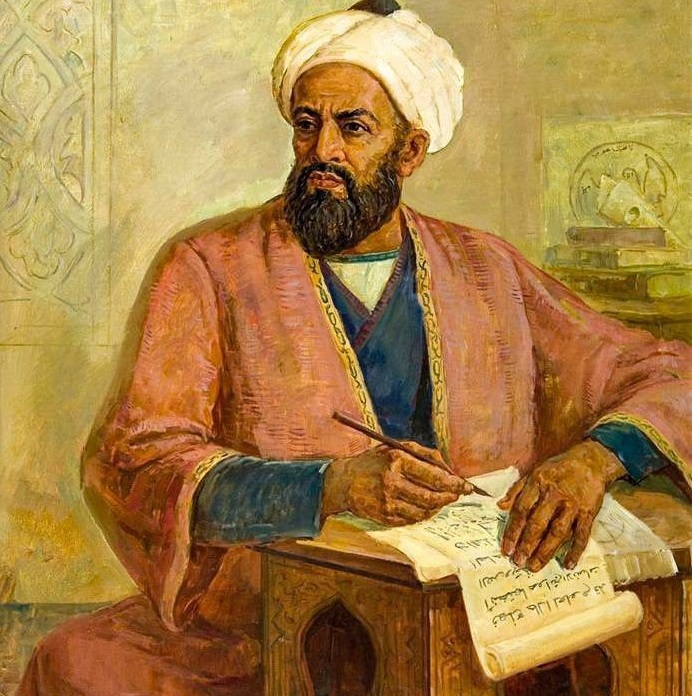
Al-Ghazali
An article as part of a series of articles written by Farhang Jahanpour in 2018 about new trends in Islamic thought
During the past few decades, the West has been mainly preoccupied with the rise of various forms of Islamic fundamentalism and militancy. The rise of Ikhwan al-Muslimun (Muslim Brothers) and the teachings of Sayyid Qutb in Egypt, the Islamic Jihad in Palestine, the Taliban in Afghanistan, the activities of Lashkar-e-Toiba [Tayyiba] and Jaish-e-Mohammad in Pakistan, the emergence of ISIS and other terrorist groups in Syria and Iraq, and many other terrorist groups among the Sunnis; and the triumph of the Islamic Revolution in Iran and the Lebanese Hizballah among the Shi’is have produced a great deal of apprehension in the West and in the rest of the world.
The continued confrontation between various militant Islamic groups and the West has given rise to what Samuel Huntington called a “clash of civilisations”[1]. The barbaric terrorist attacks on American embassies in Kenya and Tanzania, culminating in the attacks in New York and Washington on 9/11, and many terrorist attacks in various other countries since have further confirmed those fears and have portrayed Islam as a violent, dogmatic and confrontational religion that is permanently hostile to the West and to democratic principles.
Islam Is Not Monolithic
Yet, contrary to the accepted wisdom in the West that regards Islam as a monolithic and unchanging religion, there has always been a great deal of intellectual and religious movement and innovation initiated by Muslim thinkers and theologians. In fact, right after Prophet Muhammad’s death, the Muslim community was split between the majority conservative Sunni faction and the minority dissenting Shi’i sect. Neither of those two denominations remained united for long, and each of them split into various sects. In time, the Sunnis were divided into four major schools or sects, the Hanbali, Hanafi, Maliki and Shafe’i, and later on, the Wahhabi sect was added mainly in the Arabian Peninsula; and the Shi’is also split into even more branches.
In addition to these orthodox groups, there was a very strong mystical movement in Islam, known as Sufism, which reached its highest point in the beautiful poetry of Iranian poets, Sana’i, Attar, Rumi and Hafiz in Iran, and Ibn Arabi in Andalusia.
Islamic Philosophy
Islamic philosophy, based on early Islamic teachings and foreign influences, in some cases, diverged considerably from the earlier orthodox views of the Shari’a and the Islamic theology. In the 9th century AD, we see the beginning of the rise of the Mu’tazilites, a group of speculative theologians who believed in a contingent conception of human rationality and free will, as well as people’s responsibility for their actions, while maintaining a notion of God’s justice. They stressed the importance of reason and indeed the primacy of reason vis-à-vis revelation.
Very early in the history of Islam, nearly all the classical works from the Greeks, the Neo-Platonic writers, as well as ancient Iranian, Indian and Assyrian texts were translated into Arabic. The pre-Islamic classical learning, especially Greek philosophy, had a great impact on Islamic philosophy, and it gave rise to new schools of Islamic philosophy trying to marry religious concepts with intellectual and philosophical ideas.
The fusion of classical learning with Islamic theology gave rise to bold philosophical speculation. The history of Islam has seen many innovative and influential philosophers and theologians such as Avicenna (d. 1037), Abu Hamid Ghazzali (d. 1111), the agnostic Omar Khayyam (d. 1131), Abu al-Najib Abd al-Qadir Suhrawardi (d. 1191) with his pre-Islamic Zoroastrian Ishraqi or Illuminationist philosophy, the rationalist Ibn Rushd or Averroes (d. 1198), and Mulla Sadra (d. 1640) with his transcendental philosophy, as well as his existential philosophy (not to be confused with Western existentialism), and the philosophers of the School of Isfahan, among many others.
The Persian-Arab culture has also produced the evocative and sensuous tales of One Thousand and One Nights that had a profound influence upon Western literature, including the rise of the novel in most Western languages, and entertained and delighted many generations.
The Era of Coexistence Between Muslims and Christians
Under the Islamic rule in Spain (711-1492), the Caliphate of Cordoba (929-1031), the Ottoman Empire in Turkey (1299-1922), the Safavid Empire in Iran (1501-1736), and the Mughal Empire (1526-1857) in India, the East and the West mixed and mingled together and had extensive contacts. In fact, there was a much greater degree of religious tolerance under those governments than existed in most European states of the time.
From cultural, scientific and social points of view, there was not a big gap between Islamic and Western countries right up to the end of the 17th century. Many scholars have pointed out that the brilliant works in architecture, philosophy, and the visual arts created during the sixteenth and seventeenth centuries in Isfahan, Istanbul, Delhi and Agra were in every way equal to the masterpieces of the Italian Renaissance.[2]
Other Civilisations’ Response to the West
With the military, economic, political and cultural domination of several Western countries over the rest of the world, other civilisations have had to cope with that situation and to respond to it. This situation has not been unique to the past few centuries and the era of Western domination. In the past, from the time of the Egyptian, Persian, Chinese, Greek, Roman and Islamic empires, right up to the rise of Europe, those civilisations acted as global hegemons and brought the rest of the world under their military and cultural control, but as we know, in time, each of them gave way to a new superpower.
The question now is whether what many people see as the decline of the West will result in the domination of another civilisation or whether mankind is moving towards an era of a global civilisation with all countries and nations living freely and independently and contributing to the common good. If mankind is to avoid catastrophic conventional and nuclear wars and even extinction, it has no option but to move to a new era of a universal civilisation based on mutual respect, cooperation and coexistence.
In his monumental 12-volume work, A Study of History, Arnold Toynbee divided the main living civilisations of the world into five groups.[3] They were the Western Civilisation (represented by Europe and the United States), the Greek Orthodox Civilisation (represented by Greece and some East European countries, but mainly by Russia), the Buddhist Civilisation (mainly represented by China and Japan), the Hindu Civilisation (represented mainly by India), and the Islamic Civilisation.
Toynbee pointed out that for most of the 18th and 19th centuries and the first half of the 20th century, the Christian West was the dominant power in the world, and all the other civilisations had to respond to the power and domination of the West.
In his view, the Communist Revolution in Russia, the Maoist Revolution in China, and Gandhi’s uprising against British rule in India constituted the responses of those three civilisations to the West. As early as the 1940s, Toynbee predicted a powerful response by the Islamic civilisation to the West, but he said that he could not predict the nature of that reaction. Interestingly, Africa played no role whatsoever in his account of global civilisations.
Muslim Response to the West
The so-called Muslim rage and Islamic fundamentalism and Islamist terrorism that we hear so much about these days are basically late 20th and early 21st century phenomena, and are partly violent reactions to two centuries of Western domination of many Islamic countries, and an attempt by Muslims to come to terms with the realities of the modern age.
Having said that, reactions to foreign domination may take different forms, but resort to violence cannot be condoned or justified in any way and is indeed counter-productive. It should be noticed that most of the victims of Islamic radicalism and terrorism have been Muslims themselves.
Today, many people in developing countries, including those in the Islamic world, are making their own painful journey to modernity. In their grappling with the modern world, dominated by a much more powerful and often hostile West, Muslims are reacting in ugly and violent ways that are very similar to the religious wars in Europe and the civil wars in Britain or the United States. Many scholars have argued that even in the West, notions of democracy and human rights emerged out of religious disputes and the necessity of tolerance and pluralism.[4]
With the rise of Arab nationalism in countries such as Egypt, Algeria, Syria, Iraq, etc., often combined with a certain degree of Islamic militancy such as the Muslim Brotherhood, we saw the reaction of the Sunni world to the West, and the Islamic Revolution in Iran was the response of Shi’a Islam to the West.
Although Iran had never been formally colonised by a Western country, like many other Middle Eastern countries, it came under the influence of various Western empires, especially the Russian and British empires, which encroached upon its territory and dominated its economy.
Iran started to reassert itself by launching a democratic movement from the middle of the 19th century that culminated in the Constitutional Revolution (2005-11). By doing so, Iran made a significant attempt to strengthen its nationalism and to assert its political and cultural independence from the West. However, the price that it paid was the marginalisation of Islam and a partial departure from its Islamic heritage. Both the Constitutional Movement in its initial phase, as well as the reign of the two Pahlavis, were basically secular, with growing anti-clerical positions and the marginalisation of the role of religion.
By adopting his hostile stance to the West and to growing modernisation at home, and ultimately defeating one of the most openly pro-Western countries in the Middle East, Ayatollah Khomeini tried to revive what he regarded as Iran’s Islamic heritage. He argued that Iranian rulers had deviated from Islam and had replaced their religious heritage with what he regarded as decadent Western culture. According to him, although Iran and other Muslim countries had thrown away the outward signs of Western domination, they were not truly independent.
He maintained that although not physically colonised by the West, the Iranians and other Muslim nations dressed like the people in the West, thought like them, behaved like them, and had the same goals and aspirations. According to him, the West still dominated the education, thinking, ideology, values and aspirations of Muslim nations. Therefore, if they really wanted to be independent, they had to return to their Islamic roots, of course, according to his interpretation of Islam.
Notes
[1] See: Samuel P. Huntington, The Clash of Civilizations
and the Remaking of World Order (Simon and Schuster, 1996).
[2] Marshall Hodgson in The Venture of Islam (1974)
[3] Arnold J. Toynbee, A Study of History (London: Oxford University Press, 12 vols., 1934-1961). There is also an abridged version of this book in two volumes by D. C. Somervell (London: Oxford University Press, 1957).
[4] See: Owen Chadwick, The Secularisation of the European Mind in the 19th Century (Cambridge University Press, 1991).

