

By Farhang Jahanpour
I Have a Dream
However, as opposed to the prevailing feeling of helplessness among the poets and in the society at large, there was a sense of anticipation for a fundamental change in society, for the coming of a saviour, for a violent revolution that would turn everything upside down.
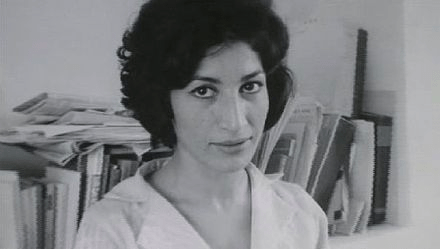
Forough Farrokhzad (January 5, 1935 — February 14, 1967), the most famous poetess of modern Iran, in a poem entitled Man Khab Dideham (“I Had a Dream”, published in a collection of her poems in 1962, incidentally earlier than Martin Luther King’s famous speech with the title “I Have a Dream”) predicts the coming of a social messiah, “someone who isn’t like anyone”. In a part of that poem we read:
I dreamed
That someone is coming…
someone who is like no one,
not like Father,
not like Ensi,
not like Yahya
not like Mother,
and is like the person who he ought to be.
And his name is
(just as mother says in the beginning and end of her prayer)
the ‘judge of judges’
or ‘need of needs’.
Someone is coming,
someone is coming,
someone who in his heart is with us,
in his breathing is with us,
in his voice is with us,
someone whose coming
can’t be stopped
and handcuffed and thrown in jail,
Conquest of the Garden
I am not talking about timorous whispering
In the dark.
I am talking about daytime and open windows
and fresh air and a stove in which useless things burn
and land which is fertile
with a different planting
and birth and evolution and pride.
On the eve of the revolution, there were messianic and apocalyptic expectations among a large section of the population. Everybody was waiting for a dramatic and spectacular event. After many years of oppression and helplessness, people felt a new sense of purpose and determination. Like the chained slaves in Akhavan Sales’s poem they felt that if they could turn upside down the huge edifice to which they were chained they would find the answer to their quest.
The triumph of the revolutionaries against the might of the Shah’s army, SAVAK and police force and the great support that he received from the West proved to many people that the revolution was almost miraculous.
For the people who had been brought up on the stories of Imam Husayn and Yazid and the battle between good and evil and who had anticipated the return of the Hidden Imam the revolution seemed to have other-worldly and eschatological dimensions. Most people expected a new dawn and a new age of freedom, independence and social justice – the three prominent slogans of the revolution. The reemergence of Ayatollah Ruhollah Khomeini, as an old man with a white beard and as someone who had been in exile for 14 years and people had only heard some stories of resistance against the Shah about him, seemed to represent only too well what Forough Farrokhzad had dreamed about regarding the coming of someone
“whose coming can’t be stopped
and handcuffed and thrown in jail”
His stubbornness in his single-minded opposition to the Shah and his refusal to compromise only strengthened his image as someone that people had been waiting for, someone who was not afraid and who was different from others.
Although many writers and poets advocated or anticipated violent change or revolution, none of them foresaw the way that things would actually turn out. Instead of a new age of freedom, independence and democracy they faced a brutal theocracy, with hasty trials and hundreds of executions of the senior military and political officials of the former regime.
Not only did they not achieve political freedom, they even lost some of the social, religious and economic freedoms that they had enjoyed under the Shah. As a result, after the Islamic revolution the former feelings of pessimism and alienation were compounded. Most popular Iranian writers either went into self-imposed exile or led embittered and quiet lives at home.
Nader Naderpour’s verdict after the violent revolution was:
In my homeland
After the dawn of blood
There is no sign of the sun
Ahmad Shamlu, a formidable critic of the former regime who had called on his compatriots to rise up, shortly after the victory of the revolution summed up the feeling of most of his fellow-poets in a poem called ‘Dar in Bonbast‘ (In this dead-end road), in which the post-revolutionary period is described as a new and worse kind of hell:
They sniff your mouth,
Lest you’ve said, ‘I love you,’
They sniff your heart.
These are strange times, darling…
And they whip love
On the barricades…
We must hide love in the backroom of the house.
They keep the fire burning
In this crooked dead-end of the Cold
With fuel
Of songs and poems
Don’t endanger yourself
By thinking.
These are strange times, darling…
Whoever pounds on the door at night
Has comes to kill the light…
We must hide light in the backroom of the house.
They are the butchers
Standing at the crossroads
With clubs and bloody cleavers.
These are strange times, darling…
And they excise the smile
From the lips, and the song from the mouth…
We must hide Joy in the backroom of the house.
The canary roasting
Over a fire of lilies and jasmines
These are strange times, darling…
Drunk and victorious
Satan feasts our mourning…
We must hide God in the backroom of the house.
However, as the result of those earlier unrealistic expectations and the bitter experiences of the past four decades, with domestic suppression, economic downturn, the devastating Iran-Iraq war which touched every family, when Iranians had to fight a foreign foe practically supported by the entire world, the feeling of isolation from the rest of the world and even from their closest neighbours, and the comprises that are necessary in order to cope with the real world, Iranian people have become much more realistic and much more resilient.
Events have shown that, despite all the bitter experiences that they have had to endure, they have not lost their sense of optimism and the need to continue the fight to improve their society. However, this time their struggle will be more measured, more realistic, more rational and as a result hopefully more successful.


