

Text of Lectures given at Religion and Society Seminar at Kellogg College, Oxford, January 2011
Whether we are believers, agnostics or atheists, there is no denying the importance of the role that religion has played and continues to play for good or ill in human history. Many people see religion as a source of conflict and superstition and as an impediment to the path of progress and scientific development. Nevertheless, even those who have such a negative view of religion cannot deny the influence that various religions have exerted on people’s lives.
There has always been a complex, multifaceted and dynamic relationship between religion and politics, culture, literature and the way of life of different societies throughout the history of human development, nowhere more so than in the Middle East, which has been the cradle of many world religions. The study of this relationship forms a fundamental part of the disciplines of history, political philosophy, law, anthropology, sociology, literature and the arts. Recent revolutions and the rise of radical Islamic terrorism have affected not only the Middle East but the entire world. But the lasting influence of religion on societies has not been limited to the Middle East, but has manifested itself from the most primitive to the most advanced societies.
As this is the 400th anniversary of the completion of the King James Bible, during the past few weeks, a great deal has been written and spoken about this book. No other book, or indeed any other piece of literature with the possible exception of Shakespeare’s work, seems to have influenced the English language as much as the King James Bible. Its turns of phrase have permeated the everyday language of English speakers, whether or not they’ve ever opened a copy. It is the most published book in the world and has a circulation that eclipses every other book.
The US statesman, lawyer and orator Daniel Webster said: “If there is anything in my thoughts or style to commend, the credit is due to my parents for instilling in me an early love of the Scriptures.”[1] Equally celebrated as a British orator, T. B. Macaulay said that the translation demonstrated “the whole extent of [the] beauty and power” of the English language. Alfred Lord Tennyson considered Bible reading “an education in itself”, while Charles Dickens called the New Testament “the very best book that ever was or ever will be known in the world.”
The King James Bible and the works of Shakespeare have had the most profound influence on the language and thinking of the English-speaking peoples, even those who do not go to church or do not watch many Shakespeare plays. The same, of course, is true of all other religious scriptures that are read, memorised and recited daily by millions of their followers throughout the world.
While the historical and social influence of religion cannot be denied, religious people normally do not regard religion purely as a social phenomenon, but as a metaphysical and divine phenomenon that transcends time and space. Given such claims, it is important to look at the impact of religion in man’s history and in the bigger schemes of things.
Most astronomers now estimate the age of the universe to be 13.75 billion years since the Big Bang. On 23 April 2009, a gamma-ray burst was detected, which was later confirmed as being over 13 billion years old. Astronomers estimate the age of the universe in two ways: 1) by looking for the oldest stars; and 2) by measuring the rate of expansion of the universe and extrapolating back to the Big Bang, just as crime detectives can trace the directional origin of a bullet from the holes in a wall.[2]
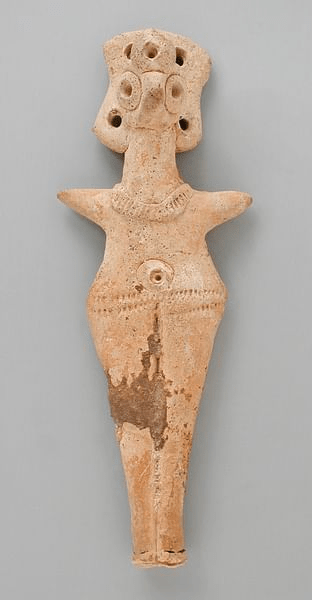
The Solar System is thought to be 4.5 billion years old, and humans have existed as a genus for only a few million years. However, organised religion traces its roots to the Neolithic period that began 11,000 years ago in the Near East, but many other religious schools of thought have occurred independently in several other locations around the world.
It is an incontrovertible fact that ever since the dawn of history, religion has played an important role in people’s lives. There is some inconclusive evidence that even the Neanderthals buried their dead, which is evidence of the use of ritual and perhaps belief in an afterlife. The use of burial rituals is regarded as evidence of religious activity.[3] Other scholars believe that religious thought evolved after the discovery of language and communication. Philip Lieberman states: “Human religious thought and moral sense clearly rest on a cognitive-linguistic base”.[4]
The religious mind is one consequence of the development of a human brain that is capable of formulating religious and philosophical ideas. Paul Ehrlich states: “Religious ideas can be traced to the evolution of brains large enough to make possible the kind of abstract thought necessary to formulate religious philosophical ideas.”[5]
Beliefs in the supernatural clearly have had – and continue to have – enormous influence on human behaviour and the evolution of human societies. An examination of why religions have evolved, the role of religion, and the evolution of religious thought is critical to understanding human nature and should be carried out without reference to the “truth” or “falsehood” of the claims of any religion. As one of the leading experts in religious philosophy, Ninian Smart (1927-2001), put it, we cannot “talk about worship and other activities in meaningful ways without having to comment on their validity, without having to comment on whether there is a Vishnu or a Christ.”[6] In other words, we can have a kind of secular theology or study of religions purely as an academic discipline. Ninian Smart provided a sevenfold scheme for the study of religion:
1- Doctrinal
2- Mythological
3- Ethical
4- Ritual
5- Experiential
6- Institutional
7- Material
He believed that Rudolf Otto’s concept of the Holy as a key to understanding religion was too restrictive, since Buddhism, Taoism, and Confucianism are nontheistic.[7] Therefore, there must be other factors in religions that seem to be so attractive to people and exert such a profound and lasting influence on their lives.
Notes:
[1] One Nation Under God (Published by Christian Defense Fund, 1997), Daniel Webster
[2] “How Fast Is Universe Expanding”, National Aeronautics and Space Administration, http://map.gsfc.nasa.gov/universe/uni_expansion.html
[3] Douglas Palmer, Simon Lamb, Guerrero Angeles Gavira, and Peter Frances, Prehistoric Life: The Definitive Visual History of Life on Earth, New York, DK Pub. 2009.
[4] Philip Lieberman, Uniquely human: the evolution of speech, thought, and selfless behaviour (Harvard University Press, 1991)
[5] Paul Ehrlich, Human Natures: Genes, Cultures, and the Human Prospect (Washington, D.C., Island Press, 2000), p 214.
[6] Ninian Smart, Dimensions of the Sacred: An Anatomy of the World’s Beliefs (University of California Press, 1996), p. 9
[7] ibid, p 28
 F Jahanpour