

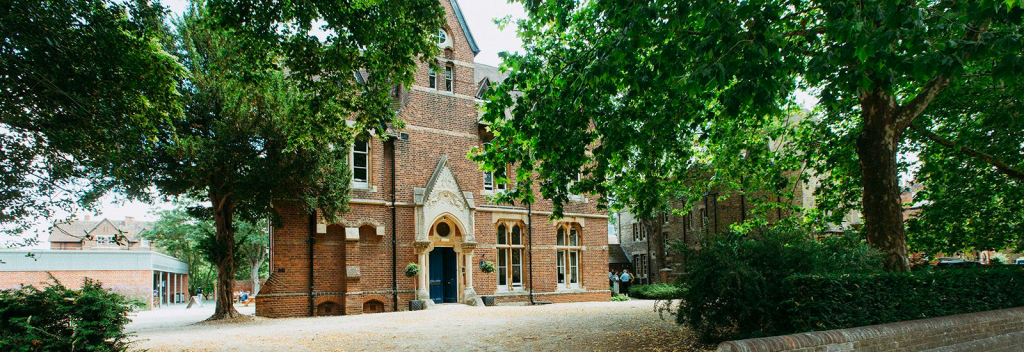
Text of Lectures given at Religion and Society Seminar at Kellogg College, Oxford, January 2011
A main reason for the evolution of religious thought has been the effort to make sense of our human circumstances. Science tells us that we are creatures of accident clinging to a ball of mud hurtling aimlessly through space. As William Shakespeare put it:
Life’s but a walking shadow, a poor player
That struts and frets his hour upon the stage
And then is heard no more. It is a tale
Told by an idiot, full of sound and fury,
Signifying nothing.[1]
In the words of the great Iranian agnostic poet, Omar Khayyam,
How sweet is mortal Sovranty! – think some:
Others – “How blest, the Paradise to come!”
Ah take the Cash ion hand and waive the Rest!
Oh, the brave Music of a distant Drum![2]
Or
The Worldly Hope men set their Hearts upon
Turns Ashes – or it prospers, and anon,
Like Snow upon the Desert’s dusty Face
Lightning a little Hour o two – is gone.[3]
This is not a notion that would warm people’s hearts and rouse multitudes. On the contrary, it produces much unbearable anxiety, which forces us to try to find ways of coping with it. In the face of life’s tribulations, people seek a belief system that appears to justify those tribulations, or provide solace enabling us to cope.
The desire to solve the riddle of existence and to find solace in a lonely and frightening world has been one of the main attractions of religion, and it has engrained itself in our being from childhood, very much like our ability to speak, our language and accent and many other traits that we inherit from birth. Even a major opponent of religion such as Professor Richard Dawkins says that religion has been hardwired into our being, and another atheist John Paul Sartre wrote about a “God-shaped hole in his psyche.”
It is known that most religions have their births in the Middle East. However, in the course of time those primitive beliefs have evolved and matured in the forms that we see today. Professor Wilfred Cantwell-Smithof the University of McGill in his book The Mystery and End of Religion (1963) says that religion can be divided into two parts: Faith that is a personal matter and concerns belief in spiritual values or a revelation from God, like that of Moses, Christ or Muhammad. The other aspect of religion is what he calls “accumulated tradition”.
Naturally, the accumulated religious traditions by which most religions are known today differ considerably from one religion to another, and they are naturally quite different from what the original religions stood for or how the early believers understood them.
Most religious texts that we possess, although speaking of ancient myths and stories, were written many centuries after the events that they describe. The oldest surviving Hebrew Bible manuscripts date to about the 2nd century BC,[4] the oldest record of the complete text survives in Greek translation (Codex Sinaiticus) and dates from the 4th century AD,[5] and the oldest extant manuscripts of the vocalized Masoretic text, upon which modern editions are based, date to the 9th century AD.[6] Therefore, what we possess as the records of the sayings of various prophets at best provide some inkling or some versions of what they said when they were allegedly alive.
The Epic of Gilgamesh
Gilgamesh was an historical king of Uruk in Babylonia, on the banks of the River Euphrates, who lived about 2700 B.C. The earliest Sumerian Gilgamesh poems date from as early as the Third Dynasty of Ur (2100-2000 BC).[7]
The account begins with the description of Gilgamesh, who was two-thirds god and one-third human. He was the greatest king on earth and the strongest super-human that ever existed. Although most historians tend to emphasize the importance of Hammurabi and his code of law, the civilizations of the Tigris-Euphrates area focus on Gilgamesh and the legends surrounding him.
Many stories and myths were written about Gilgamesh, some of which were written down earlier than 2000 B.C. in the Sumerian language on clay tablets, which still survive. Some of those clay tablets that were looted from the Baghdad Museum after the US invasion in 2003 were returned to the museum by President Biden in September 2021.
These Sumerian Gilgamesh stories were integrated into a longer poem, versions of which survive not only in Akkadian (the Semitic language, related to Hebrew, spoken by the Babylonians), but also on tablets written in Hurrian and Hittite (Indo-European languages, a family of languages which includes Greek, old Persian and English, spoken in Asia Minor).
The myths of the Flood
Gilgamesh decides that he can’t live unless granted eternal life. He decides to undertake the most perilous journey of all: the journey to Utnapishtim with his wife, the only mortals to whom the gods had granted eternal life. Utnapishtim lives in the Far-Away, at the mouth of all rivers, at the end of the world. Utnapishtim was the great king of the world before the Flood who, with his wife, were the only two mortals preserved by the gods during the Flood.
The Flood is so great that even the gods are frightened:
The gods shook like beaten dogs, hiding in the far corners of heaven,
Ishtar screamed and wailed:
“The days of old have turned to stone:
We have decided evil things in our Assembly!
Why did we decide those evil things in our Assembly?
Why did we decide to destroy our people?
We have only just now created our beloved humans;
We now destroy them in the sea!”
All the gods wept and wailed along with her,
All the gods sat trembling, and wept.
Tablet four tells the story of the mighty flood:
The skies roared with thunder and the earth
heaved,
Then came darkness and a stillness like
death.
Lightening smashed the ground and fires
blazed out;
Death flooded from the skies.
When the heat died and the fires went
out,
The plains had turned to ash.
The Flood lasts for seven days and seven nights, and finally light returns to the earth. Utnapishtim opens a window and sees that the entire earth has been turned into a flat ocean, and all humans have been turned into stone. Utnapishtim then falls to his knees and weeps.
Utnapishtim’s boat comes to rest on the top of Mount Nimush; the boat lodges firmly on the mountain peak just below the surface of the ocean and remains there for seven days. On the seventh day:
I [Utnapishtim] released a dove from the boat,
It flew off, but circled around and returned,
For it could find no perch.
I then released a swallow from the boat,
It flew off, but circled around and returned,
For it could find no perch.
I then released a raven from the boat,
It flew off, and the waters had receded:
It eats, it scratches the ground, but it does not circle around and return.
I then sent out all the living things in every direction and sacrificed a sheep on that very spot.
The gods smell the odor of the sacrifice and begin to gather around Utnapishtim. Enlil, who had originally proposed to destroy all humans, then arrives, furious that one of the humans has survived, since they had agreed to wipe out all humans. He accuses Ea of treachery, but Ea convinces Enlil to be merciful. Enlil then seizes Utnapishtim and his wife and blesses them:
At one time Utnapishtim was mortal.
At this time let him be a god and immortal;
Let him live in the far away at the source of all the rivers.[8]
[1] A line from William Shakespeare‘s Macbeth, from Act 5, Scene 5
[2] Rubaiyat of Omar Khayyam, translated by Edward Fitzgerald (Harrap Limited, 1984), Ruba’i XII
[3] ibid, Ruba’i XIV
[4] See Wikepedia, Biblical Manuscripts, http://en.wikipedia.org/wiki/Biblical_manuscript#Hebrew_Bible_.28or_Tanakh.29_manuscripts
[5] Septugint, http://en.wikipedia.org/wiki/Septuagint
[6] Masoretic Text, http://en.wikipedia.org/wiki/Masoretic_Text
[7] See Andrew R. George, translator and editor, The Epic of Gilgamesh (Penguin Classics, 2000). Subsequent quotes about the flood are taken from this book.
[8] For further information see: The Epic of Gilgamesh , trans. by Maureen Gallery Kovacs (Stanford: Stanford University Press, 1990), or Gilgamesh , translated by John Maier and John Gardner (New York: Vintage, 1981)

