

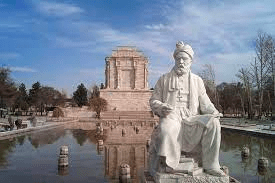

This year is the 1000th anniversary of the death of great Persian poet Abolqasem Ferdowsi (940-1022), who composed the Shahnameh (the Book of Kings, also spelt Shah-Nameh) in some 60,000 couplets about the lives and heroic deeds of Persian kings during the Pishdadi and Sasanian period. The book is mainly about the glorification of Persian culture and Iranian heroes in the battles between Iran and Turan.
In the course of the centuries, many poets have tried to imitate the stories and the language of the Shahnameh, but with very little success. The following poem is often mistakenly attributed to Ferdowsi, but in fact it is titled Mehr-e Mihan (Love of the Homeland), written by Mostafa Sarkhosh.
Sarkosh was a nationalist poet who deliberately imitated Ferdowsi’s style, and his poems also dealt with the same themes that can be found in the Shahnameh. Among his poetry books are Peyk-e Mehr (the Message of Love, published 1952) and Atash-e Del (The Fire in the Heart, published 1956). He had studied agriculture in Germany but was very interested in literature and was recruited by Alborz College to teach Persian literature.
The following poem glorifies the Iranian people, their history and their religion, which was based on the teachings of Zoroaster, who taught his followers to live by the standards of justice, honesty, compassion and truthfulness, shunning enmity and lying.
The poem regrets the loss of all that goodness and virtue, which have been replaced with some base teachings that have foreign origins and have distorted the pure Iranian traits. The poem is basically a denunciation of what the author sees as religious hypocrisy, using religion for material gains and the triumph of deceit and superstition over true religious precepts.
در این خاک زرخیز ایران زمین
نبودند جز مردمی پاک دین
همه دینشان مردی و داد بود
وز آن کشور آزاد و آباد بود
چو مهر و وفا بود خود کیششان
گنه بود آزار کس پیششان
همه بنده ناب یزدان پاک
همه دل پر از مهر این آب و خاک
پدر در پدر آریایی نژاد
ز پشت فریدون نیکو نهاد
بزرگی به مردی و فرهنگ بود
گدایی در این بوم و بر ننگ بود
کجا رفت آن دانش و هوش ما
که شد مهر میهن فراموش ما
که انداخت آتش در این بوستان
کز آن سوخت جان و دل دوستان
چه کردیم کین گونه گشتیم خار؟
خرد را فکندیم این سان زکار
نبود این چنین کشور و دین ما
کجا رفت آیین دیرین ما؟
به یزدان که این کشور آباد بود
همه جای مردان آزاد بود
در این کشور آزادگی ارز داشت
کشاورز خود خانه و مرز داشت
گرانمایه بود آنکه بودی دبیر
گرامی بد آنکس که بودی دلیر
نه دشمن دراین بوم و بر لانه داشت
نه بیگانه جایی در این خانه داشت
از آنروز دشمن بما چیره گشت
که ما را روان و خرد تیره گشت
از آنروز این خانه ویرانه شد
که نان آورش مرد بیگانه شد
چو ناکس به ده کدخدایی کند
کشاورز باید گدایی کند
به یزدان که گر ما خرد داشتیم
کجا این سر انجام بد داشتیم
بسوزد در آتش گرت جان و تن
به از زندگی کردن و زیستن
اگر مایه زندگی بندگی است
دو صد بار مردن به از زندگی است
بیا تا بکوشیم و جنگ آوریم
برون سر از این بار ننگ آوریم

