

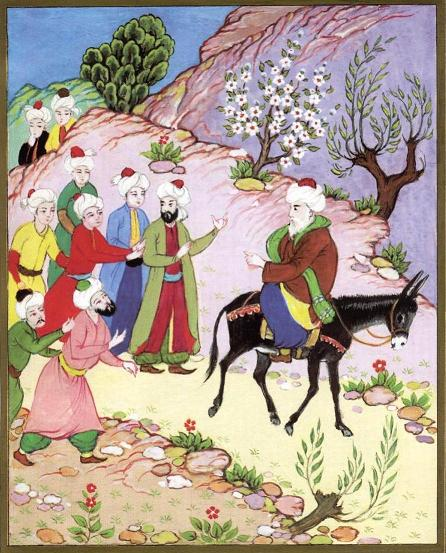
Rumi was born on 30th September 1207 in the city of Balkh, which at that time was part of Iran’s Khorasan province, and which is now a city in the northwest of Afghanistan, and died on 17 December 1273, aged 66, in Konya, which is now in Turkey. After the Mongol invasion of Central Asia, Rumi’s father and the entire family left Balkh. They spent some time in different parts of Iran and Baghdad before settling in Konya, the capital of the Seljuq sultanate.
Rumi was already established as a professor of theology and an Islamic jurist in Konya, with many disciples and followers, when, on 14 November 1244, at the age of 37, he met a 59-year-old wandering Sufi named Shams Tabriz in the bazaar of Konya. This chance meeting and their subsequent meetings had a life-changing influence on Rumi and turned him from a theologian into a mystic and a poet.
It seems that Shams opened the floodgates of verse in Rumi, who wrote a massive work in six volumes, the Mathnavi, and the Divan-e Shams, written in praise of Shams and the pain of separation from him after he mysteriously disappeared, never to return. The Divan contains some 3230 ghazals or lyrics. In addition to those two books, he also wrote 44 shorter pieces called Tarji’at, as well as 1994 quatrains on mystical issues. He was the most prolific Iranian writer and also used a larger variety of different types of rhymes and rhythms than any other Persian poet.
The following poem is one of the first poems that he wrote after meeting Shams, in which he expresses the spiritual transformation that happened to him. According to him, he was dead, then became alive, he was tears, then he became laughter. The poem is in the form of a conversation between Rumi and his master, Shams. The master teases him, saying that he is not mad enough, so he decides to go wild. The master praises him, saying that he is a candle, giving light to the assembly, but Rumi protests, saying that he was no candle but “scattered smoke.” Throughout the poem, Rumi insists that all he wants is to remain Shams’s disciple and to make use of his wings to learn to fly.
As there has been some debate about the accuracy of Coleman Barks’ translations of Rumi, it is important to point out that his translations convey the main meaning and essence of Rumi’s poems, if not providing a literal rendering. However, it can be argued that, as in many other translations of Rumi, his versions lack the joyful, exuberant and rhythmic qualities of Rumi’s poems, which are very difficult to duplicate in another language. While the Mathnavi is full of spiritual stories and allegories expressed in calm and measured tones typical of his later life, Rumi’s Divan reflects a man totally devoted to his master and on fire due to his reawakening.
Here are a few examples of Coleman Barks’ translations of Rumi and the original versions to provide an opportunity for comparison:
I was dead, then alive,
Weeping, then laughing.
The power of love came into me,
and I became fierce as a lion,
then tender like the evening star.
He said, “You’re not mad enough,
You don’t belong in this house.”
I went wild and had to be tied up.
He said, “Still not wild enough
to stay with us!”
I broke through another layer
into joyfulness.
He said, “It’s not enough.”
I died.
He said, “You’re a clever little man,
full of fantasy and doubting.”
I plucked out my feathers and became a fool.
He said, “Now you’re the candle
for this assembly.”
But I’m no candle. Look!
I am scattered smoke.
He said, “You are the sheikh, the guide.”
But I’m not a teacher. I have no power.
He said, “You already have wings.
I cannot give you wings.”
But I wanted his wings.
I felt like some flightless chicken.
Then new events said to me,
“Don’t move. A sublime generosity is
coming toward you.”
And old love said, “Stay with me,”
I said, “I will.”
You are the fountain of the sun’s light.
I am a willow shadow on the ground.
You make my ruggedness silky.
The soul at dawn is like darkened water
that slowly begins to say Thank you, thank you.
Then at sunset, again, Venus gradually
changes into the moon and then the whole night sky.
This comes of smiling back
at your smile.
The chess master says nothing,
other than moving the silent chess piece.
That I am part of the ploys
of this game makes me
amazingly happy.
(The Essential Rumi, Translated by Coleman Barks with John Moyne, pp 134-35)
مرده بدم زنده شدم گریه بدم خنده شدم
دولت عشق آمد و من دولت پاینده شدم
دیده سیر است مرا جان دلیر است مرا
زهره شیر است مرا زهره تابنده شدم
گفت که دیوانه نهای لایق این خانه نهای
رفتم و دیوانه شدم سلسله بندنده شدم
گفت که سرمست نهای رو که از این دست نهای
رفتم و سرمست شدم وز طرب آکنده شدم
گفت که تو کشته نهای در طرب آغشته نهای
پیش رخ زنده کنش کشته و افکنده شدم
گفت که تو زیرککی مست خیالی و شکی
گول شدم هول شدم وز همه برکنده شدم
گفت که تو شمع شدی قبله این جمع شدی
جمع نیم شمع نیم دود پراکنده شدم
گفت که شیخی و سری پیش رو و راهبری
شیخ نیم پیش نیم امر تو را بنده شدم
گفت که با بال و پری من پر و بالت ندهم
در هوس بال و پرش بیپر و پرکنده شدم
گفت مرا دولت نو راه مرو رنجه مشو
زانک من از لطف و کرم سوی تو آینده شدم
گفت مرا عشق کهن از بر ما نقل مکن
گفتم آری نکنم ساکن و باشنده شدم
چشمه خورشید تویی سایه گه بید منم
چونک زدی بر سر من پست و گدازنده شدم
تابش جان یافت دلم وا شد و بشکافت دلم
اطلس نو بافت دلم دشمن این ژنده شدم
صورت جان وقت سحر لاف همیزد ز بطر
بنده و خربنده بدم شاه و خداونده شدم
شکر کند کاغذ تو از شکر بیحد تو
کآمد او در بر من با وی ماننده شدم
شکر کند خاک دژم از فلک و چرخ به خم
کز نظر وگردش او نورپذیرنده شدم
شکر کند چرخ فلک از ملک و ملک و ملک
کز کرم و بخشش او روشن و بخشنده شدم
شکر کند عارف حق کز همه بردیم سبق
بر زبر هفت طبق اختر رخشنده شدم
زهره بدم ماه شدم چرخ دو صد تاه شدم
یوسف بودم ز کنون یوسف زاینده شدم
از توام ای شهره قمر در من و در خود بنگر
کز اثر خنده تو گلشن خندنده شدم
باش چو شطرنج روان خامش و خود جمله زبان
کز رخ آن شاه جهان فرخ و فرخنده شدم
After meeting Shams, Rumi turned away from orthodoxy towards a much more tolerant, universalist and mystical view of religion. I suppose as the world grows closer together and we become aware of the varieties of religious experiences throughout the world, this kind of open and tolerant view of religion is the only one which will grow and become most acceptable:
Not Christian or Jew or Muslim, not Hindu,
Buddhist, Sufi, or Zen. Not any religion
or cultural system. I am not from the East
or the West, nor out of the ocean or up
from the ground, nor natural or ethereal, not
composed of elements at all. I do not exist,
am not an entity in this world or the next,
did not descend from Adam or Eve or any
origin story. My place is placeless, a trace
of the traceless. Neither body nor soul.
I belong to the beloved, have seen the two
worlds as one and that one call to and know,
first, last, outer, inner, only that
breath breathing human being.
چه تدبیر ای مسلمانان که من خود را نمیدانم
نه ترسا و یهودیم نه گبرم نه مسلمانم
نه شرقیم نه غربیم نه بریم نه بحریم
نه ارکان طبیعیم نه از افلاک گردانم
نه از خاکم نه از بادم نه از ابم نه از اتش
نه از عرشم نه از فرشم نه از کونم نه از کانم
نه از دنیی نه از عقبی نه از جنت نه از دوزخ
نه از ادم نه از حوا نه از فردوس رضوانم
مکانم لا مکان باشد نشانم بی نشان باشد
نه تن باشد نه جان باشد که من از جان جانانم
دویی از خود برون کردم یکی دیدم دو عالم را
یکی جویم یکی گویم یکی دانم یکی خوانم
ز جام عشق سرمستم دو عالم رفت از دستم
بجز رندی و قلاشی نباشد هیچ سامانم
اگر در عمر خود روزی دمی بی او بر اوردم
از ان وقت و از ان ساعت ز عمر خود پشیمانم
الا ای شمس تبریزی چنان مستم در ین عالم
که جز مستی و قلاشی نباشد هیچ درمانم
There are times when one feels that no translation can do full justice to the original. Here is one example of that:
مرغ باغ ملکوت
روزها فكر من این است و همه شب سخنم
كه چرا غافل از احوال دل خویشتنم
از كجا آمدهام، آمدنم بهر چه بود؟
به كجا میروم آخر ننمایی وطنم؟
ماندهام سخت عجب، كز چه سبب ساخت مرا؟
یا چه بودهست مراد وی از این ساختنم؟
خرّم آن روز كه پرواز كنم تا برِ دوست
به امید سر كویش، پَر و بالی بزنم
كیست آن گوش، كه او میشنود آوازم؟
یا كدامین كه سخن مینهد اندر دهنم
من به خود نامدم اینجا، كه به خود باز روم
آنكه آورد مرا، باز برد تا وطنم
مرغ باغ ملكوتم، نیم از عالم خاك
چند روزی قفسی ساختهاند از بدنم
Who says words with my mouth?
Who looks out with my eyes? What is
the soul? I cannot stop asking.
If I could taste one sip of an answer,
I could break out of this prison for drunks,
I didn’t come here of my own accord,
and I can’t leave that way.
Whoever brought me here will have to take me home.
This poetry. I never know what I’m going to say.
I don’t plan it.
When I am outside the saying of it,
I get very quiet and rarely speak at all.
(Coleman Barks, Rumi, The Book of Love, pp 56-57)
Rumi’s beautiful poem on the news of Sana’i’s death is a good indication of his view of the permanence of the human soul and consciousness, if not body:
Someone said, Sanai is dead.
No small thing to say.
He was not bits of husk,
or a puddle that freezes overnight,
or a comb that cracks when you use it,
or a pod crushed upon on the ground.
He was fine powder in a rough clay dish.
He knew what both worlds were worth:
A grain of barley.
One he slung down, the other up.
This inner soul, that presence of which most know nothing,
about which poets are so ambiguous,
he married that one to the beloved.
His pure gold wine pours on the thick wine dregs.
They mix and rise and separate again
to meet down the road. Dear friend from Marghaz,
who lived in Rayy, in Rum, Kurd from the mountains,
each of us returns home.
Silk must not be compared with striped canvas.
Be quiet and clear now
like the final touchpoints of calligraphy.
Your name has been erased
from the roaring volume of speech.
گفت كسی خواجه سنایی بمرد
مرگ چنین خواجه نه كاریست خرد
كاه نبود او كه به بادی پرید
آب نبود او كه به سرما فسرد
شانه نبود او كه به مویی شكست
دانه نبود او كه زمینش فشرد
گنج زری بود در این خاكدان
كو دو جهان را بجوی میشمرد
قالب خاكی سوی خاكی فكند
جان و خرد سوی سماوات برد
جان دوم را كه ندانند خلق
مغلطه گوییم به جانان سپرد
صاف درآمیخت به دردی می
بر سر خم رفت جدا شد ز درد
در سفر افتند به هم ای عزیز
مرغزی و رازی و رومی و كرد
خانه خود بازرود هر یكی
اطلس كی باشد همتای برد
خامش كن چون نقط ایرا ملك
نام تو از دفتر گفتن سترد
(Ghazal, 996, Divan-e Shams)
Shrine of Shams Tabriz in Khoy, Iran


