

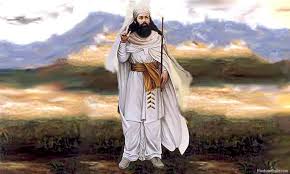
Zoroastrianism, which provided the moral and spiritual framework for early Iranian civilisations, was one of the oldest religions of the world that had a great influence on Judaism, Christianity and Islam, and also, to some extent, on Buddhism. Zoroastrianism, as the first monotheistic religion, served as the state religion of the pre-Islamic Iranian empires for more than a millennium. A small number of Zoroastrians still follow that ancient prophet and are still scattered in Iran, India (where they are known as Parsees) and in some Western countries.
Zoroaster, or Zarathushtra as he is referred to in the Zoroastrian scripture, was the prophet of ancient Iran whose religion ultimately became dominant in the Persian Empire up until the Arab invasion of Iran in the seventh century AD.
Zoroaster’s dates
As in the case of most ancient prophets, there is some controversy about the time when Zoroaster lived. Some Greek sources give very old dates for Zoroaster. For instance, Xanthos of Lydia is cited by Diogenes Laertius (3rd century CE) as placing Zoroaster’s date 6,000 years before Xerxes’ Greek campaign. Plutarch assigned a date of 5,000 years before the Trojan War. At least nine famous Greek historians (Aristotle, Odoxous, Pollianus, Hermitus, Plutarch, Theopompous, Suidas, Eskoloiyon and Laktantius) have all mentioned Zoroaster’s birth as 5000 years before the Trojan War or 6000 years before the invasion of Greece by Xerxes. Greek historiographers who had access to written Babylonian and Persian calendars calculated that the prophet was born in 6184 BC and died in the year 6107 BC.[1]
However, during the past few decades, there has been an almost unanimous consensus among scholars that Zoroaster lived ca. 1000 BC, although some have proposed dates as early as ca. 1750 BC and some as late as the seventh century BC. The late eminent British scholar of Zoroastrianism, Mary Boyce, put Zoroaster’s time at around 1,200 BC.[2] Professor Boyce starts the introduction to her book on Zoroastrian beliefs by pointing out: “Zoroastrianism is the oldest of the revealed world-religions, and it has probably had more influence on mankind, directly and indirectly, than any other single faith.”[3] This is high praise indeed when one considers the great influences that Hinduism, Buddhism, Judaism, Christianity and Islam have exerted on world history
Iranian civilisation based on Zoroastrianism
Like most other early civilisations, Iran’s first civilisation was also based on religion. Zoroastrianism was the dominant religion under the Achaemenids (559-330 BC), a dynasty founded by Cyrus the Great. After the Hellenistic period (300-250 BC) came the Parthian (250 B.C.-226 AD) and the Sasanian (226-651 AD) empires. The Sasanian Empire was strongly influenced by Zoroastrianism, and most of the texts of Zoroastrian scriptures that we possess date from that period.
Zoroastrianism, and the worship of the Zoroastrian God Ahura Mazda, seems to have been the dominant belief system under all those dynasties. For instance, in his famous Behistun Inscription (522 B.C.), Darius I the Great writes: “King Darius says: By the grace of Ahura Mazda am I king. Ahura Mazda has granted unto me this empire. Ahura Mazda brought me help, until I gained the empire; by the grace of Ahura Mazda do I hold this empire.”[4]
In his Daiva Inscription, Xerxes (518-465 B.C.) also starts by praising Ahura Mazda: “A great God is Ahura Mazda, who created this earth, who created yonder sky, who created man, who created happiness for man, who made Xerxes king, one king of many, one lord of many.”[5]
Therefore, Zoroastrianism must have been the dominant religion of the Persian Empire from at least the sixth century BC to the seventh century AD.
Zoroastrian scriptures
Most of the Zoroastrian scriptures have been lost over the ages. Early Persian and Arab historians have reported that the Avesta was written in golden ink on 12,000 cowhides and kept in the national library at the Iranian capital in Ctesiphon. According to those sources, Avesta contained 21 volumes, 348 chapters and 7,259,700 words (of which only 83,000 words have survived to the present time). However, all that is left to us from that massive literature are fragments that the Parsees took with them to India or preserved by native Zoroastrians in Iran. Whether the destruction of the larger part of Avesta was due to Alexander or the Arabs, the fact remains that what we now possess is a fraction of the original scripture, which even at the time of the Sasanians consisted of twenty-one books.
What has remained is divided into two parts, the Avesta proper and the Khordeh Avesta (Shorter or New Avesta), which is a book of short prayers. The date of the Gathas, the earliest part of the Avesta, has been placed at around 1,000 B.C. The Avesta itself contains four main divisions:
1- The Yasnas, which is a liturgical work in 72 chapters, of which 17 are the Gathas.
2- The Visperad, which is a collection of sacrificial litanies and a kind of liturgical supplement to the Yasnas.
3- The Vendidad (the Laws against the Demons), which traditionally is the only complete book, and which is a compilation of religious laws and mystical tales. It is a work of much later composition containing details of ceremonies and purification.
4- The Khordeh-Avesta, which is another book similar to Yasna. It is a miscellaneous collection of hymns, litanies, and prayers.
Zoroaster’s Birth and Early Life
Zoroaster’s ancestral name was Spitama, and Zarathushtra was a title which was probably given to him after he declared his prophetic mission. Just as Prince Siddhartha was known as the Buddha (the Enlightened One) and Jesus as Christ (the Anointed One), Spitama was called Zarathushtra (He of the Golden Light, or of the Golden Camel).
Zoroaster’s birth, like that of any other great prophet, has been surrounded by fable and myth. In Zoroastrian scriptures, it is recorded that even while in the embryonic stage, the child glowed with such spiritual lustre that everything around Dughdova, his mother, was radiant with light, which increased as the time for nativity drew nearer. Instead of crying, this infant smiled at birth, and nature also smiled with him in sympathy:
In whose birth and in whose growth
Rejoiced waters and plants;
In whose birth and in whose growth
Increased waters and plants;
In whose birth and in whose growth
Cried out ‘Hail!’
All the creatures of the Holy One.
‘Hail! Born to us is the priest
Spitama Zarathustra!’[6]
On the other hand, the Evil Spirit was confounded:
At whose birth and at whose growth
Rushed away, Angra Mainyu
From this earth which is wide,
Round, whose ends lie afar.
Thus he howled, the evil-knowing
Angra Mainyu, the all-deadly,
‘Not all the angels together
Drive me out against my will,
But Zarathushtra alone
Overpowered me in spite of myself.
He smites me with the Holy Word,
A weapon like a stone as big as a house;
He burns me with Best Righteousness, as if with molten metal;
So does he make it that it were better if I quit this earth;
He alone who forces me to quit,
Who is Spitama Zarathushtra.[7]
According to Zoroastrian texts, Zoroaster had a supernatural experience that changed his life and revealed to him his new mission. At the age of fifteen, he withdrew from the world and spent many years in seclusion, thirsting to commune with the Heavenly Father. His inner soul cried out:
“This I ask Thee, tell me truly, O Lord: Who is the first generator and father of asha (Law)? Who determined the path of the sun and stars? Who has ordained that the moon shall wax and wane? All this, O Wise One, and yet more, I wish to know.
This I ask Thee, tell me truly, O Lord: Who upheld the earth beneath and the heavens above from falling? Who (created) water and plants? Who yoked the two horses to the winds and plants? Who, O Wise One, is the creator of Vohu Manah (Good Mind)?
This I ask Thee, tell me truly O Lord: Who created light and darkness? Who made sleep and waking? Who (created) morning, noon and night, that remind a man of his duty?”[8]
At last, after a long period of thirst and longing, he saw a vision of an angel in the form of a shining being, Vohu Manah, the embodiment of the good mind (or Holy Spirit), which appeared to him in a vision and led his soul in holy trance into the presence of Ahura Mazda. After this experience he addressed humanity, saying: “Come hither to me, Oh ye best ones;” and turning to God, he prayed: “Hither, Oh Ahura Mazda, in thine own person and to sight, Oh Right and Good Mind, and I may be heard beyond the limits of the people. Let the august duties be manifest to all of us and be clearly seen.”[9]
From then onward, Zoroaster spoke with conviction and with the voice of authority. Not only had he obtained an experience of God’s reality, he even was made aware of God’s laws:
“And I recognized Thee as the Beneficent, O Wise Lord, when I saw Thee first at the creation of Life, that Thou will make the deeds and words to be recompensed – evil for evil and good for good – through Thy generosity at the last turning point of Creation.”[10]
Almost an identical experience with that of Christ and Satan took place between Zoroaster and the Evil Spirit. He tempted Zoroaster, saying: “Do not destroy my creatures, Oh Holy Zarathushtra, renounce the good religion of the worship of Mazda and thou shalt gain such a boon as was gained by the son of Vadhaghna [Zahhak], who eventually became the ruler of nations.”Zoroaster, however, strongly rejected this offer of Angra Mainyu. “No, no! ”he exclaimed, “Never will I renounce the good religion of the worship of Mazda, even though my body and soul should separate.”
But for ten long years, almost no one in Media, where the prophet came from, heeded his call. Even his relatives and friends deserted him, and he was called a heretic and a sorcerer. Harassed by foes, and persecuted by his own people, he turned to Ahura Mazda, his Heavenly Friend and asked:
To what land shall I turn, whither shall I go,
Forsaken by kinsmen and nobles am I;
Neither do my people like me,
Nor do the wicked rulers of the land.
How then shall I please Thee, Mazda Ahura?…
In grief, I cry to Thee, Ahura, behold it
Help me even as friend unto friend.
Show me through righteousness the riches of the Good Mind.[11]
After being rejected in his native land, Zoroaster moved to Bactria (modern Balkh), in the northeast of Persia, where King Vishtaspa (Gushtasp) embraced his religion. From this time onward, his religion started to spread rapidly, and before long, it was established all over Persia.
Zoroaster’s Teachings:
The first important point that Zoroastrian sacred texts preach is the existence of an Omniscient Creator called Ahura Mazda. The name Ahura Mazda is full of significance. Ahura (Sanskrit Asura) means “Lord of Life”. He is the Creator and upholder of all life, and thus represents the spirit side of the universe. Mazda may be explained as made up from maz (Sanskrit mah) and the root da (Sanskrit dha), and the word may be translated as “Creator of Life and Creator of Matter”. Thus, this name brings out the fundamental duality of our visible universe – Spirit and Matter. His name implies that the Supreme Being is the Creator and Upholder of both of these two great principles.
This supreme Ahura Mazda is necessarily invisible and intangible to our physical senses. He can only be “seen” through the “eye of the spirit”.[12] For human beings, He must necessarily remain a mere name. To understand Him, therefore, Zarathushtra has pointed out a method through the Amesha-Spenta (usually translated as ‘Holy Immortals’). In later ages, these have been understood as being almost equivalent to archangels or deities standing next to the Godhead in rank, each with a special “department” of the universe assigned to him or her to look after.
Some Western scholars have explained them as “personified qualities of Godhead”. To begin with, they are six in number, divided into two groups of three each. In one group, all three bear names in the feminine gender and represent the Mother-side of the Supreme. In the other group, the names are in the neuter gender, but they stand for masculine concepts and represent the Father-side of the Supreme. Thus, we have among the highest divinities two clear groups, one representing the active side, the Fatherhood, and the other representing the passive side or the Motherhood of the Supreme. These two also correspond respectively to the Ahura and the Mazda side of God.
It must not be forgotten that these six are not different Beings, nor even the “creation” of the Supreme. They are aspects or names and attributes of Ahura Mazda. A better comparison would be with the “rays” or various colours that make up the white light of the Sun. These six “Holy Immortals” together with Ahura Mazda Himself make a Heptad, which is known in later literature as the “Seven Amesha Spentas”. But the phrase used for these seven in the Gathas is very significant – they are called there “the Ahura Mazdas” (in the plural number).[13]
The six “aspects” of the Supreme, or the Father, or the six Amesha Spentas consisted of three masculine and three feminine aspects of the divine.
The masculine ones are:
1- Asha, the Eternal Law of God or the Supreme Righteousness.
2- Vohu-Mana, “the Loving Mind” or “Love”. In Yasna, the worshipper and the worshipped are called “the Lover and the Beloved”.
3- Kshathra. After achieving Righteousness and Love, one should translate them into action. Therefore, one must seek the help of the third “Aspect” of the Lord, Kshathra, which represents the strength of the Lord or the Creative Activity of the Supreme.
Feminine Amesha Spentas are:
1- Armaiti, usually translated as piety, is the counterpart of Asha on the Mother side. She is the ‘Daughter of Ahura Mazda’ and our ultimate refuge.[14]
2- Ameretat is immortality.
3- Hauravatatis, wholeness or perfection.
Asha stands for the knowledge of the Law of God, and for the Law itself. In many places, Asha stands for the “Eternal Law of God”, which is identical with Righteousness. In later theology, Asha-Vahishta (the Highest Asha) becomes identified with the Sacred Fire, the physical symbol of Zoroaster’s religion. There is an oft-quoted sentence that reads: “There is but one Path, the Path of Asha; all the others are false paths.” This sentence fittingly closes the Book of Yasna. And in another place the worshipper expresses this wish: “Through the highest Asha through the best Asha may we catch a glimpse of Thee, may we draw near unto Thee, may we be in perfect union with Thee.”[15] Asha, in short, is the Righteousness of the Father in Heaven, which we should seek first so that all other things should be added unto us.”
These poetic teachings regarding the Holy Immortals may be summed up thus: Every human being must understand the Eternal Law of God, namely, Truth and Righteousness. He must realise the power of Love, and he must translate it into acts of Loving Service. All through his striving, he must hold fast to Faith and thus attain the Goal of Perfection and Immortality.
The terms used to describe Ahura Mazda are always warm and friendly. He is portrayed not as a stern judge but as a loving and accessible father. He is consulted at the time of difficulties. He is questioned at moments of uncertainty. Communion with Him always leads to satisfaction and assurance:
“This I ask Thee, tell me truly, O Ahura! Whether at the beginning of the Best Existence, the rewards will bring blessedness to him who wishes them. He watches the transgressions of all through His spirit and is a life-healing friend. This I ask Thee, tell me truly, O Ahura! Whether what I shall proclaim is verily the truth. Will Asha and its works render help (at the last)? Dost Thou assign power through Vohu Manah? For whom has Thou made this earth the producer of joy?
This I ask Thee, tell me truly, O Ahura! This religion, which is the best of existing things, and which can prosper all that is mine in union with Asha – will they rightly observe this religion of my creed through the words and deeds of Armaiti (piety) in desire for Thy good things, O Mazda?…
I will speak forth; hear and hearken, now ye from near and from afar that desire instruction. Now observe Him in your mind, for He is made manifest…”[16]
Ahura Mazda, the God of Love
This familiar tone of the Gathas, talking to God as to a friend, is a remarkable aspect of Zoroastrianism, and it is difficult to find any precedent for it in the religious history of the world. It is, on the one hand, different from Semitic deities, which express the fear of God; and, on the other hand, from the language of the Vedas, which speaks of God in abstract terms. The Ahura Mazda of the Gathas is not a god to be feared or an abstract god, but a god who is accessible to people, to be loved and consulted in difficulties
Another important teaching of the Zoroastrian scriptures is that from age to age God speaks to mankind through the mouths of His prophets, and that at the time of Zoroaster, he was the bearer of God’s message:
“I will speak of that which the Holiest declared to me as the work that is best for man to obey. Mazda Ahura said: Those who at my bidding render him (Ahura Mazda) obedience shall all attain unto Welfare and Immortality by the actions of the Good Spirit.” [17] Again: “I will speak of Him who is the Greatest of all. I praise Him, through Asha, and he is bounteous to all that live. By the holy spirit, let Mazda Ahura hearken, in whose praise I have been instructed by Vohu Mana – By His wisdom let Him teach me what is best.”
Zoroastrian Dualism?
Although Ahura Mazda is the supreme Lord of creation, there is another power that exerts some influence in the lives of men. He is Angra Mainyu or Ahriman (the Evil Spirit). Ahriman is in constant battle with Ahura Mazda. Man must help Ahura Mazda against Ahriman by leading a good and virtuous life. Some scholars are reluctant to accept Zoroastrianism as a purely monotheistic religion, arguing that Zoroaster taught that the world was ruled by two principles, Good and Evil, the latter being represented by Ahriman.
But a deeper study of Zoroastrian scriptures shows that Ahura Mazda is regarded as the one God and that the role of Ahriman was no other than that assigned to the Devil in the Jewish Faith, Christianity and Islam. “If a belief in Ahriman as the author of evil makes the Parsi religion a dualism,” says Dr M. L. West, “it is difficult to understand why a belief in the devil, as the author of evil, does not make Christianity also a dualism.”[18]
In fact, the great distinction of Zoroaster is, as Max Muller points out, in the fact that he strongly protested against the polytheistic nature worship and replaced it by the worship of the Supreme God, Ahura Mazda. Max Muller writes: “Zoroaster clearly did attack the reigning polytheism, denouncing the old tribal gods as evil spirits, and as clearly attacked the still more ancient tradition of magic and idolatry. He preached a purely ethical service of Ahura Mazda, a god of truth and light.”[19]
Man has been given the choice to show his allegiance to either of these two forces, good and pious men following Ahura Mazda, and evil-doers following Ahriman. Each individual will be judged after death; the good go to paradise (indeed, paradise is an old Persian word meaning a walled garden), while the wicked suffer long punishment. Some of the obligations of a righteous person were to fight against heresy, to be kind to animals, to look after them and treat them well. Among the wicked were included the bad judge, the man who neglected his fields, and who oppressed others. The good ruler fought for his religion, defended his people, fed the poor and protected the weak. The three principal teachings that constituted Zoroastrian ethics are “pendar-e neek, goftar-e neek, raftar-e neek” (good thoughts, good words, good deeds).
The teachings of Zoroaster put an end to human sacrifice, and even animal sacrifices were forbidden, since the beast which fed and worked for man ought to be venerated. The intoxicating drink, haoma, was also banned.
One main difference between Zoroastrianism and the Hindu and Buddhist religions is that while the Indian religions put the emphasis on meditation and severance from the world as the best means of salvation, the teachings of Zoroaster emphasise the importance of an active life. Man can earn his afterlife only by a strenuous moral life on earth, not by passive obedience, meditation, or any mode of miracle and mystery.
Another important contribution of Zoroaster to religion was his teachings on the immortality of the soul and on the fact that man’s future life depends on his actions in this life. These teachings were unique at the time that they were promulgated and, as far as we know, no prophet before Zoroaster had taught those principles as explicitly as he did. The belief in the immortality of the soul after death has been clearly recorded in Zoroastrian scriptures, and the departure of the soul from the material world to the spiritual realm has been described in many beautiful allegories. The ascent of the righteous soul heavenward is described in the following poetic passage:
“At the close of the third night, when the dawn breaks, the soul of the righteous person passes through the trees, inhaling sweet fragrance. It seems as if a wind were blowing from the region of the South, of sweet fragrance, of sweeter fragrance than other winds. And it seems to the soul of the righteous person as if it were inhaling that wind with the nose, and it thinks: ‘Whence does that wind blow, the wind of the sweetest fragrance that I ever inhaled with my nostrils?’
It seems to him that his own conscience was advancing to him with that wind in the shape of a maiden, fair, bright, of white arms, courageous, beautiful, tall, with prominent breasts, beautiful of body, noble of glorious birth, of fifteen years, and of a form as fair as the fairest creatures. Then the soul of the righteous person addressed her, asking: “What maiden art thou, the fairest of maidens whom I have ever seen?”
Then replied unto him his own conscience: “O thou youth of good thoughts, good words and good deeds, and of good conscience! Everybody loved thee for the greatness, goodness, beauty, sweet fragrance, courage, innocence, in which I appear to thee. When thou didst see others practising heresy and idolatry, causing harm and working destruction to plants; then thou wouldst sit chanting the holy songs, sacrificing unto the good waters and the fire of Ahura Mazda, and causing joy to the righteous coming from near and far.
Lovely as I was, thou madest me more lovely; beautiful as I was thou madest me more beautiful; favoured as I was, thou madest me more favoured; seated as I was on an exalted place, thou madest me sit on a more exalted place, through thy good thoughts, good words and good deeds; and so men will hereafter sacrifice unto me who have long sacrificed unto and have been in communion with Ahura Mazda.
The first step that the soul of the righteous person took placed him in the Good Thought paradise; the second step that the soul of the righteous person took placed him in the Good Word paradise; the third step that the soul of the righteous person took placed him in the Good Deed paradise; the fourth step that the soul of the righteous person took placed him in Endless Lights.”
Footnotes
[1] Michael Stausberg and Yuhan Sohrab-Dinshaw Vevaina, eds., The Wiley Blackwell Companion to Zoroastrianism (Wiley Blackwell, 2015), pp. 19-30. Phiroze Vasunia, ed. Zarathushtra and the Religion of Ancient Iran: The Greek and Latin Sources in Translation (The K. R. Cama Oriental Institute, Mumbai, 2007), pp. 37-47
[2] Mary Boyce, Zoroastrianism: Its Antiquity and Constant Vigour (Apex Books, 1992)
[3] Mary Boyce, Zoroastrians: Their Religious Beliefs and Practices (Routledge & Kegan Paul, 1979), p 1.
[4] The Behistun Inscription, 5 and 9. http://www.livius.org/be-bm/behistun/behistun03.html
[5] See Achaemenid Royal Inscriptions: XPh (“Daiva Inscription”) http://www.livius.org/aa-ac/achaemenians/XPh.html
[6] Khordeh Avesta, 17, Ashi Yasht (Hymn to Ashi), verse 18 http://www.avesta.org/ka/yt17sbe.htm
[7] Ibid., verses 19-20
[9] Yasna 33, verses 7-8
[10] Yasna 43, verses 5-6
[11] Yasna 46, verses 1-2
[8] Yasna 44, verses 1-5. For translations of Zoroastrian texts, see M. L. West, Hymns of Zoroaster: A New Translation of the Most Ancient Sacred Texts of Iran (I. B. Tauris, 2010)
[12] Yasna, 45, verse 8
[13] Yasna, 30, verse 9 and 31, verse 4
[14] Yasna, 45.4
[15] Yasna 60, verse 12
[16] Yasna 44, verses 2-5
[17] Yasna 31, verse 6
[18] The Hymns of Zoroaster: A New Translation of the Most Ancient Sacred Texts of Iran, with Introduction and Commentary by M. L. West (I. B. Tauris, 2010)
[19] Max Muller, Sacred Books of the East: Zend-Avesta, vol. 3 (Motilal Banarsidass, 1988), introduction.

