

Written as a part of a series on intellectual backgrounds to the Islamic Revolution in 1985
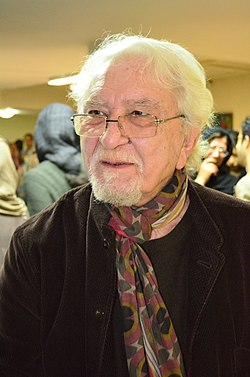
Not all Iranian thinkers and writers were obsessed with Islam or with Islam’s relations with the West. Others had a more positive view of the West and who rejected a narrow Islamic view of international relations, and believed in a deep level of political as well as philosophical dialogue with both the East and the West. Professor Shayegan (1935-2018) was one such philosopher. Despite his numerous books on Eastern and Western philosophies, he described himself: “I am not a philosopher, I am a free thinker.”
Daryoush Shayegan was a professor of comparative philosophy at the University of Tehran, who was active both under the Pahlavi period and after the revolution, when he divided his time between Iran and Paris and continued his teaching and writing till shortly before his death, which occurred on 22 March 2018 at the age of 83 in Tehran. He was fluent in English, French and Russian, as well as Sanskrit and his native Persian. In addition to his numerous works in Persian, he also published several books in French, including a novel, “Land of Mirage,” which won the ADELF award presented by the Association of French Authors on 26 December 2004.
Shayegan, who was born to a Shi’a father and a Sunni mother, was one of the few scholars who were more interested in turning towards the East rather than to the West, and who explored the links between Iranian and Hindu and Buddhist philosophies. However, he was also very well-read, both in Western philosophy, as well as in Hindu and Islamic philosophies and wrote many books on Western philosophers.
After his secondary school education in Tehran, Shayegan went to the University of Geneva to study medicine, but after only one term, he changed his mind and turned to the study of arts and literature. He then received his doctorate from the Sorbonne University in Paris. For a while, he also studied with the eminent French scholar of Persian philosophy and mysticism, Henry Corbin, who introduced him to Eastern philosophy. After returning to Iran, he studied Sanskrit at the University of Tehran, and in 1967, he published a scholarly work in two volumes on “Indian Religions and Philosophical Schools”.
Shayegan was the founding director of the “Centre for the Study of Civilisations” and advocated the “dialogue between civilisations”, which was later on taken up by the Iranian Reformist President Mohammad Khatami. In 2009, Shayegan was awarded the Global Dialogue Prize for “outstanding achievements in the advancement and application of intercultural value research”.
He published several works on the theme of Iran’s encounter with the West. In one of his books, Idols of the Mind and Perennial Memory, first published in 1975,[1] he argues that in order to understand the intensity of the challenge which Iran and the East generally face in their encounter with the West, it is important that they understand the main differences between the two world-views. He writes: “As opposed to our ‘poetic-mythological’ [sha’eraneh-asatiri] world-view, the Western world-view is based on ‘rationalism and realism or experimentalism’ [ta’aqoli-hosuli]. In the West, truth is merely something which can be proved by experiment and tests. According to him, the “rationalisation” of every manifestation of reality was accompanied by “de-mythologising”.
However, he was not an uncritical admirer of the Western view of life. He says that the ultimate outcome of this de-mystification and de-mythologising of reality, and reliance upon rationalism and experimentation, has led the West to the worship of man and history and has been summed up in Neitzche’s famous statement that “God is dead” and his concept of replacing the traditional view of God with a superman. The development of Western philosophy from Descartes to Karl Marx has turned nature itself into something purely materialistic and has turned man into a “working animal” ultimately to nihilism and existentialism. [2]
He studies the consequences of this kind of thinking for Western art and the influence it has had on Eastern and Persian art. He believes that this influence has led to a kind of artistic and intellectual chaos and disorder, which has encouraged blind imitation of everything Western. While Western art and architecture have developed out of a long process of intellectual development and rationalism during the past few centuries in the West, the imitated Iranian art, unlike Iran’s traditional art and miniature, which were deeply rooted in Iranian national and intellectual consciousness, has no roots and does not reflect the deeper artistic feelings of our people.
He believes that Iran and other Eastern countries are passing through a period of intellectual and artistic stagnation and transition (fetrat). Although he regrets the passing of Iran’s “poetic-mythological” world-view, Professor Shayegan seems to suggest that we do not have any strong defences against the Western onslaught. He writes: “In the face of the Western intellectual onslaught which believes in experimentalism and rationalism which has resulted in a technological age with its amazing material gains and technical ability, our poetic view of the world seems incongruous, brittle, reactionary and, according to some, it is even acting as a break in the path of progress.”[3] He blames all those who either totally reject or totally adopt what the West has to offer.
Nevertheless, he rejected the views of many Muslim thinkers who condemned Western philosophy without being sufficiently familiar with it. In fact, his book Cultural Schizophrenia: Islamic Societies Confronting the West was a critique of the Muslim world’s approach towards modernity.[4] He wrote about backwardness (ta’akhur) and inertia or ossification (jumud), contrasting them with the ideas of evolution and progress in the West. He pointed out that innovation (bid’a) was condemned by Muslim clerics as “the worst thing”. In fact, bid’a has become synonymous with heresy. He was especially critical of post-revolutionary clerics as opposed to traditional clerics.
Based on examples ranging from Iran to Morocco, Shayegan portrays a society he defines as peripheral – bound by a slavish adherence to its own glorified history, its “Tradition” – yet facing an external reality that derives from the West. The meeting of these two incompatible worlds leads to a profound distortion not only in how the Muslim world sees the West but, more importantly, in how it sees itself.
Speaking about the Iranian mullahs, he wrote: “The mullahs are putting their most unhinged fantasies into effect, giving free rein to their unbridled imagination, whipping the cult of martyrdom from frenzy to paroxysm, reducing timeless myths to their most flatly operational allude: and they are innovating in all directions. They have given concrete form to hallucinatory possibilities that once seethed harmlessly in the formless magma of our collective unconscious.”[5]
So, the period leading to the Islamic revolution was a period of great scepticism about the West and what it stood for, but many other philosophers who experienced the aftermath of the revolution saw the narrowness of that outlook and the need to interact with the West, as well as with Indian and other Eastern philosophies.
[1] Daryoush Shayegan, Botha-ye Zehni va Khatere-ye Azali, Tehran, Amir Kabir, 2535 Imperial Calendar.
[2] Daryoush Shayegan, Botha-ye Zehni va Khatere-ye Azali, (Tehran, Amir Kabir, 1976), pp 87-88.
[3] Ibid, p 90
[4] An English translation of this book by John Howe was published in London in 1992, and a paperback translation was published by Syracuse University Press in 1997.
[5] Ibid., paperback edition, p. 174

