

Translator’s introduction
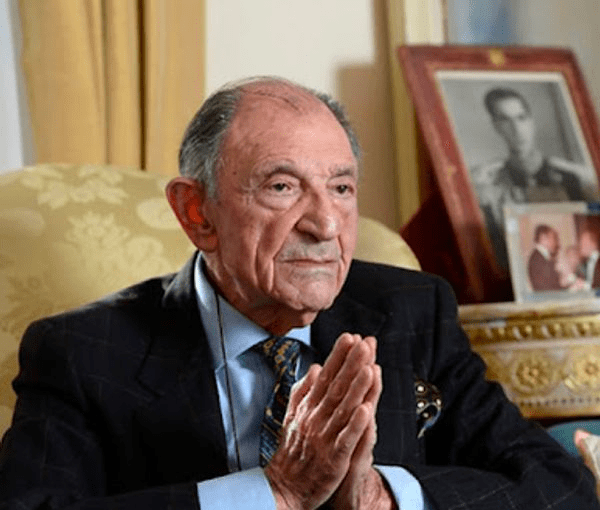
When an old friend of mine asked me to translate the Memoirs of Ardeshir Zahedi, I willingly accepted, even without having seen the book. I have been fully vindicated in my expectations of the book, and I hope that this feeling will be shared by its readers. This book is important for several reasons.
First of all, Ardeshir Zahedi comes from one of the oldest Iranian families, which has played a leading role in Iran’s political life for many centuries. On his mother’s side, Ardeshir Zahedi is the grandson of Hossein Pirnia, known as Mo’tamen al-Molk (1875–1948), who was one of the most enlightened Iranian statesmen of the Constitutional period (1905-11). He was elected to every session of the Iranian Parliament (the Majlis), which came into being after the Constitutional Revolution, from 1906 to 1943, and served as Majlis speaker for many years. He was again elected from Tehran to the 14th Majles in 1943, but declined to serve due to old age. He also served as minister of education in 1918 and minister without portfolio in 1920.
Hossein Pirnia’s older brother, Hasan Pirnia, known as Moshir al-Dowleh (1871–1935), was also a famous politician and scholar who played a leading role in drafting the text of the Fundamental Law of the Constitutional Revolution signed by the Qajar King Mozaffar al-Din Shah in 1906. After stints as Minister of Foreign Affairs and Minister of Justice, Hasan Pirnia served four times as Prime Minister between 1915 and 1924. Following his retirement, he published a three-volume history of pre-Islamic Iran, entitled Tarikh-e Iran-e Bastan (History of Ancient Iran), which is still regarded as an indispensable text on the subject. Hasan and Hossein Pirnia’s father, Mirza Nasrollah Khan, was also a Prime Minister during the Qajar era, and many of their ancestors had played leading roles in Iranian history for many centuries.
On his father’s side, the Zahedi family trace their ancestry back to a famous 13th-century Iranian mystic whose name the family still bears, namely Tajj od-Din Ebrahim, known as Sheykh Zahed Gilani, who came from the shores of the Caspian Sea and was the Grand Murshid or Master of the famed Zahediyeh Sufi Order of Lahijan, whose beautiful shrine in the picturesque village of Sheikhanvar near Lahijan still attracts many pilgrims. His ancestors had come from Sanjan in Khorasan province, fleeing the Seljuq invasion, and they settled in Gilan in the late 11th century.
Sheikh Zahed’s most notable disciple was Sheikh Safi ad-Din Ardabili (1252-1334), the eponym of the Safavid Dynasty (1501-1736) that formed Iran’s greatest dynasty after the Arab invasion in the 7th century AD. Safi ad-Din Ardabili married Sheikh Zahed’s daughter Bibi Fatemeh, and their descendants ruled as Safavid monarchs. Therefore, for the past 800 years, Zahedi’s ancestors have played prominent roles in Iranian history.
Secondly, Ardeshir Zahedi’s father, General Fazlollah Zahedi, was one of the architects of modern Iran. He was the youngest person ever to achieve the rank of general in the Iranian army. He was one of Reza Shah’s closest commanders who took part in many campaigns after Reza Shah came to power in 1921, including the campaigns in Kordestan to put an end to the rebellion by Esma’il Khan Semitqu, in Khuzestan against Sheykh Khaz’al, who wanted to set up an independent principality in that province, and in Gilan Province against Mirza Kuchek Khan. Therefore, he played a decisive role in the consolidation of Reza Shah’s reign and the establishment of a new unified Iran, which started on the path of the secular modernization of the country, with the establishment of a new regular army, new-style schools, the founding of Iran’s first modern university, a new legal system and early phases of industrialization of the country, including the introduction of the first medium sized factories and the construction of the trans-Iranian railway.
General Fazlollah Zahedi was also the man who led the military campaign against Dr Mohammad Mosaddeq’s government in 1953, after the late Shah Mohammad Reza Pahlavi had fled the country, and thus he restored the Shah to power and so initiated a most controversial period in Iran’s recent history. Opinions regarding the 1953 coup are sharply divided, with some regarding it as the end of Iran’s boldest experimentation with democracy and the nationalisation of the Iranian oil industry, while others see it as the beginning of 25 years of relative stability and rapid modernisation that propelled Iran into the centre of International politics at the height of the Cold War.
The third reason for the importance of this book is that Ardeshir Zahedi himself played a most crucial role in Iran’s recent history. He was the Shah’s son-in-law and very close to him right to the end of his life. He served as Iranian ambassador to Great Britain (from 1962 to 1966), and twice to the United States (from 1959-1961 and again from 1972-1979) and Iran’s minister of foreign affairs (from 1966-72). As the Iranian ambassador to the United States, he established close links with practically all the leading US politicians and was on personal terms with a number of US presidents. His lavish receptions and his closeness to many leading American figures had made him many friends in high places, as well as some enemies who accused him of interfering in US domestic policies.
Apart from the high-profile posts that he held, his closeness to the Shah meant that he was practically the second most important and most powerful person in Iran. The Shah had a very close relationship with Ardeshir Zahedi, which continued even after Zahedi and his wife, the Shah’s daughter, Princess Shahnaz, separated. He was the Shah’s confidant and advisor on whose advice the Shah often acted.
The fourth reason for the importance of this book is Zahedi’s close involvement in the events of 1953 and 1978-79. Zahedi’s version of the ouster of Dr Mosaddeq’s government is controversial and goes against the dominant narrative that the coup had been staged solely by MI6 and the CIA. Zahedi challenges the versions given by Kermit Roosevelt and Monty Woodhouse, the main architects of the coup, and other authors who have repeated their versions of events. Kermit Roosevelt has understandably embellished some of the details about his role in the coup, but as Ardeshir Zahedi points out in the book, his father met Roosevelt for the first time after the coup. Writing in his diary about his meeting with Kermit Roosevelt when the latter gave him a personal briefing about the coup, President Eisenhower rightly stated: “I listened to his detailed report, and it seemed more like a dime novel than historical facts”. Zahedi does not deny the existence of a foreign plot to unseat Mosaddeq’s government, but he provides evidence from declassified US archives that, according to the US Embassy in Tehran, Kermit Roosevelt’s efforts had failed.
Zahedi maintains that the coup was really an attempt by the Iranian military and a sizeable section of the Iranian elite and ordinary people who were worried about the course that events had taken during the latter part of Mosaddeq’s government. This version of events by someone who was intimately involved in those events is certainly worth hearing, because it might correct many erroneous assumptions about those momentous events and America’s role in them. It is worth noting that General Zahedi was related to Dr Mosaddeq through his wife, and in fact, he served as the interior minister in Mosaddeq’s cabinet. He was not against the nationalisation of the oil industry, but feared that Iran would fall to the Soviet Union, despite Dr Mosaddeq’s wishes, if the dispute with the West and domestic chaos continued for much longer.
Many Iranians rightly regard Dr Mosaddeq as one of their national heroes and admire his nationalisation of the Iranian oil industry. However, the notion that he was universally popular and the Shah was universally hated at the time of the coup is one that has become part of the national mythology. I personally witnessed two contrasting feelings at the time of the failed coup on the night of 15-16 August 1953 that led to the Shah’s departure from Iran, followed by the military operation on 19 August that toppled Dr Mosaddeq’s government and reinstated the Shah. While the feeling among many educated, urban young people, especially the followers of the communist Tudeh Party and other left-leaning parties, was strongly pro-Mosaddeq, the sentiment among many other traditional classes, especially in the countryside, where still most Iranians resided, was overwhelmingly pro-Shah.
I vividly remember those events as a schoolboy. My father owned some farms and gardens in a pleasant village in Kerman province, where we spent most of our summer vacations in order to escape the extreme summer heat of the town where we lived. As there were few radios in the village, during those critical days of August 1953, large numbers of villagers gathered around our radio to listen to the latest news bulletins. When, on 16 August, it was announced that the Shah had fled the country, and Foreign Minister Hossein Fatemi, in an insulting tone, announced that the Shah’s palaces had been seized and sealed, many villagers openly sobbed. However, when three days later General Fazlollah Zahedi’s voice was heard on the national radio announcing the fall of the former government and asking the Shah to return to the country, many villagers ran widely through the village shouting, “The Shah is back”!
Ardeshir Zahedi’s serious involvement in politics started with the 1953 coup in which he played an important part on his father’s side, and it ended with the 1979 Iranian revolution, when again he made every effort to forestall the revolution. In September 1978, shortly before the Iranian revolution, the Shah summoned Zahedi to Tehran for consultation and to discover the views of the members of the Carter Administration regarding the latest developments in Iran.
His arrival in Iran gave rise to many rumours that he might be asked to form a government and repeat what his father had done for the Shah in 1953. Zahedi was certainly popular among several leading clerics, chief among them Grand Ayatollah Abol-Qasem Kho’i and Grand Ayatollah Mohammad Kazem Shari’atmadari, who were strongly opposed to Ayatollah Ruhollah Khomeini’s radical interpretation of Islam and who gave their backing to Zahedi.
Zahedi also enjoyed the overwhelming support of military commanders who had a strong admiration for his father and who urged him to “do something”. However, Zahedi, who was, as always, loyal to the Shah, did not want to go over his head to form a government, and the official invitation from the Shah never came. The outcome of Zahedi’s possible involvement in domestic politics at such a late stage is only a matter of speculation, to which we will never know the answer. Nevertheless, it is yet another sign of the key role that he played in Iranian politics right up to the eve of the revolution. After the revolution, he was engaged in desperate efforts to find a residence for the Shah and the royal family, who had been rejected by most of their former allies and friends.
The fifth reason for the importance of this book is the mirror that it holds up to Iranian politics before the Islamic revolution, as well as to the approach of Western and especially US politicians towards the events in Iran. That 25-year period, when Ardeshir Zahedi was at the heart of Iranian politics, constitutes the most important period in Iran’s recent history. Reza Shah’s reign put an end to the medieval Qajar period and ushered in the start of modern Iran. His reformist policies were continued by his son, Mohammad Reza Shah.
During the reign of the two Pahlavis, Iran was transformed from one of the poorest countries in the world to a showcase of development among Third World countries. In 1920, Iran had a largely farm-based economy with endemic poverty and starvation. In 1979, it boasted one of the most developed economies in the Middle East, having made major strides towards industrialisation. During the last 15 years of the Shah’s reign, Iranians’ per capita income had increased twelvefold, from $195 annually in 1963 to approximately $2,400 in 1978 before the Islamic revolution. One indication of the relative decline of the Iranian economy since the victory of the revolution is the relative value of the Iranian currency. Throughout the 1970s, the Iranian currency Tuman was pegged to the dollar at seven Tumans for one dollar. During the past decades, despite hundreds of billions of dollars in oil revenue, the value of the Iranian currency has fluctuated between 1,000 and 1,100 Tumans to a dollar.
Under the late Shah, thanks to considerable outlay allocated to education, health, and social welfare, great strides were made in improving the lives of millions of Iranians. Infant mortality, malnutrition, endemic diseases, and illiteracy were greatly reduced. While rural versus urban income gaps and income inequalities persisted, indicators showed that large sections of the society had moved out of poverty to relative affluence. Elementary school enrollment during the 1970s quadrupled to more than 9 million, while the number of university students – all of them receiving free education and subsidies – topped 220,000.
Iranians enjoyed many social freedoms, including freedom of assembly, of dress, of travel, of religion, of entertainment and the use of alcohol. Women had been emancipated, had been given the vote, could be elected to high office, with many female ministers, university professors, judges and lawyers. Iranians could visit almost all European countries without a visa, and some three million Iranian tourists travelled abroad annually. However, despite all those freedoms and economic benefits, Iranians felt that their political freedom was restricted. The main reason behind the Islamic Revolution was to create a freer and more independent country. However, while Iranians have not achieved political freedom, they have lost nearly all the other freedoms that they enjoyed under the Shah.
Most Iranians, including many of those who took part in the revolution, feel cheated and look nostalgically back at the times of the Shah. Many people believe that the Pahlavi period was certainly superior to what had preceded it, and clearly much more enlightened than what has followed it. Nevertheless, it is important to carefully analyse the events of those years and examine the reasons for the emergence of the Islamic revolution. A proper assessment of those 57 years can provide many lessons for the Iranians, as well as for the nations in the Middle East and North Africa that have bravely risen against dictatorship and oppression. Learning from those events can help them avoid making the same mistakes as the Iranians did after the collapse of the former regime.
For all these reasons, the present book is worth careful consideration by all those who are interested in Iran’s recent history and the lessons that it can provide for the present generation of Iranians, as well as for their counterparts in the region and for the West in deciding how to respond to these upheavals.
This book is not written as a pretentious academic exercise, but is in the form of a simple conversation, with the author narrating his memories honestly and openly, mingling the good with the bad. The English translation has closely followed the original, but as some parts of the original Persian volumes were of little interest to Western readers, with the author’s consent and permission, some parts of the original have been condensed, with some chapters being deleted altogether. The transliteration method used in this translation does not follow the normal academic transliteration, but the words and the names are spelt as they normally appear in the press.
This book will no doubt give rise to a great deal of debate and controversy, but this is one of the functions of any good book. Therefore, I strongly commend the present book to Iranians abroad who cannot read Persian and to those who are interested in Iran’s eventful recent history.

