

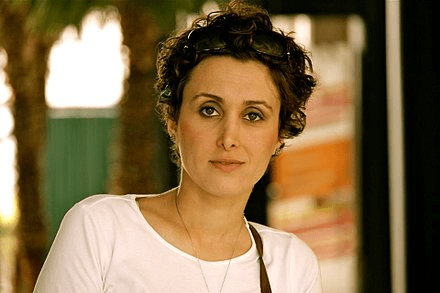
A Revolution in Rhyme: Poetic Co-option under the Islamic Republic. Fatemeh Shams (Oxford, UK: Oxford University Press, 2021). Pp. 400. $85.00 cloth. ISBN: 9780198858829
Reviewed by Farhang Jahanpour, Former Professor & Dean of the Faculty of Languages, University of Isfahan, Isfahan, Iran (fjahanpour@btinternet.com)
A Revolution in Rhyme by Iranian poet, scholar, political activist Fatemeh Shams treats the poets who rose to prominence shortly before or after the victory of the 1979 Iranian revolution. Shams has an impressive background both as an academic as well as a poet, with several of her poems recently translated into English. A Revolution in Rhyme demonstrates her extensive and intimate knowledge of many poets active since 1979 and especially those who have written about the Islamic revolution and Iran–Iraq War (1980–88). The book treats their work with sympathy and sensitivity, while displaying her wide knowledge of classical and modern Persian poetry, Western literature, and literary criticism.
In contrast to most English language studies of contemporary Persian literature, Fatemeh Shams chooses to write about how many young poets saw Ayatollah Khomeini as the embodiment of the revolutionary spirit. She quotes Nemat Mirzadeh (Azarm), a poet from Khorasan, who bravely addressed the exiled Khomeini in the following poem:
O’ you, far from the homeland, the imprisoned fighter
The heart of the nation is bound by your love
Like a [repressed] rage hidden in the fist, your throat is silent
Your soul is restless, like a lion in captivity.
Shams chooses ten poets to illustrate the wide spectrum of writing and thinking about Khomeini and the revolution, often exhibiting the unifying power of verse in the face of disparate ideologies. The poems show the euphoria of the early years of the revolution, followed by a feeling of disappointment as the result of the inconclusive outcome of the Iran-Iraq war, despite enormous sacrifices by millions of people and hundreds of thousands of “martyrs.”
As a result, A Revolution in Rhyme is not merely about post-revolutionary poetry but reveals the soul of a nation that experienced incredible elation, followed by a feeling of having been deceived, and ultimately many having turned against Khomeini and his ideology. It tells us the story of the rise and decline of the Islamic revolution.
One example of the early adulation of Khomeini is a poem by Hamid Sabzevari, called “This is the Cry of Freedom,” in which he praised Khomeini not only as an Iranian leader but as a saviour of all oppressed people:
This is the cry of freedom rising from the East
This is the cry of the humans rising from the depth of the soul
This is the call for the storms rising from each corner
This is the volcanic anger of the enslaved nations.
A leading female poet, Tahereh Saffarzadeh, who happened to be my classmate at the University of Shiraz, wrote a poem, “Oath of Allegiance to Awakening,” when Khomeini was still in exile in Iraq but was published after the revolution:
Return
Return
You, the kind teacher of wakefulness.
You, the teacher of the battle for emancipation
A vigilant angel has arrived from Qom
The graves have cracked
The human woke up from his profound sleep
Anxious and keen
To wash away the sin of oppression
However, as the Iran–Iraq War dragged on, the number of dead and injured piled up, and the government tightened its grip, the mood began to change. As the author points out: “Death and bloodshed had to be rebranded. The sinister face of violence had to be concealed and consecrated” (p. 167). With the fall of Khorramshahr, a major port in the oil-rich Khuzestan province, Qaysar Aminpur, a poet born in Khuzestan, wrote:
I wanted
To write a poem for war
I realised that it would not be possible
The pen is no longer the idiom of my heart
“Pens should be put down,” I said
The cold arsenal of words is no longer effective
One must take up deadlier weapons
In my ode to war I must recite through the barrel of a gun
With expressions of bullets.
Later on, Aminpur questioned the whole notion of the enemy and the meaning of victory in war. Despite great bloodshed, the enemy never disappeared and with the fall of one enemy new enemies were created:
At his burial, the martyr said:
If victory means the enemy’s failure
Why is there still a living enemy?
Instead of glorifying war, victories and martyrs, doubts began to emerge about the whole concept of war. Again, according to Aminpur:
The falling martyr,
Dipped his finger into his blood
And wrote a few letters on the stone:
I wish a real victory
Not in the war
But over the war
The changed mood was not only due to disappointment in the war, but in the loss of revolutionary ideals, the decline of public morals and corruption and mismanagement.
It is remarkable that, shortly before his death, in a poem, Khomeini also described his own profound disappointment at not having been able to achieve his goal. When forced to accept the terms of the ceasefire with the Iraqi dictator whom he had pledged to defeat, Khomeini compared it to drinking “a cup of poison.” Referring to the mystical “beloved” that he had failed to embrace, Khomeini wrote:
My life has reached its end and still my beloved has not come
My tale has ended but an end to this heartache has not come
I have in hand death’s cup but have never seen a cup of wine
Years have passed but a favor from my darling has not come…
After Khomeini’s death, his successor Ayatollah Khamenei organized annual poetry reading nights in which hundreds of poets took part, reciting their poems in his presence, reminiscent of the court poets of former kings. However, according to Shams, the spirit of the early days had vanished and the new poems lacked sincerity.
The mood of cultural, religious, and social disillusionment was best summed up by an early devoted follower of the revolution Qaysar Aminpur. In his poem called “Descent into the Desert” he wrote:
At first this heart was blue, in the end it turned yellow
At first it was sunny, in the end it turned cloudy, black, cold
Anything it imagined an ideal, turned into a pity
Anything it imagined a cure, turned into pain.
The complete loss of faith in the revolution can be seen in a poem by Nemat Mirzadeh who nearly 30 years earlier had praised Khomeini in a panegyric qasīda. However, in the following poem written from exile and posted to Khomeini’s successor, Ayatollah Khamenei, he openly criticizes Khomeini’s lack of vision and his inability to lead the nation to the Promised Land, instead dragging them towards a swamp:
Here lies a man who had a delayed birth of more than a thousand years
He was not a man of his time
And the earthen jar of his heart
Could not uphold a people’s love
Nor could he endure to carry the burden of the people’s trust
On the shoulders of his mummified belief
Nor did he have the blessed fate
To vanish while at his greatest peak
Like a star that burns the night with its zeal
And disappear like an asteroid
His fate was of another kind
He arrived amid tears of joy
And left behind a swamp.
There are a few minor typing errors in the book. Nonetheless, A Revolution in Rhyme skillfully charts the process of the evolution of the initial euphoria that had gripped many supporters of Ayatollah Ruhollah Khomeini and the Islamic Revolution, including many writers and poets, towards the loss of faith in the revolution and its ideals. This book is indispensable for those who wish to see how many leading Iranian poets reacted to a unique and strange revolution that promised to reform the society in the name of religion towards the end of the 20th century. It shows how many educated, liberal, leftist, progressive, secular, as well as many religious people were mesmerized by a revolution that promised an end to despotism, dependence and corruption, and how in a few short years they felt that they had been cheated, and turned strongly against Khomeini and his revolution.
A Revolution in Rhyme may also be valuable to many sociologists who wish to study the phenomenon of a religious revolution in the modern age, and how it failed to sustain the support of its original followers. For those interested in the political repercussions of the Islamic revolution, the book demonstrates how the revolution has turned many formerly religious people against religion and has helped the process of secularization in Iran. The majority of educated Iranians are at best indifferent towards the religious establishment that has dominated Iranian politics during the past four decades, and at worst, they are intensely hostile to it and work hard to topple it and replace it with a more democratic and liberal regime. Repeated violent protests and uprisings are the best testimony to people’s dissatisfaction in their reactionary rulers.
For all these reasons, I strongly recommend this fascinating and informative book.

