

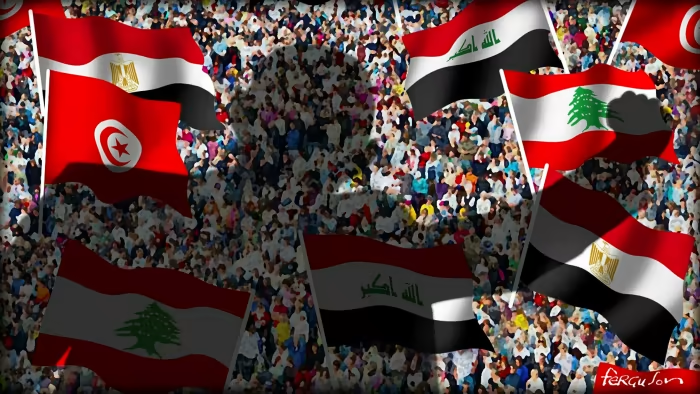
Lecture 3 in a series of lectures given to a group of British and American journalists at the BBC Monitoring on 22 April 1999
The resurgence of democracy
Since the early 1980s, and especially after the collapse of the Soviet Union and the end of the Gulf War, the claim for democracy by multi-party rule has topped the agenda of many countries in the Middle East and among the former Soviet republics. Although there has been a remarkable increase in the number of democracies worldwide, the situation in the Middle East is still far from desirable.
After the end of the Gulf War, President George Bush spoke of a New World Order and the dawn of a new era of democracy in the region. However, out of the eight Arab states participating in the coalition against Iraq, only Egypt tolerates a degree of political dissent. Six of the Arab coalition forces – Saudi Arabia, Kuwait, Oman, Bahrain, Qatar and the UAE – are family or tribal oligarchies with no popular mandate. Syria also lacks any democratic credentials.
In many countries in the former Soviet bloc and parts of the Middle East, civil society is so weak and poorly organised that it is not possible to organise a quick transition from authoritarian rule towards liberal democracy, pluralism, and the rule of law. In such societies, political parties – if any – are weak, disorganised and especially without any experience in politics. Few of them have had any experience of democracy in the past, and in many of them, there are many restrictions on freedom of expression and a free and independent press. Most political parties in the region are centred around certain individuals and lack any coherent political, economic or social programs. In nearly all Middle Eastern societies, the media is under the control of the state, and access to foreign media is often limited.
However, despite these serious restrictions, many members of the intellectual elite and especially the more educated younger generations in those countries have begun to voice ideas about the need for democratic reforms. The governments in many Middle Eastern countries are already facing relatively articulate and well-organised movements in favour of civil society, greater freedoms and more representative governments, and many rulers are already scrambling to find a response to this challenge. The strength of these movements varies from society to society, and the response of the rulers ranges from total hostility to such demands to partial compliance, and in a few societies, there is a coalition of interest between the reformers and some members of the ruling establishment.
Democracy in the Ancient World
Before looking at the prospects for democratic reform in the Middle East, I want to make a few introductory remarks that may shape our expectations about the pace of democratic reform in the region and whether democracy is compatible with Islam. Many people in the Middle East feel that some political leaders in the West are trying to impose their version of democracy on the Middle East with an almost missionary and crusading zeal. They wish to make the world safe for democracy in the same way that their crusading forefathers were trying to make the world safe for Christianity. Some leaders and political analysts believe democracy can be transplanted to the Middle East, or established during the tenure of a single president or ruler, or through military force and regime change. Of course, anything that is established that quickly will have no roots in society and will wither as the result of the slightest adverse wind.
Last week I referred to some of the myths that individuals and nations – both in the East and the West – hold about themselves and about each other. One such myth that is very prevalent in the West, even among liberal thinkers, academics and journalists, is about the long-standing democratic traditions of the West as opposed to the so-called “Eastern despotism.” In most Western writings on the subject of democracy, reference is made to the discovery of democracy in ancient Greece. Then, with a giant leap of some two thousand years, that period in Greece is linked with the writings of Charles Louis de Montesquieu, Jean Jacques Rousseau, John Locke and David Hume, and with Western democracies that have developed during the past two centuries in the West.
There is no doubt that ancient Greeks made an enormous contribution to the evolution of political thought and laid the foundations for much of subsequent development in the field. Their ideas still shine as beacons of light in the history of rationalism and philosophical thinking. The word democracy itself is derived from the Greek demokratia, from demos, “the people,” and kratos, “rule.” Plato and Aristotle, in their pioneering attempts to create a systematic theory of politics, recognised democracy as one of the five or six main types of government. The best definition is provided by Aristotle:
“A democracy is a state where the freemen and the poor, being in the majority, are invested with the power of the state… The most pure democracy is that which is so-called principally from that equality which prevails in it; for this is what the law in that state directs; that the poor shall be in no greater subjection than the rich; nor that the supreme power be lodged in either of these, but that both shall share it. For if liberty and equality, as some persons suppose, are chiefly to be found in a democracy, it must be so by every department of government being alike open to all; but as the people are the majority, and what they vote is law, it follows that such a state must be a democracy.”[1]
It is, however, often forgotten that although Aristotle provided such a clear definition of democracy, it was not his own preferred form of government. He normally associated democracy with populism and mob rule, while the best form of government, in his view, was one that was ruled by the intellectual elite and by the philosopher king. It should further be remembered that in this form of democracy, which was practised for a short time in ancient Athens, the greatest of ancient democracies, the franchise was limited to native-born citizens. The majority of the people, namely women and slaves, were not included. In fact, Aristotle denied women any equality with men and even questioned whether they possessed a soul. He maintained that women had been formed in human shape merely to be attractive to men for the sake of procreation. The use of sortition (casting of lots) in preference to election was regarded by Aristotle as one of the characteristic features of democracy.
Furthermore, the number of citizens in Athens was no more than 10,000. In ancient democracies, all citizens were entitled to attend the legislative assembly and to vote. However, the failure of the ancients to develop a representative system made it impossible for them to create large democratic states. The nearest modern parallel is to be found in the New England town meetings and in some of the smaller Swiss cantons. Direct democracy was one of the most obvious ways of organising a political community among small tribes or city-states. It was practised in many primitive societies known to modern anthropologists. Even today, among the tribal people or among the Bedouin Arabs, there is a similar form of democracy. Often, after the death of a tribal chieftain or a village elder, his successor is chosen through the people showing allegiance to one of the senior people who is the most popular.
After the end of the golden age of philosophy in Greece and with the emergence of Alexander the Great and later the Roman Empire, the theory and practice of democracy were almost totally neglected, and the West lost its contact with Greek classics. Ancient Greek learning was revived only under Islam, when nearly all the great ancient Greek texts were translated into Arabic during the first few centuries of Islamic rule. It was not until many centuries later that ancient Greek ideas were reintroduced to Western Europe through Latin translations of Arabic texts. Arabic translations of the Greek texts and Muslim commentaries and additions to those texts formed the bridge between ancient Greece and post-Renaissance Europe.
It would be a mistake to deny any liberal and democratic ideas to the Middle Eastern people and believe that democracy and liberalism are Western monopolies. Many examples of tolerance and good governance exist in Middle Eastern history. Many Middle Eastern countries during the Middle Ages were no more oppressive or more despotic than their Western counterparts. From the famous Declaration of Cyrus the Great in the 6th century BC, announcing the freedom of belief and allowing some 40,000 Jews to return home from their Babylonian captivity, to Prophet Muhammad’s Covenant with the people of Medina, and Caliph Umar’s Covenant with the inhabitants of Jerusalem in 638, there has been a tradition of tolerance and pluralism in the Middle East.
In practice, there existed a tolerant and cosmopolitan climate under the Abbasids, who ruled the Islamic empire from 750 to 1258 AD. The Ottomans introduced the Millet system, granting civil and religious rights to the members of different religious communities. Most Western travellers and scholars were impressed by the fairly tolerant attitude towards religious and ethnic minorities under the Safavids in Iran and the Mughals in India. From all these examples, one can deduce that Eastern governments were not as despotic and cruel as is often imagined.
Democracy in the Modern World
When we talk about democracy as a form of democratic government, as opposed to ancient theories of democracy, we should realise that it is a new phenomenon in the whole world. Even in the West, democracy did not start until a relatively short time ago. The French Revolution of 1789 is sometimes regarded as the first starting point of democracy. Yet the effect of the French “Declaration of the Rights of Man and of the Citizen,” which affirmed the principles of civil liberty and of equality before the law, was short-lived and was followed by the imperial reign of Napoleon and his successors. The U.S. “Declaration of Independence”, which asserted the right to life, liberty and the pursuit of happiness, was the most brilliant invention of the late eighteenth century. The U.S. “Declaration of Independence”, the US Constitution and “The Bill of Rights” made a major contribution to the development of democracy in the rest of the world, but they have also evolved with time, and what we understand from them now is quite different from what was understood at the time.
Despite their lofty aspirations and optimistic statements that assert that all men are created equal, it should be borne in mind that, again, rather like in ancient Greece, this equality did not initially extend to the slaves or to women. The suffragette movement in the United States and England became successful only after the First World War, not till 1937 in France and not till 1975 in Switzerland. In Britain in 1918, women over the age of 30 who satisfied certain conditions gained the vote, and in 1928, suffrage was granted to women over the age of 21. The history of the suffragette movement in the United States also corresponds quite closely to the developments in Britain.
Even so, until recently, the number of women members of the British Parliament and the US Congress remained very low. In the United States, black people were theoretically given the vote after the Civil War (1861-65), but, in practice, they did not take an active part in political affairs until the Civil Rights legislation under President Lyndon Johnson in the 1960s. Poverty was another impediment to universal participation in the elections because, for a long time, only those who owned property were eligible to vote. Therefore, when it was stated that “all men are created equal”, that statement referred only to white, free and propertied men, excluding all the rest.
It is appropriate to point out that the Iranian Constitutional Revolution (1905-11), which was sponsored by Iranian intellectuals and widely supported by most of the people in all parts of Iran, who rose up against the ruling Qajar Dynasty and put an end to royal dictatorship, was the result of the democratic yearnings of the Iranians. The Iranian democracy was achieved as the result of extensive struggles and sacrifices of the Iranian people against a dictatorial government, which was supported by most Western countries.
Iran’s 156-member Parliament, Majles Shora-ye Melli (the National Consultative Assembly), the first in the whole of Asia, gathered for its first session on 7th October 1906 to write a constitution, and the first nationwide elections for electing 252 parliamentarians were held on 17th September 1906. At that time, Iran was bordered by the Russian Empire to the north, the Ottoman Empire to the west, and the British-controlled Afghanistan and India to the East. So, it was surrounded by three empires. Russian tsars, who were close to the Qajar Shahs and whose nationals commanded the Persian Cossack Brigade, opposed the Iranian Constitutional Movement. It is sad to point out that even democratic Britain did not back the constitutionalists because it was worried about weakening the Qajar rule in fear of what it meant for its interests in the region, especially in India, although it allowed Iranian protestors to take refuge in the British Embassy in Tehran.
Western democracy evolved from simple beginnings. Even those far-sighted and visionary individuals who drafted the American Constitution saw democracy in a different light from how we see it today. In 1776, in the context of the Virginia Senate, Thomas Jefferson argued that only the ‘wisest men’ should be Senators and, when chosen, that they should be perfectly independent of their electors, because ‘choice by the people themselves is not generally distinguished for its wisdom’. And that Senators should be, ‘appointed for life, or to anything rather than a mere creation by and dependence on the people.’[2]
In 1763, John Adams (who was to help draft the Massachusetts Constitution) claimed that ‘Democracy will soon degenerate into anarchy, such an anarchy that every man will do what is right in his own eyes, and no man’s life or property or reputation or liberty will be safe’. Not surprisingly, in the Constitution of Massachusetts, not only were the electors of the Senate to possess more wealth than those of the Lower House, but those for the Governor were restricted by a tougher financial restriction.
Later, John Adams, in his book, Defense of the U.S. Constitution, said of the populace that it had, ‘as blind an instinct as those worms that die while weaving magnificent habits for being of a superior order’ — hardly a democratic sentiment.[3] James Madison (the chief writer of the Constitution), in the Constitutional Conventions, saw the role of the Senate as ‘to protect the minority of the opulent against the majority.’[4] Alexander Hamilton argued for lifetime terms for both the president and the Senate and warned that if the government was in ‘the hands of the many, they will tyrannize over the few’. And that ‘nothing but a permanent body [a lifetime senate] can check the imprudence of democracy.’[5]
To be fair, the above-mentioned architects of the American Constitution quickly changed their views about democracy when they saw it at work. American public opinion was more powerful than the ideas that shaped their Constitution, and it determined that it should be democratic. As James Maddison noted in 1792, `Public opinion set bounds to every government, and is the real sovereign in every free one.’[6] Nevertheless, it is important to bear in mind that the theories and the practice of American democracy evolved over time until they reached their present form. Surely, other nations are also liable to go through many learning experiences until they manage to devise a form of democracy that best suits their circumstances.
One should also not forget that even in our own times, Western democracy has faced many challenges and reversals. After all, this century has seen the rise of absolutist and totalitarian ideologies such as Nazism, Fascism, and Communism, all originating in the West. Spain was ruled by a fascist dictator, General Franco, until 1975, and communism was partially dismantled only a decade ago (many states in Central Asia and indeed in Russia, Yugoslavia and some other Eastern European countries are still ruled by former communist party members). The dreadful ethnic cleansing in Bosnia a few years ago and in Kosovo now further demonstrates that even in Europe, democracy is still very fragile and can easily be reversed. Therefore, the belief that there has been a long and inherent concept of democracy in the West as opposed to “Eastern despotism” does not stand up to scrutiny.
Nevertheless, it must be admitted that despite all the shortcomings and challenges that democracy has faced in the West, the new concepts of democracy and human rights owe most to the political and intellectual development of the Western world in the last few centuries. The people of other cultures, including the Islamic countries, latched on to these concepts and are trying to adapt them to their own circumstances. It is possible to refine and reinterpret the concepts of democracy and human rights in such a way that would make them more compatible with different cultures, to make them feel more “indigenous” or more “authentic”. Nevertheless, the main tenets of democracy and human rights that stress the rights of individuals and allow citizens to elect their leaders and choose their form of government cannot be interpreted away. Otherwise, the outcome will not be democracy.
Different Varieties of Democracy
It is also important to bear in mind that there are many different types of democracy. Most Americans, when they talk of democracy, think only of the American version of it and regard other forms of democracy as somewhat inferior or defective. There is no unanimity of views about the true meaning of democracy. The term democracy has been used in several different senses:
- Direct democracy. It is a form of government where the right to make political decisions is exercised directly by the whole body of citizens, acting under procedures of majority rule.
- Representative Democracy. This is a form of government where the citizens exercise the same rights not in person but through representatives chosen by and responsible to them.
- Radical democracy. It is a form of government that enables undifferentiated individuals to exercise their rights and protect their interests. In this form of democracy, individual interests are subordinate to the interests of the majority. One may refer to this form of democracy as the tyranny of the majority.
- Guided democracy, which involves the unchecked pursuit of objectives proclaimed by the ruling elite. Individual interests are seen as synonymous with state interests. The political elite is regarded as the executors of the general will.
- Socialist democracy, which stresses equality and social justice, rather than individual freedom. This system involves the redistribution of resources to reduce inequality of wealth and income. Under this system, attitudes to civil rights are ambiguous, as a certain amount of coercion is required to achieve the stated objectives of equality.
- Liberal or constitutional democracy. This is a form of government, usually a representative democracy, where the powers of the majority are exercised within a framework of constitutional restraints designed to guarantee the minority the enjoyment of certain individual or collective rights, such as freedom of speech and religion.
- Finally, the word democratic is often used to characterise any political or social system which, regardless of whether or not the form of government is democratic in any of the above senses, tends to minimise social and economic injustice and the violations of the rights of the citizens.
At the moment, various democratic governments fall within one of the above definitions, and clearly, some are more liberal and more democratic than others. In the West, democracy came to birth with pain, bloodshed, upheaval, revolution, exploitation and cruelty. Above all, it was a gradual and evolutionary process. Today, we are witnessing similar convulsions and uncertainties as some versions of Western modernity are being implemented in the Middle East within a much shorter time span. We should not expect a magic wand, nor should we expect very quick results.
In the writings of the nineteenth-century philosopher and theorist John Stuart Mill, democracy was inextricably linked with representative government, which, to exist at all, had to meet three fundamental conditions: “People should be willing to receive it; they should be willing and able to do what is necessary for its preservation; and they should be willing and able to fulfil the duties and discharge the functions that it imposes on them.”[7]
He believed that participation through the ballot box would be self-improving, would reveal the general interest of the community at large to take part in the affairs of the state, and would make the society more cohesive, thus reducing social tension and the need to resort to force by the government. But, of course, all that requires a high level of education and social consciousness. It also requires the establishment of civil society, the development of a free press, and mechanisms for public participation in the affairs of the society.
True democracy goes beyond the purely institutional framework. It refers to a state of mind, a tolerant attitude and respect for others. It requires genuine belief in pluralism and respect for other beliefs and ideologies, and it believes in racial, sexual, religious, and social equality. Therefore, it is important to develop a democratic culture that respects the mutual rights and responsibilities of the government and the citizens. One of the requirements of a lasting democracy is democratic education and the propagation of a political culture so that the citizens gain a growing understanding of the workings of democracy. It means the recognition of the equal rights of men and women, as well as the equal rights of members of religious minorities – both of which pose problems in some Islamic societies.
The ability to elect and depose the government would be the minimum requirement of a democratic society, and even this is not fully developed in most Islamic countries. However, societies must live with their own history — they have no other — and the question we ought to ask is not whether this or that society or state has become like us, but whether there is a greater or lesser measure of political liberty today than yesterday. These should include freedom of thought and of expression, freedom of electoral choice, justice for all, the right to public dissent, the right to emigrate, etc. Mere elections do not represent a true liberal democracy. After all, Hitler came to power through an election, and there have been many other examples of elected leaders who have proved to be less than satisfactory in practice.
At the same time, we should be careful not to ascribe too close a relationship between economic reform and political change. The formula of ‘open politics’ and ‘open markets’ owes something to Friedrich Hayek’s linking of free markets and free citizens, but we should be chary of assuming that the pursuit of economic reform in repressive societies will necessarily lead to liberalism in politics, as witnessed in China and several developing countries, where there has been a degree of economic liberalisation, but so far without political liberalisation.
Also, it seems that democracy is not essential for economic growth and material advancement. The economic situation in Indonesia improved enormously under General Suharto, despite the lack of any political reforms. By adopting, broadly speaking, market-oriented policies, Suharto took his country from a per-capita GDP of about $100 to a per-capita GDP of $3,500 before his fall. But he didn’t do very much on institutional liberalisation. Conversely, the economic situation in Russia and some Central Asian countries has gone from bad to worse, despite democratic reforms. Therefore, democracy does not always bring about the desired economic results, at least not in the short term.
At the same time, poverty does not necessarily need to be a bar to democracy. Parliamentary democracy in India is remarkable in the sense that it breaks the link between liberalism and wealth. India is certainly poor, though less so than in the early years of independence. The picture of parliamentary government in India has been described as “continuously contradictory, wonderfully varied, marvellously muddled, by turns or even simultaneously exasperating, absorbing and infuriating, only and always distinctively itself.”[8]
In brief, democracy is a wonderfully complex system, and it is no good to simplify it and to try to impose one particular form of democracy on different societies regardless of their history and state of political, economic and social development. “Democracy”, writes John Dunn, “is the name for what we cannot have – and cannot cease to want.”[9]
The Present State of Democracy in the Middle East
The direction and pace of a possible democratization process in the Middle East will presumably be influenced by five social forces, namely: 1- The nature of the regime or government. 2- The religious and ideological nature of the society. 3- The past record of democratic reforms and the state of local civil society. 4- The strength of public opinion pushing for democracy. 5- The international community, represented by democratic governments and international organisations, which presses for democratisation.
As far as the regimes in the Middle East are concerned, most of them have come to realise that there is no escape from introducing some form of democracy. Among the Arab countries, six countries have held elections with the participation of two or more parties and open opposition against the incumbent regime. This was the case in Egypt, Algeria, Tunisia, Morocco, Jordan and Yemen. Egypt has had regular elections since 1976, with the last elections in November 1995.
Although Egypt is a nominally multi-party democracy with a 454-member People’s Assembly and a 210-member Advisory Council, the true power of government is held by the President, who serves for 6-year terms and exercises wide-ranging powers. Ever since the fall of the monarchy in 1953, following the Egyptian Revolution of 1952 and the establishment of a republic, Egypt’s first two presidents, Gamal Abdul Nasser and Anwar Sadat, remained president for life. The same seems to be true of the incumbent, President Hosni Mubarak. The People’s Assembly, however, approves the budget, levies taxes, approves government programs and can censure cabinet members. In 1961, Gamal Abdul Nasser banned all existing political parties except for the Arab Socialist Union (ASU), and for 16 years, Egypt was ruled as a one-party state. The multiparty system was reintroduced by Anwar Sadat in 1977, but Islamist parties, including the Muslim Brotherhood, are prevented from open participation in elections.
Algeria staged elections for municipal as well as provincial councils in 1990 and the general elections in 1991-92, which were won by the Islamic Salvation Front (better known by its French name, Front Islamique du Salut, or FIS), but they were cancelled as a result of a military coup. The latest elections were held on 15th April 1999. However, only two days before the elections, six of the seven candidates withdrew from the election, leaving Abdelaziz Bouteflika, a former foreign minister and the candidate supported by the army, as the sole contender. There was a low turnout, and there were protests and demonstrations in many Algerian cities.
The six candidates who withdrew on the eve of the vote alleged that there was massive fraud in early voting at special stations for soldiers, and people scattered in the vast Sahara Desert region. A joint statement signed by the six said they would mobilise popular support to “impose a true democracy” in Algeria. Therefore, it seems that the long record of clashes in Algeria that have claimed the lives of at least 75,000 since 1992 will continue.
Tunisia was governed by Habib Bourguiba for a long time. In March 1975, he was proclaimed “President for life”. His regime finally collapsed in 1987, with a coup by his new premier, Zine el-Abidine Ben Ali, who seized power and declared the former president mentally unfit to fulfil his duties. Tunisia’s first free election since 1956 was held in April 1989, in which some opposition parties were allowed to participate. Zine el-Abidine Ben Ali’s Democratic Constitutional Assembly Party won a landslide victory. Zine el-Abidine Ben Ali was elected president with no opposition.
In 1989, Jordan held its first free parliamentary elections since 1967. The participation of parties was, in principle, illegal, but it was nevertheless tolerated. In the 1993 elections, the Muslim Brotherhood participated as a party and gained many seats. This practice was later stopped, as there was growing opposition within the Muslim Brotherhood to the peace treaties with Israel.
At the time of the unification of North and South Yemen in May 1990, elections were held for the new joint parliament. Morocco, too, has a limited multi-party system and holds elections at regular intervals.
In the Persian Gulf region, Saudi Arabia introduced a Majlis al-Shura after the Gulf War, while Kuwait and Bahrain have had older records of elections. In Bahrain, there were elections shortly after the sheikdom received its independence, but since the government suspended the country’s first popularly elected parliament in 1975, there has been popular agitation for a return to democracy. It is hoped that fresh elections will be held under the new emir. Recently, we have witnessed general elections with the participation of women in Qatar.
However, most of these elections are imperfect, as often there is limited scope for the freedom of expression and the expression of open dissent, and the elected parliaments are mainly powerless and ineffectual. To take the example of Kuwait, which has had the longest record of democracy among the Persian Gulf littoral states, there are free elections fixed at a four-year interval, the last being held in October 1996. During these elections, any eligible man within his own constituency (of which there are 25) can stand as an independent candidate. In the last election, two candidates per constituency were elected, making a total of 50 elected Members of Parliament.
Several questions must be asked about the nature of the elections. The first question is “Who is eligible to vote?” In 1996, Kuwait had a population of 1.5 million, of which only 600,000 were Kuwaitis, and the rest were foreign workers. Out of the whole population, only three-quarters were “first class” citizens. In addition, only male adult citizens could vote. That meant that only 90,000 inhabitants of Kuwait were able to vote on the future of their country. It is clear that this system, as it stands, cannot justly represent the whole of society. In the recent, much-publicised elections in Qatar, it is believed that about 30,000 people voted.
The second question is “Who is eligible to be a candidate?” Theoretically, any male literate Kuwaiti aged 30 years and above can stand for election. He will not be able to represent a political party and should be considered an independent candidate. By opening his diwaniyya or family or tribal assembly to potential voters in his area, the candidate can put forth his beliefs and ideas. Even though the country does not allow official parties, there are clearly three different factions in Kuwait – Sunni, Shi’i and Bedouin.
The possibility of political parties in these circumstances is regarded as potentially dangerous, as they may lead to factional strife. It is believed that most voters often vote on factional lines. It would be difficult to imagine the Sunnis, for instance, voting for a Shi’i or a Bedouin candidate, or vice versa. Of course, in order to broaden the scope of the election and to open up the electoral system to more people, it is essential to widen the suffrage, both to women and to many others who are native-born Kuwaitis, as well as to those who have resided there for many years. Also, in order to get rid of this feeling of factionalism, it may be advisable to treat the whole of Kuwait as one constituency.
The example of Kuwait, which is the most advanced democratic state among the Persian Gulf littoral states, shows the problems that exist in that region and the distance that has to be traversed. It is even worse in Iraq, where the autocratic nature of Saddam Hussein’s regime does not allow for any genuine public participation in the affairs of the state. At least 65 per cent of the population of Iraq is Shi’i, and about 20 per cent are Kurdish. Yet some 20 per cent of Arab Sunnis, mainly from the Tikrit area, hold the reins of power.
The situation is quite different in the three non-Arab countries of the region, Iran, Turkey and Israel, where there have been long-standing democratic traditions and a long history of regular elections. These three are the strongest democracies in the region, but even they are not perfect.
As was mentioned before, Iran has had the longest record of an elected parliament in Asia. However, with the interference of Allied forces in Iran during the First World War, democracy was forced to take a back seat. Reza Shah staged a coup against the Qajar Dynasty and was declared by the Majlis as the new king and founder of the Pahlavi Dynasty. With the start of the Second World War, when the Allies wanted to gain access to Iranian oil and prevent the Nazis from doing so, they deposed Reza Shah, sent him into exile and put his young son, Mohammad Reza Pahlavi, to succeed him. It is remarkable that, despite the two wars and many domestic upheavals, parliamentary elections have continued in Iran and the Majles has continued to exist, although with little real power. Democracy in Iran suffered a major setback in Iran in 1953 when the British and American governments staged a coup against the democratic government of Dr Mohammad Mosaddeq, whose government had nationalised the Iranian oil industry. Dr Mosaddeq was replaced by General Fazlollah Zahedi, who basically introduced a police state in Iran.
Again, ever since the victory of the Islamic Revolution in 1979, Iran has held regular parliamentary and presidential elections. Unlike most Middle Eastern countries, the Iranian presidents have been elected for a maximum of two terms and have then been replaced. It must be admitted that the Iranian parliaments have been more competitive and have had more influence on national affairs than they did under the Pahlavi monarchs. However, judged by Western liberal standards, Iran’s democracy is not perfect. Iran’s Islamic Constitution declares Islam to be the official religion of the state, and furthermore, it only gives the Shi’is the status of first-class citizens, although there are seats allocated for the Sunni, Zoroastrian, Jewish and Christian candidates. All candidates for local or national elections have to be vetted by the clerics-dominated Guardian Council. Ever since the start of the Islamic revolution, the supreme leader, the president, the head of the executive, the head of the judiciary, the head of the legislature, and many other leading members of the regime have not only been Shi’is but have also been clerics.
Turkey, on the other hand, is a strictly secular state and bars any religious groups from open participation in politics. The secular military establishment did not even tolerate the coalition government of Necmettin Erbakan in 1996-97, although his Refah Party had joined a coalition with the staunchly secular True Path Party (DYP), led by the former Prime Minister Tansu Çiller. Before its coalition with the Refah Party, the DYP had strongly advocated the separation of religion and politics and saw no role for religion as part of the state. Refah Party received the highest number of votes in the last national elections held in December 1995.
After the banning of the Refah Party, most supporters of the Islamic Party joined a new party called the Virtue Party, with the same ideology as the party that it replaced. The Virtue Party has suffered recently as a result of the arrest of some 400 militant Islamists who were allegedly collaborating with that party, also as a result of the arrest of the Kurdish leader, Abdullah Öcalan, whose arrest has strengthened the hand of the military and the secular parties. The elections held in Turkey on 18th April 1999 confirmed the wave of support for the incumbent government, but they also provided mixed messages. Bülent Ecevit’s party, the Democratic Left (DSP), topped the poll with more than 21% of the vote. The Islamist Virtue Party’s share of the vote dropped from 22% in the last election (cast for its predecessor, the Refah Party) to about 17%. However, there was a dramatic increase in the number of votes cast for the extreme right-wing, the Nationalist Action Party (MHP), which won about 18% of the vote. The figures mean that the new government will again have to be a coalition, and will need the support of at least three parties in the new parliament.
The leftist DSP and the rightist MHP have a history of conflict dating back to the 1970s, when supporters of the left and the right fought bloody street battles, and the country sank into a situation of a virtual civil war that eventually led to the 1980 military coup. The history of hostility towards these two parties that have now won the biggest share of the vote bodes ill for the future. Also, as there definitely exists a sizeable religious constituency in Turkey, the militant secularism of the state may push the Islamists into extremism and might create clashes in the future. The situation would become more critical if the Islamists and the militant Kurdish parties joined hands against the central government, as there are already some signs of this happening.
Israel claims to be the only true democracy in the Middle East. It certainly meets many requirements of democracy, at least for its Jewish population. There is open freedom of debate and expression, and fair and healthy elections. The judiciary enjoys real freedom, and there is genuine separation of powers. However, even there, due to the proportional voting system, some small extremist religious groups wield an influence far greater than their numerical strength. Although Israel is a predominantly secular state, its claim to democracy was somewhat diminished by the Knesset Basic Law (Amendment 9 of 1985), which states: “No political party may stand for election which rejects the State of Israel as the state of the Jewish people.” This statement disqualified any Palestinian party that believes that Israel belongs to all its inhabitants, not only Jews.
Although the formal links between religion and politics are in no way as strong in Israel as they are in most Islamist countries, nevertheless, there is some ambivalence in the minds of many Israelis as to whether their country should be a religious and undemocratic or a secular and democratic state. A great deal depends on the outcome of the forthcoming elections in Israel, not only for the state of Israel itself but for the future of the Palestinians and Arab-Israeli relations. It is clear that the Palestinians and indeed all non-Jewish organisations suffer from discrimination and do not enjoy the same rights as their Jewish counterparts. Some have compared the current regime in Israel as being close to apartheid.
Islam and Democracy
Both in view of the new political developments in Islamic countries, as well as the ambivalence of some Middle Eastern Muslims towards democracy and liberalism, it is imperative to take up the issue of the compatibility of democracy with Islam. It is essential to see whether Islam as such is fundamentally opposed to democracy, or whether one can find an Islamic rationale for democratic forms of government. Like any other religion, Islam is capable of diverse and contradictory interpretations. In the same way that Christianity has been used to argue both for and against slavery or apartheid, Islam has also been interpreted as being in favour of or hostile to democracy.
Towards the end of the last century and the beginning of this century, several Muslim reformers who came into contact with Western ideas began to develop arguments that aimed to show the compatibility of Islam with democracy. Chief among these reformers were Jamal al-Din Asadabadi (Afghani) from Iran, Namik Kemal, the leading thinker of the 19th-century ‘Young Ottoman Movement in Turkey, and Muhammad Abduh, a president of al-Azhar theological college, from Egypt. After visiting the West, Afghani was so impressed by Western tolerance and religious and political freedom that he remarked: “There are lots of Muslims in the East, but true Islam is being practised in the West.”
Given the limited number of specific injunctions in the Koran and the contradictory nature of some Traditions (the sayings attributed to Prophet Muhammad and, in the case of the Shi’is, the Imams as well), Muslim jurists have developed many elaborate methods for sifting the true injunctions from the spurious, and for making rulings about the issues which have not been specified in the Koran and the Traditions. Muslim reformers took some ancient Islamic ideas that had formed part of the age-old Islamic theology and gave them modern interpretations in such a way as to make them compatible with democratic ideas. Some of the Islamic concepts that had been used by the reformers to argue in favour of democracy included:
1- Ra’y (individual opinion). This means that a jurist who has reached the status of ijtihad (being an expert in Islamic law) can pass an independent judgment regarding certain issues which are not explicitly laid out in the Koran, or can interpret Koranic injunctions in the light of new realities. This concept allowed the reformers to stretch Islamic ideas, to give them new interpretations, and even to formulate new concepts that were in keeping with the requirements of the time.
2- Qiyas (analogy). This means that if there are no clear rulings about a certain issue, a mujtahid can make a judgment by using analogy, or by using the rulings of other eminent jurists as a precedent. By using this device, the jurists could deduce new rulings and new political ideas by looking for guidance in similar circumstances in the past. They could also devise new laws that did not exist in the Shari’a (the Islamic law), or reinterpret those laws in the light of new circumstances.
3- Ijma’ (consensus). If Muslim jurists are unanimous in their view regarding a legal or theological issue, then that unanimous view would be regarded as binding by the rest of the Muslims. There is also a famous saying attributed to Muhammad, who said: “My community will not agree upon an error.” In other words, the views of the public and the consensus among the leading scholars or the community at large would always be right. This provided a powerful argument in favour of democracy and submitting to the opinion of the public.
4- Maslahat (public good or expediency). In cases when public interest or expediency is involved, a mujtahid can make a ruling if it is not specified in the Shari’a or is even against some “secondary teachings.” By making use of this device, Muslim leaders can sometimes ignore or set aside an Islamic injunction if public good requires them to do so. This device was famously used by Ayatollah Khomeini in order to overcome some disagreements among the leading clerics and enforce some legislation that was clearly opposed to the letter of the Islamic Shari’a.
The above principles, coupled with the important concept of consultation (shura), and the ceremony of bay’a, in which a new caliph or ruler was acclaimed and accepted by the people, could form the basis of an Islamic justification for democracy and public involvement in the affairs of the state. The Koran clearly refers to the principle of “shura” or consultation. The Prophet himself is urged: “Consult the people in thy affairs.”[10] From this verse, Muslim reformers deduced that the State must carry out its responsibilities in consultation with the people directly or through their elected representatives, as the situation may demand. According to them, the administration of public affairs through appropriate consultation with competent persons should be a characteristic of Muslim society. The Koran praises “Those who hearken to their Lord and observe prayer, and whose affairs are determined by mutual consultation [shura], and who spend out of whatsoever We have bestowed upon them.”[11] “Majlis al-Shura” or “Consultative Assembly” is the name given to parliaments in most Islamic countries, based on the Koranic term “shura.”
What is needed is that these principles should be codified in a coherent system that includes some of the more progressive democratic ideas that have been developed in the West during the past few centuries.
However, these interpretations of Islamic concepts are not shared by everyone. Many Muslim fundamentalists believe that these readings of Islamic injunctions distort the true meaning of those concepts. Despite the possibility of interpreting Islamic teachings in a more enlightened and progressive manner, most Muslim radicals are openly contemptuous of democracy. In an open letter to General Naguib published two weeks after the July 1952 Revolution in Egypt, Sayyid Qutb, a leading Egyptian fundamentalist theologian who has had an enormous influence upon later Islamists, openly called on him not to be deceived by democracy. No purge was possible, he argued, without a “just dictatorship” which would “grant political leadership to the virtuous alone.”
He further elaborated upon these views in his commentary on the “shura” chapter of the Koran that orders the believers to make use of “shura” or consultation in their affairs.[12] Sayyid Qutb subjected the text to a rigorous analysis and argued that shura embodies the duty of the ruler to consult with at least some of the elite, within the general context of God-given laws that the ruler must execute. No reference is made in the Koran to the election of the ruler by the ruled. He further pointed out that acting on the advice given is optional and not mandatory. Sayyid Qutb declared: “In Islam, the people do not govern themselves by laws they make of their own, as in a democracy. Rather, the people are governed by a regime and a set of laws imposed by God, which they cannot change or modify in any case.”
Sa’id Hawwa, another fundamentalist theologian, was soon to etch these views in greater relief: “The shura is by no means identical to democracy, and in certain regards, it is even its exact opposite.” According to him, the modernists, who cloaked Islam with a democratic garb, deviated from the authentic meaning of the shura in the Islamic system of government. Whether they did so on purpose or not is immaterial: the upshot was that the whole concept of shura was taken out of the Islamic context. “Democracy is a Greek term which signifies sovereignty of the people, the people being the source of legitimacy; it is the people who legislate and rule. As for the shura, it denotes consultation [by the ruler] with a person or persons concerning the interpretation of a certain point of Islamic law. In Islam, the people do not govern themselves by laws they make on their own, as in a democracy; rather, the people are “governed by a regime and a set of laws imposed by God, which they cannot change or modify in any case.” The concept of majority rule is rejected by Islam “because Islam would not concur that the majority is sovereign, whatever its mistakes and errors.”
Across the border in Tripoli, Muhammad Ali Dannawi summed it all up in a simple formula: “The state in Islam obeys Divine Law, not the people; liberating the state from subservience to human passions, whims and fancies… be they of the majority or the minority.”[13] Abdelkader Moghni, an FIS member elected to the Algerian parliament in 1991, speaking at a prayer meeting, said that democracy was atheism and Islam offered the only true freedom. At the same meeting, Abdelkader Hachani, acting leader of the fundamentalist movement, said that the struggle in Algeria was between the party of God and the power of the devil. FIS supporters must “correct with their swords” any leaders who deviated in the struggle to install an Islamic state in Algeria.[14]
Ayatollah Khomeini and many other fundamentalist leaders in Iran and in the Arab world have openly declared that Islam is incompatible with man-made laws. In his book on Islamic Government (Velayat-e Faqih), Ayatollah Khomeini stressed that in Islam, there is no legislature, as the Koran is the only divine source of legislation. Instead of a parliament, there would be an Islamic Consultative Assembly, which would merely discuss the best ways of implementing divine decrees. The irony is that when in power, Ayatollah Khomeini had to resort to the concept of maslaha or expediency and reject many Islamic laws that formed an obstacle in the path of government legislation.
Faced with the daily demands of government, Ayatollah Khomeini discovered the incompatibility of many Islamic doctrines with the requirements of a modern state. Iranian clerics claim that their Islamic state defies the Western models, but their creation is called a “republic” with a “constitution”, a “president”, a “parliament”, and “national elections” with the participation of women and members of some religious minorities, and “five-year plans” for economic development. Nevertheless, the cornerstone of the whole system is the concept of the velayat-e faqih or the guardianship of the jurisconsult or chief religious authority. The clerics have even established an apparatus of coercion exclusively charged with preventing women from appearing in public unveiled. In order to stress the unique position and privileges of the clerics, there is also a separate court dealing exclusively with the offences of the mullahs.
A major confusion in the minds of many Islamists who do not repudiate democracy outright is that they mistake majority rule for democracy. They assert that as Muslims form the majority of the citizens in many Islamic countries, the state should be run on Islamic lines, while according to the members of other religious minorities or non-believers, the status of second-class citizens at best, if not as persecuted outcasts. In the words of the Moroccan Islamic scholar Mustafa Hogga, these Islamists “say that they respect the principles of democracy”, but “they mean by that they base themselves on majority rule, not on the protection of minority rights.”[15] However, true democracy means the protection of the rights of minorities and providing them with full equality before the law. Therefore, when the Islamists advocate democracy, how can we be sure that it is not going to be used against itself? Or that the resort to voting does not mean “one man, one vote, once?”
Hogga identifies another problem with the use of democracy by Islamists, namely, a means for getting to power and then implementing their exclusivist Islamist ideology. Hogga writes: “Democracy is sometimes seen as one of the means by which an Islamist state can be established.” He compares this tactical approach of the Islamists to their “instrumental” attitude towards modern Western technology: “It is being used without letting it interfere with our values”.[16] In other words, they wish to make use of the fruits of technology, especially in its application to modern warfare and to information technology that provides a useful means of propaganda and indoctrination, without accepting the inquiring, rational, experimental and intellectual outlook that forms the basis of modern scientific and technological advances.
The great changes that took place in the West, starting in the 16th century and coming to full fruition in the 18th century and the establishment of democratic systems, took place on four levels: intellectual, economic, social and religious.
Intellectually, experimental science led to an empirical worldview, based on observation and on provable scientific data, rather than on Scripture or revelation. Modern science had to be autonomous, not bound to a specific philosophy or religion. Each scientist had to make up his own mind, rather than relying on doctrine and received truths.
Economically, there was a great increase in productivity, which derived from new techniques and depended upon a concentrated control of production, the formation of large labour groups, which finally led to the development of labour unions and labour laws.
In the social sphere, both Europe and America witnessed the breakdown of old landed privileges and their replacement by bourgeois power, which ushered in the American and French revolutions and various reform movements in Britain. The emancipation of women, necessitated by economic needs, the developments in mass education, and growing urbanisation, were other social factors that led to greater demands for democratic rights.
From a religious point of view, the development of science and the emergence of the new scientific outlook weakened the appeal of dogmatic religion and forced believers to bring their religious beliefs into harmony with science. The development of the “new theology” brought the Scriptures under the same academic scrutiny as the rest of the ancient texts, proving the non-sustainability of many orthodox religious views with rational thinking. All these developments contributed to the greater freedom and pluralism of belief. The breakdown of central authority in politics also had its counterpart in the breakdown of religious authority. Martin Luther’s famous declaration that “man can go to God without the mediation of the Pope” shattered the foundations of religious hierarchy and put man, rather than the Church, at the centre of faith.
However, these great advances did not create a smooth transition towards freedom and democracy. The Reformation was followed by the Counter-Reformation, and the Renaissance and the Age of Enlightenment were followed by Puritanism and Calvinism. Most Middle Eastern countries are beginning to experience the impact of intellectual, economic, social and religious changes and are making the transition from conservative, traditional societies into modern states. However, they have some added problems to contend with. Firstly, most of these new ideas have come from abroad, rather than being homegrown, and secondly, they are happening in a much more accelerated form and in a much shorter time span. This has made the job of adjustment and the absorption of new ideas much harder to endure. At the end of a rapid period of change, the Middle Eastern countries are experiencing the same religious backlash and rearguard action as was experienced a couple of centuries earlier in the West.
In the past decade, Islamic fundamentalism has been making some gains and has been encroaching further into the formerly more secular Islamic countries. Apart from Iran, Saudi Arabia, and Sudan, where the Shari’a had been declared the basis of government, with the emergence of the Taliban in Afghanistan, a more extreme form of Islamic fundamentalism has come to power there. Some other countries have also moved closer towards an Islamic government. Pakistan’s Parliament approved a Shari’a Bill on 16th May 1991, and more recently, the parliament has again called for the substitution of non-Islamic laws by those set out in the Shari’a. After the end of the Gulf War, 100 leading religious figures in Saudi Arabia criticised the presence of American and other Western forces in the kingdom and called for the full implementation of Islamic laws and a shift away from close links with the West. The memorandum was handed over to King Fahd by the leading Saudi cleric, Abdul-Aziz ibn Abdullah bin Baz, on 18th May 1992.
In 1992, there was an attempted coup led by the fundamentalist an-Nahda Movement in Tunisia, which involved both civilians and members of the armed forces. In August of that year, 46 of the alleged culprits were sentenced to death. There have been violent clashes and demonstrations in Algeria following the cancellation of the 1992 elections in which the Islamic Salvation Front, a fundamentalist Islamic party, was heading for a big majority. As a result of continued unrest and terrorism in Algeria, many thousands, including dozens of foreign nationals, have been killed. The bloodshed still continues, and neither side seems to be ready for a compromise.
In Egypt, there is a major campaign by fundamentalists to disrupt the tourist trade, which is one of the main sources of revenue for that country. The leading fundamentalist Egyptian cleric, Shaykh Umar ‘Abd al-Rahman, openly called tourism the source of corruption and the revenue received from it as unlawful. In Jordan and Lebanon, the fundamentalist parties received the highest number of votes in national elections. There were major clashes in Tajikistan between the fundamentalists and the forces loyal to the former communist regime, as a result of which about 60,000 people were killed, 40,000 have disappeared, and a large proportion of the population has been made homeless.
All these movements base their ideology on a literal interpretation of the Koran. The irony is that out of some six thousand verses in the Koran, only two hundred and forty-five are about some aspects of social legislation, including seventy on civil and financial affairs, ten on economic affairs and seventy on personal affairs. Many of them are couched in vague and generalised terms, and were in any case suitable for the society of Arabia fourteen hundred years ago, with little relevance to the complex realities of the modern world. Yet in those countries where the Shari’a has the force of law, medieval punishments such as flogging, the cutting of hands and feet, beheading, even the stoning of alleged adulterers to death, and the forced veiling of women — some of which do not even have any Koranic basis — have been imposed.
Having witnessed the failure of militant Islam and the inadequacy of fundamentalist interpretations of Islam in the modern world, many Muslim reformers have started to question the narrow and rigid interpretation of the fundamentalists. A very interesting and far-reaching debate has started in the Islamic world that may lead to the genuine democratisation of Islamic societies. In Iran, some members of the clergy, such as Ayatollah Mohammad Mojtahed Shabestari, Mohsen Kadivar, and Hasan Yousefi Eshkevari, and Islamic scholars such as Abdolkarim Soroush, and many others have tried to break new ground and to provide new interpretations of Islamic teachings. In my next lecture on Iran, I will refer to some of the ideas of these reformers.
Islamic Reformation
If Muslim leaders wish to make Islam compatible with the modern world, they should address some of the issues which are not only causing concern to their critics but are unacceptable to many sincere Muslims, too. They should make it clear whether religion and politics are inseparable, whether strict Islamic laws are to be enforced or whether they should be reformed, whether freedom of expression, of religious and political beliefs, of artistic expression and freedom of action are to be respected, whether respect for women would mean the enforcement of Islamic laws regarding polygamy, the wearing of the veil, discrimination in inheritance, employment and education; or whether the emancipation of women and their demands for complete equality with men should be respected.
In short, Islam must undergo a Reformation, similar to the one that transformed Christianity. A reformed Islam would not necessarily renounce the spirit of Islam. Rather, it would stress the higher and more enlightened aspects of Islamic civilisation, while openly admitting that many Islamic laws and practices are no longer in keeping with the declaration of human rights, freedom of conscience, equal rights for men and women and separation of church and state, which have been accepted by most Islamic governments.
Without such a transformation, fundamentalist Islam will be rejected not only by Western and world opinion but by many enlightened Muslims who regard it as a regression to medieval attitudes and practices. Fundamentalist Islam will be of greater danger to Muslim societies themselves than to the rest of the world. On the other hand, a reformed and tolerant Islam not only would seem much more attractive and acceptable to millions of its followers, it would also win the respect of the outside world and could even usher in a new age of democracy and human rights.
Conclusion
Many factors inhibit the development of democracy in Middle Eastern countries. One difficulty has to do with a narrow and literal interpretation of the Koran. In this respect, the majority of moderate Muslims must support those Muslim reformers who are proposing more liberal interpretations of Islamic teaching and are trying to interpret Islamic teachings in such a way as to make them compatible with democratic ideas. However, apart from religious inhibitions, many other factors are preventing the development of Middle Eastern countries towards greater openness and democracy. Some of the factors that create the possibility of insecurity and prevent democratic reforms in the Middle East are:
- The lack of constitutional legitimacy of most governments in the Middle East, and the pervading influence of the military in political matters.
- Non-democratic governments that do not provide for any checks and balances or any form of popular supervision over the policies, decisions and activities of the government.
- Weak and non-institutionalised means for succession. Even in republican systems, the presidents tend to become presidents for life, until removed either as a result of natural death, assassination or violent upheavals.
- Power and financial benefits, and influence are concentrated in the hands of narrow circles of relatives or cronies of the rulers, which do not allow or facilitate public participation in the political or economic affairs of the state.
- The rapid pace of modernisation and the destruction of the traditional forms of relationships in society.
- The emergence of politically mobilised populations with few outlets for self-expression, due to the lack of a free press and media.
- Heavy and growing demands on weak and inefficient administrative structures.
- The lack of adequate educational, social and medical facilities for the population.
- Societies fractured in differing degrees along religious, ethnic or linguistic lines, vulnerable to sectarian feuds, disintegrative tendencies and secessionist movements.
- The vulnerability of many states to transnational appeals, such as Islamic revival, Pan-Shi’ism, Salafism, Pan-Turkism, Arab nationalism, etc.
In order to help the Middle East move towards pluralism and democracy, all the above problems need to be addressed. That, of course, requires time and patience, but above all, perseverance. The West can help achieve these goals by throwing its weight behind the reformers and by showing its displeasure towards those who try to prevent the march of democracy. We should try to encourage Muslim reformers who wish to interpret Islamic teachings from a more democratic point of view. It is only as a result of an indigenous and homegrown democratic movement and genuine help and encouragement by foreign well-wishers that democracy will thrive and prosper in the Middle East.
Notes
[1] Politics, book IV, ch. 4, 1290b, 1291b.
[2] Carl J. Richard, The Founders and the Classics (Harvard University Press, 1994), pp. 131-132.
[3] Richard, pp. 132 and 135.
[4] Richard, p. 139.
[5] Richard, p. 141.
[6] Richard, p. 156.
[7] J. S. Mill, Considerations of Representative Government (London, N.D.), P. 126.
[8] W. H. Morris Jones, ‘India 40 Years On’, South Asia, 1989, p. 74.
[9] John Dunn, Western Political Theory in the Face of the Future (CUP, 1979), p. 27.
[10] Koran, 3:160.
[11] Koran, 42:39.
[12] Koran, Sura XLII.
[13] Quoted by Emmanuel Sivan in Radical Islam: Medieval Theology and Modern Politics (Yale University Press, 1990), p. 74
[14] Reuters, 3 January 1992.
[15] Quoted in Edward Mortimer’s Peter Mansfield Memorial Lecture, ‘Middle East International’, No 595, 12 March 1999, p. 24.
[16] Ibid.

