

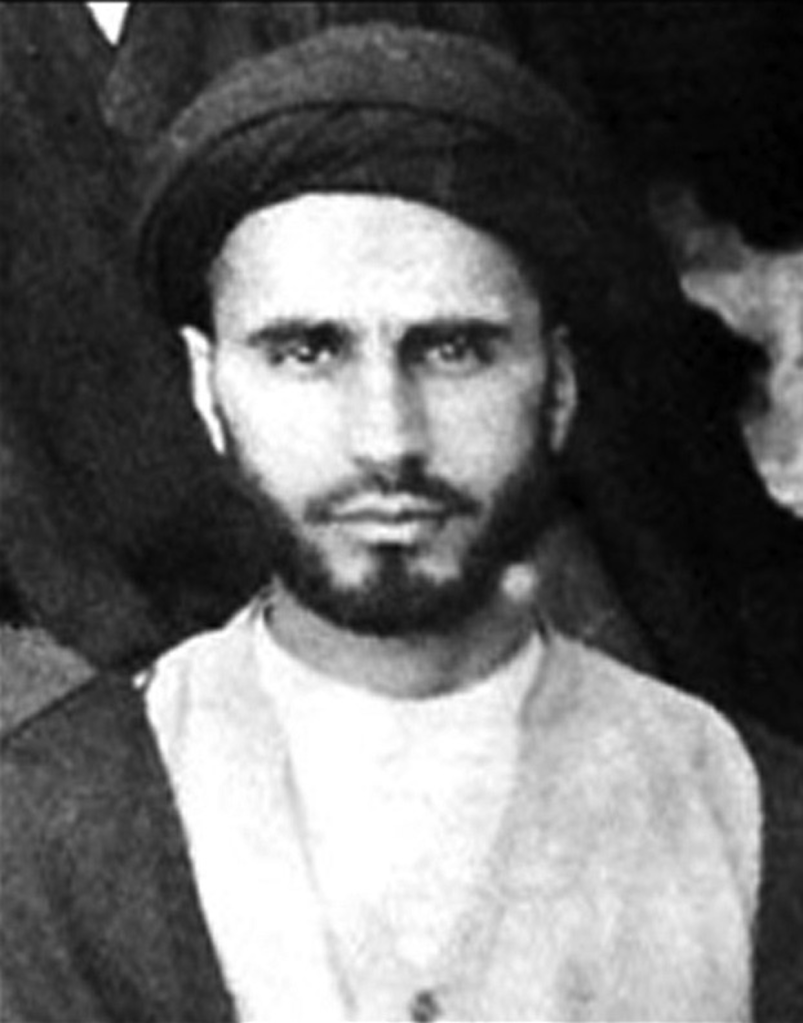
Ayatollah Ruhollah Khomeini as a young man
Reverse Orientalism: Iranian Reactions to the West, by Farhang Jahanpour
This is the transcript of my chapter in the book Perceptions of Iran, edited by Ali M. Ansari, I. B. Tauris, 2014, pp 77-100
In this chapter, I wish to look at a few instances of how Iran has viewed the West, especially during more recent times. In the same way that Western views of Iran have not always been uniform and have been influenced by the circumstances at different times, Iranian views of the West have also gone through a great deal of change, from unquestioning admiration to complete condemnation.
Orientalism
In his famous and highly influential book Orientalism, the late Edward Said describes Orientalism as ‘a Western style for dominating, restructuring, and having authority over the Orient’.1 He speaks of Orientalism as having developed a life of its own and having its own internal consistency, when a ‘formidable scholarly corpus, innumerable Oriental “experts” and “hands” and “Oriental professorates” created a complex array of “Oriental ideas” (Oriental despotism, Oriental splendor, cruelty, sensuality), many Eastern sects, philosophies, and wisdoms domesticated for local European use…’2 According to Said, ‘It is hegemony, or rather the result of cultural hegemony at work, that gives Orientalism the durability and the strength I have been speaking about so far.’3
Although one may not agree completely with Said’s bold generalisations about Orientalism – and it is interesting to note that he was mainly dealing with Western responses to Islamic and Arabic studies, with minor, passing references to great scholars of Persian Studies, such as E. G. Browne, R. A. Nicholson and A. J. Arberry – nevertheless, one cannot argue with the main thrust of his thesis that Orientalism is concerned with how the West sees the Orient, rather than how the Orient exists in reality or how the Orientals see themselves. Edward Said’s vision, influenced by Antonio Gramsci’s idea of culture as a form of subtle domination by the ruling classes, 4 and Michel Foucault’s notion of culture as discourse and his insistence on finding a genealogy for knowledge in institutional contexts, 5, contains important insights.
One can argue that the reverse is also true, and the way that many Eastern people, especially Muslims and Iranians, have seen and continue to see the West is not how the West is in reality, but how the Easterners would like to see it or have been forced to see it. We are all victims of our past and our circumstances. We see the world from where we stand, and there is nothing else that we can do. Therefore, the West saw the East with a Western bias, and vice versa. To this observation should be added the unequal relationship that has existed between the East and the West during the past few centuries, and especially the present cultural, political, economic and military domination of the Middle East by the West.
Emergence of Orientalism and counter-Orientalism
In the West, Orientalism is considered to have begun with the decision of the Church Council of Vienna in 1312 to establish a series of chairs in Arabic, Greek, Hebrew, and Syriac at Paris, Oxford, Bologna, Avignon, and Salamanca.6 The suggestion was Raymond Lull’s, who advocated learning Arabic as the best means for the conversion of the Arabs. Chairs in Oriental languages had been founded at Paris, Louvain and Salamanca by 1311. Still, all of them suffered from the lack of teachers and reliable source material, and their interest was mainly in the means of the propagation of Christianity in the Islamic lands, rather than in learning from the East.
The serious study of Orientalism started only in the seventeenth century, and the proper interchange between the academic and the more or less imaginative meanings of Orientalism dates from the end of the eighteenth century. In 1632, the Thomas Adams Chair of Arabic was established at Cambridge, and four years later, Archbishop Laud established a similar chair at Oxford. Interestingly, most of the famous holders of the Thomas Adams Chair of Arabic turned out to become Persian experts who devoted most of their time to Persian studies; from Professor Storey’s erudite bibliography of Persian literature,7 to E. G. Browne, the greatest Western scholar of Persian literature who was also very interested in many religious, mystical movements, to R. A. Nicholson the great translator and interpreter of Rumi and Persian mysticism, and to Professor A. J. Arberry, with his numerous works on Rumi, Hafiz, Omar Khayyam and others.
This situation also found its parallel at Oxford. One of the most distinguished early English orientalists was Thomas Hyde (1636–1703) of Oxford, who became Professor of Arabic and Librarian of the Bodleian. Though a Professor of Arabic, one of Hyde’s main interests was the ancient Persian religion of Zoroaster. At about 1690, he had translated into Latin the first Ghazals of Hafiz. He is also to be credited with the first translation of a Ruba’i of Omar Khayyam. The first reference to Omar Khayyam is in the form of a quatrain attributed to Omar’s ghost, who recited it in a dream to his mother, recorded in the History of the Religion of the Ancient Persians, Parthians and Medes by Dr Thomas Hyde in 1700.8 Hyde’s account of Zoroaster’s religion was the principal source for Voltaire’s article ‘Zoroaster’ in the Dictionnaire Philosophique of 1764.9
Iranian contacts with the West
The first serious Iranian writings about the West, and particularly about Britain, date from the eighteenth century. Of course, the history of contact between Persia and the West goes back far longer and beyond the well-established contacts between the Persians and the Greeks, with many stories suggesting links with Iran. Starting from the earliest phases of Judaism, there was a great deal of physical and spiritual contact between the Hebrews and the Persians. The Bible contains many references to Iran, Iranian history and Iranian kings. Fourteen books of the Old Testament either directly deal with an event that happened in Iran or contain references to Iran.10 There was also a close connection between Christianity and Iran. The story of the three Magi or Zoroastrian priests visiting the newborn Jesus is well known. It is not, however, generally realised that Iran also played a leading role in the spread of Christianity. Many Christian churches were established in Iran when the Christians were still being savagely persecuted by the Roman Empire.11
According to legend, the first Persian to visit the British Isles was a certain bishop of the Nestorian Church named Ivon. In the sixth century, when the Nestorians were sending missionaries to India and China, Ivon is supposed to have gone in the opposite direction to England and to have resided there until his death. When a ploughman in the county of Huntingdon turned up his bones in the year 1001, the bishop straightaway became a saint and gave his name to the Church of St Ives, built on the spot.12
In more historical times, the motives of the first Persian envoy sent to the West were more political. He is one of the suites of an envoy of the Ismailis of Alamut. In 1238, he came to the courts of Paris and London during the reign of Henry III. He was sent by the Persian ruler Ala’ud-Din Muhammad to seek English help against the Mongol hordes of Chengis Khan (Genghis Khan). However, he received no encouragement from either source. As recorded in the travel accounts of William Rubrick, the Bishop of Winchester had taken the cross at that time. Being present at the audience, he exclaimed: ‘Let those dogs devour each other and be utterly wiped out, and then we shall see, founded on their ruins, the Universal Catholic Church, and there shall truly be one shepherd and one flock.’13
It was as a result of greater commercial and political interests between the West and the Safavid and Mughal governments that the interest in Persian studies developed. The works of travellers, merchants and diplomats such as Anthony Jenkinson (1562), Thomas Alcock (1564), Richard Cheney (1564), John Newbury (1580) and Ralph Fitch (1583–91), the three English brothers Sir Thomas, Sir Anthony and Robert Sherley (who arrived in Qazvin in December 1598 and stayed in Iran for a long time and even acted as Iran’s ambassador to various European courts), Jean Chardin and Tavernier from France, introduced Persia to the West.
Sir Anthony Sherley, who with his brother Robert had many audiences with Shah Abbas – ‘the Great Sophy’, as they called him – claims that it was he who persuaded the Shah to seek an alliance with the Christian princes of Europe against the Ottomans. Six months later, Sir Anthony Sherley was a member of a Persian mission to visit England and a number of other European courts. The mission included Hussein Ali Beg Bayat, often called Iran’s first ambassador to England. One of the strangest episodes in Anglo-Persian relations was that, while the Persians sent an Englishman as their ambassador to Europe, a few decades later, in 1798, the British sent an Iranian, Mehdi Ali Khan, as their ambassador to the court of Shah Abbas. 14
It was during the Safavid period (1500–1722), too, that the Iranians gained first-hand familiarity with the West. It should be borne in mind that it was not only as a result of the visit of Western merchants and diplomats to Iran that Iranians came into contact with the West. Many Iranians used to travel to the Caucasus and to Russia, visiting the Ottoman Empire, which had greater access to the West, and many more visited India, where there was a strong and growing British presence.
Iran’s contacts with Mughal India and later directly with the British people in India and in Britain also provided grounds for Iranian familiarity with the West. Mir ’Abd al-Latif Shushtari (1758–1806), who travelled to India in 1788, provided some fascinating accounts of European modernity, modern astronomy and new scientific innovations in his Tuhfat al-’Alam (1216 H/1801)15 Shushtari even made certain remarks about Western political and religious developments. He regarded the year 900 of Hijrah (1494/1495 AD) as the beginning of a new era associated with the decline of the power (khilafat or caliphate) of the Pope, the weakening of the Christian clergy, the ascent of philosophy, and the strengthening of philosophers and scientists.16 He described the English Civil War as the beginning of the decline of religion. Although both philosophers and rulers affirmed the unity of God, they viewed many religious concepts, such as prophecy, resurrection and prayers, as myths.17 Shushtari was also familiar with Western scientific advances and explained the views of Copernicus and Newton on heliocentricity and universal gravitation. He viewed Newton as a ‘great sage and distinguished philosopher’, and even went on to say that in view of Newton’s accomplishments, all ‘the golden books of the ancients’ are now ‘similar to images on water’.18
His ideas and his familiarity with the West attracted the attention of the Qajar king Fath ’Ali Shah. Tavakoli-Targhi writes:
“Shushtari’s critical reflections on European history and modern sciences were appreciated by Fath ‘Ali Shah, who assigned the historian Mirza Muhammad Sadiq Marvazi Vaqayi’ Nigar (d. 1250/1834) the task of editing an abridged edition of Tuhfat al-’Alam, which is known as Qava‘id al-Muluk (Axioms of Rulers).”19
Tavakkoli-Targhi refers to a number of other Iranian scholars, including Aqa Ahmad Bihbahani Kirmanshahi, Tafazul Husayn Khan and Maulavi Abu al-Khayr, who also travelled to India and became familiar with Western and especially British scientists. These scholars not only introduced Western concepts to Iran and India, but also expressed positive and enlightened views about the West.
Abu Taleb Khan (1752–1806) was another scholar of Iranian descent who flourished in India and contributed a great deal to improving the knowledge of the West in India and Iran. Born in Lucknow, he followed his father into the service of the Muslim rulers of that region. Later on, the family moved to Bengal, where Abu Taleb encountered the administration of the British East India Company, then beginning to establish its rule in that province. Between the years 1799 and 1803, he spent four and a half years travelling to Europe and the Middle East. He sailed to England via the Cape of Good Hope, landing first in Ireland in 1799. After some time in Dublin, he moved on to London, where he rented lodgings in the richer part of the city and mixed with British nobility and aristocracy. He was even presented to the king and queen as a ‘Persian prince’, and managed to observe the courts, the parliament and other institutions, and the social culture and fashions of the times. On his return, he wrote a fascinating book about his travels called Masir-i Talibi Bilad-i Ifranji (Taleb’s Travels in European Countries).20 He was generally more admiring of his hosts than were Western travellers of their hosts.
Despite his strong admiration for the British, he was not an uncritical observer. In his chapter on English character,21 he provided a long list of the alleged vices and virtues of the English people, which provides a fascinating example of cultural criticism. He was most impressed by the individual rights that British people enjoyed and by the equality of people before the law. He wrote: ‘The first circumstance that attracted my attention, and consequent applause of the English law, was the right which every British subject possesses, of being tried by a jury.’ He believed, however, that the excessive power of the judges and the lawyers’ desire for personal gain, thus unnecessarily prolonging the court cases, were two factors that compromised the jury system. He complained: ‘In short, the ambiguity of the English law is such, and the stratagems of the lawyers so numerous, as to prove a course of misery to those who are unfortunate enough to have any concern with it or them.’
He made a list of twelve alleged British vices, which included spending too much time on pampering and enjoying themselves and too little time on work and business, their luxurious living, vanity and arrogance, extravagance, selfishness, lack of chastity and their contempt for the customs of other nations. Nevertheless, he concludes: ‘Many of these vices, or defects, are not natural to the English, but have been ingrafted on them by prosperity and luxury…’ However, the consequences of those vices may not appear for a long time, firstly due to ‘the strength of constitution, both of individuals and of the Government’, and secondly, since all their European neighbours also shared such vices.
However, as opposed to those alleged vices, he provides a long list of their virtues, including ‘a high sense of honour, especially among the better classes’; their ‘reverence for everything or every person possessing superior excellence’; their ‘dread of offending against the rules of propriety, or the laws of the realm’; their ‘strong desire to improve the situations of the common people, and an aversion to doing anything which can injure them’; their ‘adherence to the rules of fashion’, which could also be regarded as a weakness; their ‘passion for mechanism, and their numerous contrivances for facilitating labor and industry’, their ‘plainness of manners, and sincerity of disposition’, and finally their hospitality.
After London, Abu Taleb Khan went to Paris, where he similarly observed the society, politics, customs and fashions of the French. His chapter on the ‘Character of the French’ is equally fascinating.22 Of the French people, he writes:
“The French in general, and especially the Parisians, are extremely courteous, affable, and flattering. They never make use of the simple words Yes or No, but always have some circuitous phrase ready, expressive of the honour you confer, or their regret. In pointing out the road, or explaining anything to a foreigner, they are indefatigable, and consider such conduct as a proof of their good breeding and humanity.”
His journey back to India took him via Lyon and the Rhone Valley to Marseilles and on to Genoa, Malta, and Constantinople. He also stopped in Baghdad and Basra, and as a Shi’ite, he made a pilgrimage to Najaf and Karbala on the way. Finally, he returned by sea to Mumbai and Kolkata, where he wrote the account of his amazing voyage.23
With the decline of Iranian military and political power and the rise of Western influence and exploitation in Iran, the attitude of many Iranians towards the West began to change. Admiration turned to opposition and in some cases to xenophobia. The new anti-Western attitude was mainly led by the clerics, who, in addition to having nationalistic feelings, were averse to the West on religious grounds.
Figure 6.1: al-Afghani

One of the leading Iranian reformers who helped mobilise the masses against the corrupt and dictatorial Qajar dynasty and its foreign backers was Seyyed Jamal al-Din Asadabadi (better known as al-Afghani).24
Afghani (1838–97), who was a precursor to Ayatollah Khomeini, already demonstrated an example of the dual role of the Shi’a clergy, both as religious leaders and as political agitators. He travelled extensively in India, the Middle East and Europe, and wherever he went, he agitated against the British and Russian domination of Islamic countries. He was fluent in Arabic and some European languages and was a fiery preacher. For a time, he served as a professor of Islamic philosophy at the prestigious Al-Azhar University in Cairo.
Ironically, Afghani has a reputation as a champion of Islam and the founder of Pan-Islamism, as this was only a political ploy for mobilising the masses against foreign domination. Although he couched his political message in Islamic terms, at heart he seems to have been quite hostile to Islam. In the Ottoman Empire, he campaigned for the strengthening of the role of the Islamic caliphate and organising opposition against the Russians, in India he agitated against British rule, while in Iran, he urged Nasir al-Din Shah to expel the British and the Russians from the country.
However, despite his Islamic pretences, he was basically a political animal and was using Islam only to achieve his political ends. For example, when he was visiting Europe, he engaged in dialogues with several orientalists and corresponded with the famous French philosopher and orientalist Ernest Renan. Responding to a pamphlet by Renan in which he had criticised the negative influences of Christianity in Europe, Jamal al-Din argued that these negative influences were not limited to Christianity. He maintained that all religions, including Islam, were fundamentally against reason and civilisation. He blamed Islam for being responsible for the backwardness of Muslim countries. In an incredible passage, he argued that the problem did not lie with ‘unscientific Arab mentality’, but with Islam itself:
“It is permissible to ask oneself why Arab civilization after having thrown such a bright light on the world, suddenly became extinguished, why this torch has not been lit since, and why the Arab world remains buried in profound darkness. Here, the responsibility of the Muslim religion appears complete. It is clear that wherever it became established, this religion tried to stifle science and was marvellously served in its design by political despotism. Al-Siuti tells us that Caliph al-Hadi put to death in Baghdad 5,000 philosophers in order to extirpate science in Muslim countries up to their roots… I could find in the past of the Christian religion analogous facts. Religions, whatever names they are given, all resemble one another. No agreement and no reconciliation are possible between these religions and philosophies. Religion imposes on man its faith and its belief, whereas philosophy frees him of it totally or in part.”25
Jamal al-Din led a strong campaign against Nasir al-Din Shah from exile, and it was one of his pupils and associates who assassinated the Shah in 1896 while he was visiting a shrine near Tehran at the beginning of celebrations to mark the 50th anniversary of his reign. The bullet that killed Nasir al-Din Shah also marked the beginning of the end of the Qajar regime, and the start of the Constitutional Movement (1905–11).
Sheykh Muhammad Husain Na’ini (1850–1936), the pro-constitutionalist cleric, was another Iranian reformer strongly impressed by Western democracy. He argued in favour of a representative and democratic government based on a constitution.26 He believed that such a government would be the best possible form of government in the absence of a government led by the Prophet or the Hidden Imam.27 He maintained that a tyrannical and despotic ruler was guilty of idolatry (shirk), the cardinal sin in Islam, because he arrogated to himself the power that belonged to God and to the people as God’s vicegerents on earth.
Use of ‘Westoxification’ as a political tool
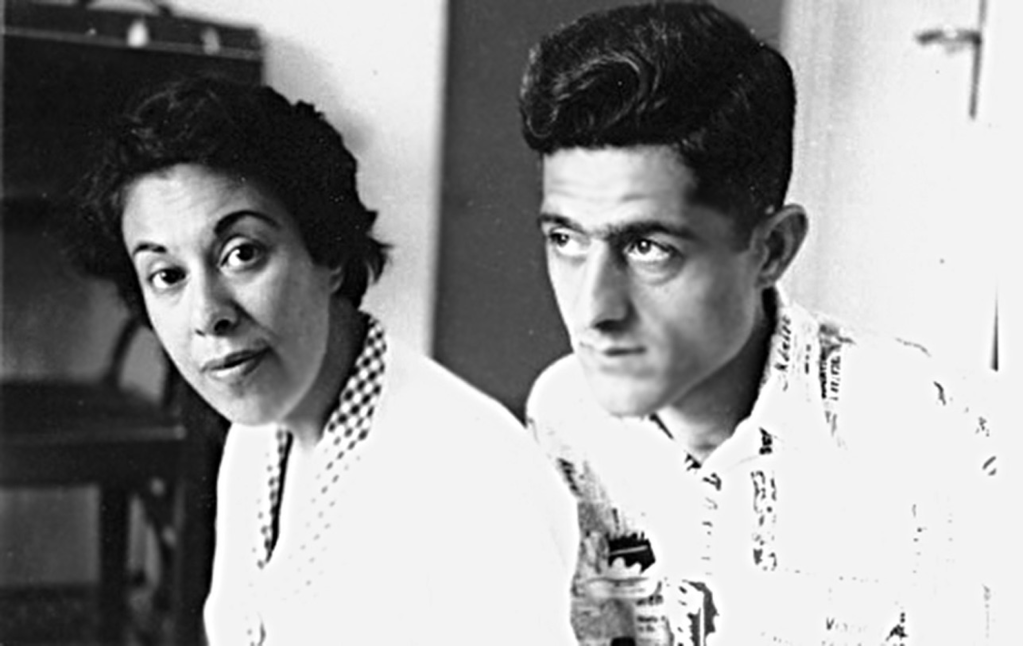
Al-e Ahmad with his wife, Simin Daneshvar
Jalal Al-e Ahmad (1923–69) and Ali Shari’ati (1933–77) were perhaps the two most influential writers in Iran whose ideas had a great impact on the young and university-educated people, and paved the way for the Islamic revolution. Both Al-e Ahmad and Shari’ati came from clerical backgrounds, turned leftist and then turned back to religion again. Al-e Ahmad’s grandfather, father, older brother, two brothers-in-law and a nephew were all clerics. Ayatollah Mahmud Taleqani, the famous revolutionary cleric from Tehran who played a very prominent role during and after the Islamic revolution, was Al-e Ahmad’s cousin. In 1943, Al-e Ahmad was sent by his father to Najaf as a talabeh (seminary student) to be trained as a mullah under the supervision of his older brother. After a short stay in Najaf, he abandoned his religious studies and returned to Iran; in his own words: ‘Fed up and stifled and turning my back on both my father and my brother. Because on that journey, I had seen a trap in the form of a mantle and a cloak.’28
Having rebelled against his religious background, he threw himself, heart and soul, into political activities and became an active member of the communist Tudeh Party of Iran. Within a year, he was a member of the Tehran provincial committee and the co-editor of a party newspaper. In 1948, he was a member of the group that, under the leadership of Khalil Maleki, broke away from the mainline Tudeh Party and set up a new group (enshe’ab), which was still firmly within the framework of Marxism-Leninism. On the afternoon of 17 January 1948, Moscow Radio openly attacked the new group, charging its members with treachery. Instead of remaining faithful to their principles, Al-e Ahmad and most of those who had signed the declaration of enshe’ab immediately signed a new statement announcing the dissolution of the new party. Al-e Ahmad joined several other leftist parties, but after the 1953 coup, he issued a ‘renunciation’, saying that he had ceased all his political activities and did not belong to any party. However, the influence of his twin early affiliations, to religious orthodoxy and to communism, remained with him throughout his life. His fundamentalist background instinctively set him against change and modernism, and his Tudeh background made him doubly hostile towards any modernisation associated with the West.
Jalal Al-e Ahmad’s famous book Gharbzadegi became the most important manifesto of all those who resented the excessive influence of the West in Iran.29 The word Gharbzadegi was coined by Ahmad Fardid, Al-e Ahmad’s friend and professor of philosophy at the University of Tehran, but it was due to Al-e Ahmad that the term achieved such fame and influence. Gharbzadegi, which has been translated as ‘disease of Westernism’, ‘Westitis’, ‘Westernosis’, ‘Westomania’, ‘Weststrickenness’, ‘Weststruckedness’, ‘plagued by the West’ or ‘Westoxication’, starts with the following words:
“I speak of being afflicted with ‘westitis’ the way I would speak of being afflicted with cholera. If this is not palatable, let us say it is akin to being stricken by heat or by cold. But it is not either. It is something more on the order of being attacked by a tongueworm. Have you ever seen how wheat rots? From within. The husk remains whole, but it is only an empty shell like the discarded chrysalis of a butterfly hanging from a tree. In any case, we are dealing with a sickness, a disease imported from abroad, and developed in an environment receptive to it.”30
He defines the West as the developed or industrialised countries which, “with the aid of machines, are capable of converting raw materials into something more complex and marketing it in the form of manufactured goods. These raw materials are not just iron ore or oil or gut or cotton, or tragacanth. They are also myths, principles of belief, music, and transcendental realities.”31
The problem with Al-e Ahmad’s assessment of the West is that although he describes Western superiority and domination as the result of its mastery of the ‘machine’, he is not sure whether it is a good thing for Iranians to master the machine as Westerners have done or not. On the one hand, he seems to suggest that in order to be freed from Western domination, it is essential for Iranians to become industrialised. He says: ‘As long as we are solely consumers, as long as we do not manufacture machines, we shall be afflicted with the West.’ On the other hand, he believes that the mastery of the machine will also lead to being plagued by the West: ‘And the ironic part is that as soon as we are able to make machines, we shall become machine-stricken! We shall be like people of the West whose cries about self-willed technology and machines are heard everywhere.’32 He refers to La France contre les Robots by George Bernanos33 as an example of Western disenchantment with the machines.
At times, he seems to forget that Western technological development is only the product of the past few centuries, and his Western plague becomes synonymous with Christianity. He complains: ‘How can we view these twelve centuries of struggle and competition as anything but a struggle between Islam and Christianity?’34 Yet at other times, in a complete distortion of the meaning of the words, he goes on to say:
“We know that, in his youth, the Prophet traded with Syria and that he spoke with a certain monk there. And was there ever any easier way to proselytise than with the cry ‘Say: There is no God but Allah and ye shall prosper?’ Moreover, in the final analysis, was it not our turning towards Islam a turning towards the West? We will be able to provide a precise answer to this question once we have learned what incredible injustices were visited on people as a result of the ossified customs of the Sasanians.”35
However, despite these inconsistencies, maybe even because of this rejection of whatever was foreign and alien, whether Islam, Christianity, the Crusades or European civilisation and modern machines, Al-e Ahmad struck a sympathetic chord in the hearts of the young people who were fed up with the loss of their identity and with a veneer of Westernisation and who were searching for native authenticity. Despite the general mixing of praise and blame for Islam and strongly criticising the behaviour of the Safavid clergy who, according to Al-e Ahmad, were responsible for Iran’s subsequent backwardness, the major message that can be deduced from Gharbzadegi is a kind of return to ‘genuine, progressive’ Islam (whatever that might be).
In his later writings, such as Dar Khedmat va Khiyanat-e Rowshanfekran (On the Services and Treasonable Activities of Intellectuals), Al-e Ahmad advocated an alliance between intellectuals and the clergy against the Pahlavi regime. In 1962, when Jalal’s father died, Ayatollah Khomeini arranged a memorial service for him, after which the two men met, and Khomeini spoke approvingly of Al-e Ahmad’s Gharbzadegi. In another meeting between the two men in Qom in Esfand 1341 (February/March 1963), Al-e Ahmad suggested an alliance between the intellectuals and the mullahs against the Shah. Shaking hands with Khomeini, Al-e Ahmad is reputed to have stated: ‘We will defeat the government if we continue holding hands.’36
A year later, Al-e Ahmad went on a pilgrimage to Mecca, and Khasi dar Miqat (Lost in the Crowd) is the account of that journey. The same love-hate relationship and an attitude of reverence and revulsion can be seen in this interesting account of his visit to Mecca, Khasi dar Miqat, in which he talks approvingly of the unity that exists between the pilgrims from all over the world who have come with sincerity and intense faith to perform their religious duty of pilgrimage. At the same time, he talks about the coarseness and crudeness of the crowds and speaks of the arrangements of pilgrimage as ‘mechanised barbarism’.37 He was one of the first persons to say that the control of Hajj ceremonies should be taken out of the hands of the Saudi authorities and be given to an international organisation composed of Muslims from all over the world. This idea found favour with several Islamic activists in Iran during the first few years after the victory of the Islamic revolution, when there were numerous clashes between Iranian pilgrims and Saudi authorities.
Dariush-Shayegan
Professor Dariush Shayegan is one of Iran’s prominent thinkers, cultural theorists and comparative philosophers. He is very well-read both in Western philosophy and in Hindu and Islamic philosophies. He has published several works on the theme of Iran’s encounter with the West. In one of his books, Idols of the Mind and Perennial Memory, first published in 1975 38, he argues that in order to understand the intensity of the challenge which Iran and the East generally face in their encounter with the West, it is important that they understand the main differences between the two worldviews. He writes: ‘As opposed to our “poetic-mythological” [sha’eraneh-asatiri] worldview, the Western worldview is based on “rationalism and realism or experimentalism” [ta’aqoli-hosuli]. In the West, truth is merely something which can be proved by experiment and tests.’ According to him, the ‘rationalisation’ of every manifestation of reality was accompanied by ‘de-mythologising’.
He says that the ultimate outcome of this de-mystification and de-mythologising of reality, and reliance upon rationalism and experimentation, has led the West to the worship of man and history, and has been summed up in Nietzsche’s famous statement that ‘God is dead’ and his concept of replacing the traditional view of God with a superman. The development of Western philosophy from Descartes to Karl Marx has turned nature itself into something purely materialistic and has turned man into a ‘working animal’ and ultimately to nihilism and existentialism.39
He studies the consequences of this kind of thinking for Western art and the influence that it has had on Eastern and Persian art. He believes that this influence has led to a kind of artistic and intellectual chaos and disorder, which has encouraged blind imitation of everything Western. While Western art and architecture have developed out of a long process of intellectual development and rationalism during the past few centuries in the West, the imitated Iranian art, unlike Iran’s traditional art and miniatures, which were deeply rooted in Iranian national and intellectual consciousness, has no roots and does not reflect the deeper artistic feelings of the people.
He believes that Iran and other Eastern countries are passing through a period of intellectual and artistic stagnation and transition (fetrat). Although he regrets the passing of Iran’s ‘poetic-mythological’ worldview, Professor Shayegan seems to suggest that we do not have any strong defences against the Western onslaught. He writes:
“In the face of the Western intellectual onslaught, which believes in experimentalism and rationalism, which has resulted in a technological age with its amazing material gains and technical ability, our poetic view of the world seems incongruous, brittle, reactionary, and, according to some, it is even acting as a break in the path of progress.”40
He blames all those who either totally reject or totally adopt what the West has to offer.
Ayatollah Ruhollah Khomeini
The most anti-Western movement in Iran and at that time in the Islamic world as a whole was, of course, represented by the 1979 Islamic revolution in Iran. Ayatollah Khomeini had little knowledge and even less interest in the West. During the few months that he stayed in Paris, his aides Abol-Hasan Bani-Sadr and Sadeq Qotbzadeh tried to arrange a tour of Paris for him. His response was that he was not interested.
His interview shortly after returning to Iran with Oriana Fallaci was quite revealing.41 He strongly criticised ‘the decadent Western civilisation’. Asked about whether Iranians would be permitted to listen to Western music, he said that the Iranians should not listen to ‘obscene and vulgar Western music’. Oriana Fallaci asked about the music of Bach, Beethoven or Mozart. Ayatollah Khomeini said that he had not heard about them, but in any case, Iranians should not listen to vulgar Western music.
Prior to the victory of the Islamic revolution, Ayatollah Khomeini had promised to respect people’s democratic rights, including equal rights for women and for religious and ethnic minorities. He had gone along with the views of secular opposition, including Jebhe-ye Melli (the National Front) and Engineer Mehdi Bazargan, the founder of the Freedom Movement, to let the people elect a Constituent Assembly to decide the form of the next government. However, after coming to power, he established an Assembly of Experts (dominated by clerics who were allegedly experts in Islamic law) and this assembly drew up the constitution of the Islamic Republic in keeping with Islamic principles. The whole system was based on the novel concept of the Velayat-e Faqih, or the rule of the chief jurisprudent, which would perpetuate not only the involvement of the clergy in politics, but their virtual control of all the levers of power, including the government, the judiciary and the legislature. This concept, which had no precedent in the history of Islam, enshrined the power of the clergy over the state and resulted in the creation of a theocracy.
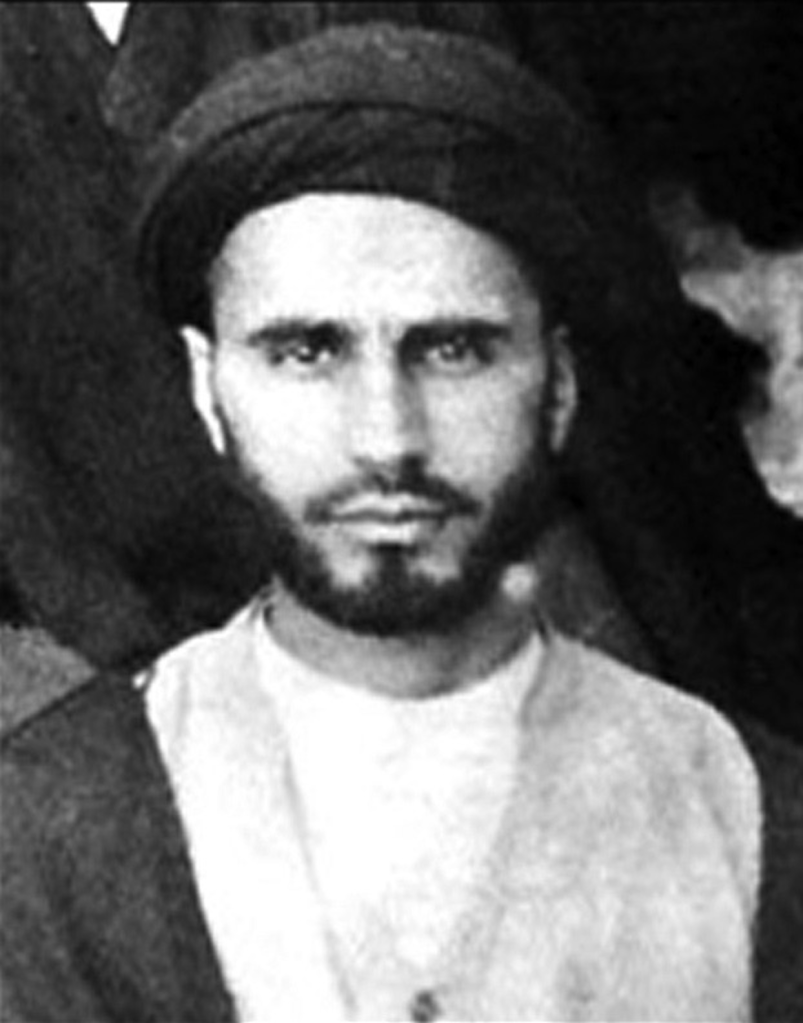
In a series of lectures that Ayatollah Khomeini had given during his exile in Najaf between 21 January and 8 February 1970 on the issue of Velayat-e Faqih, which were ignored at the time but were later compiled and published under the title of Hukumat-i Islami (Islamic Government), he elaborated his views about the role of the clergy in politics.42 In those lectures, he said that in the absence of the Prophet and the Shi’i Imams, as experts in Islamic law, the jurists have the right and the duty to be in charge of government, as the implementation of Islamic law requires the power of the government. He asserted:
“It is an established principle that the faqih has authority over the ruler. If the ruler adheres to Islam, he must necessarily submit to the faqih, asking him about the laws and ordinances of Islam in order to implement them. This being the case, the true rulers are fuqaha themselves, and rule ought officially to be theirs”.43
Speaking about the role of the parliament and its legislative power, he maintained that the Islamic government has no choice but to implement the laws of the Quran. He goes on to say: “Islamic government may therefore be defined as the rule of divine laws over men… The Sacred Legislator of Islam is the sole legislative power. No one has the right to legislate and no law may be executed except the law of the Divine Legislator.”44
After gaining power, he wasted no time in translating his vision into reality, and thus, the rule by the clergy became the cornerstone of the new political system, with all that it entailed for the rejection of Western-style democracy.
In all his speeches after the victory of the revolution, Ayatollah Khomeini spoke with contempt and hostility about the West, which he regarded as the deadly enemy of Islam and Muslims. One of his main campaigns was to rid the country of Western influences. In order to do so, he closed the universities for two years to purge them of Western-oriented staff. His attitude toward Iranian intellectuals and writers who had done so much for the cause of the revolution was to dismiss them as agents of foreigners. In his 6 May 1978 interview with Le Monde, Khomeini referred to Iranian intellectuals and writers as ‘agents of the shah’ and lackeys of the superpowers, and warned the faithful to steer clear of their influence. Later, he issued a religious proclamation addressed to university students in which he accused the country’s intelligentsia of seeking only ministerial or parliamentary posts. ‘These writers,’ he said, ‘who have thus far neither taken a step nor done anything for Islam have now found, in the name of patriotism and love of freedom, an opportunity… have picked up their pens and are hypocritically scribbling certain things.’45
In March 1979, only one month after Ayatollah Khomeini’s return to Iran, some members of the Writers’ Association of Iran arranged for an audience with him. Simin Daneshvar, the widow of Al-e Ahmad and herself a famous writer, as the representative of the group, began by congratulating Khomeini on his return from exile and his successful leadership of the Iranian revolution. She then recounted for him the history of the Association’s struggle against the Shah’s regime, and concluded by pointing out the hopes of the country’s writers for intellectual and artistic freedom.
In response, Ayatollah Khomeini bade the writers to follow the path of Islam. In practice, a few months later, Hezbollahi thugs attacked the meetings of the Writers’ Association, their publications were banned by the government, and most of the leading figures of the Association were forced to flee the country, and some of them are still living in exile. Of those who were left behind, a few were executed, some were imprisoned, and the rest had to engage in intellectual and artistic self-censorship by refusing to write or speak in public. Ayatollah Khomeini’s remark about the West, that ‘America is worse than England, England is worse than America, Russia is worse than both of them, and every one of them is worse than the other’, has become quite famous.
Hojjat ol-Eslam Mohammad Khatami
About 20 years after the victory of the Islamic revolution and a continuous campaign against the West, things started to change unexpectedly and dramatically. One result of the Islamic revolution had been the politicisation of the mullahs, which had meant that instead of engaging in mere rhetoric, they had to come face to face with international realities. The eight-year war with Iraq, as a result of which close to a million Iranians had been killed and wounded, and in which a huge segment of the Iranian society, especially the young, had been politicised, resulted in profound disaffection with the more radical aspects of Ayatollah Khomeini’s legacy. This led to a new and rather expected rise of reformist Islamic discourse.
The reformist movement was led by the young and educated classes, especially by university students and a number of religious and secular thinkers, including journalists and dissident religious thinkers and clerics such as Abdol-Karim Soroush, Mohsen Kadivar, Mohammad Mojtahed-Shabestari, Akbar Ganji, Ahmad Qabel and many others. When Hojjat ol-Eslam Mohammad Khatami, who became Iran’s fifth president after the Islamic revolution on 3 August 1997, was still the minister of culture and Islamic guidance in the cabinet of President Akbar Hashemi-Rafsanjani, he was invited by the Islamic Society of the University of Tehran to address a large gathering of the members of that society.
In his address, he warned those committed and ideologically charged students against underestimating the challenge of the West, which he called ‘the main ideological rival of the Islamic worldview’. Enumerating some of the main achievements of Western civilisation, such as scientific and technological development, rationalism, individual freedom and democracy, he went on to say:
“We should not forget that our main ideological rival enjoys a powerful and deep-rooted intellectual and political worldview. The contemporary worldview that has been moulded by the West is based upon a rational philosophy. The Western worldview has been formed in the course of many centuries, and its intellectual bases have been carefully formulated. Western philosophy has been analysed and elucidated from different angles by hundreds of great scholars in the course of many centuries. It has passed through many stages. It has been tested by time. It has evolved and matured. It has given birth to diverse intellectual schools of thought. The important point to remember is that the Western intellectual and political value system is in keeping with man’s basic instincts. Basically, human nature is instinctively in favour of that intellectual system and supports that ideology. The foundations of the modern worldview are based on freedom.”46
Later on, addressing university students in Tehran on 23 May 1998, on the first anniversary of his election as president, he said:
“Dear brothers and sisters, I would like to say candidly that social acceptance of religion today and its fate tomorrow depend on our ability to see religion in such a way as to be compatible with freedom. If you look at human history, you see that whatever has opposed freedom, even if it has been the greatest of human virtues, has suffered a setback. If religion has come to stand up against freedom, it has sustained a loss, and if justice has denied freedom, it has been undermined. If progress and development have forestalled freedom, they too have been damaged. When we speak of freedom, we mean the freedom of the opposition. There is no freedom if only the people who agree with those in power and with their ways and means are free. Now, I can give you one or two historical examples already known to you who are well-read. The first is the experience of the Medieval Age, when religion and freedom were set against each other and, consequently, religion was defeated. The other and more contemporary instance has been communism, which pursued economic justice at the expense of freedom. The result was that communism was also defeated and freedom triumphed.”47
Khatami has written eloquently about the achievements of Western civilisation, especially its advocacy of democracy, freedom and human rights.48 He has called for a ‘Dialogue of Civilisations’ and the need for the Islamic and Western civilisations to learn from each other. It is also worth remembering that in the days after 11 September 2001, Iran was one of the first nations to offer sympathy to the Americans for that atrocity, as thousands of Iranians took part in spontaneous candlelit vigils in Tehran and other Iranian cities. Iran’s President Mohammad Khatami, in an interview with CNN, expressed his ‘deepest condolences to the American nation and … sorrow for the tragic event of September. What occurred was a disaster … the ugliest form of terrorism ever seen.’11 He made some of the most eloquent remarks in condemnation of the terrorists, by saying: ‘They have self-mutilated their hearts, minds, tongues, eyes and ears and can only communicate in the language of violence.’
However, despite a promising dawn, the reformist movement in Iran failed for two main reasons. The first reason was internal rivalry and the attempts by right-wing extremists to protect their privileged positions and their hold on power. The second reason was an inadequate and indeed negative response by the West to Iran’s outstretched hand.
The backlash from the hardliners resulted in the closing down of scores of reformist newspapers by the conservative-dominated judiciary, and the arresting and jailing of a large number of reformist intellectuals on trumped-up charges. Massive student demonstrations – the biggest since the establishment of the Islamic Republic – in protest against the closing of Salam, a leading reformist newspaper, were brutally put down, resulting in the death and injury of a large number of students. Many resolutions by the reformist parliament that were aimed at limiting the power of the clergy and at giving a degree of freedom to the citizens were rejected by the Guardian Council as having violated the Shari’a or the constitution. The massive onslaught by the hardliners and the weak response by Khatami’s government eroded the initial mood of optimism and weakened the reformist movement.
The second reason for the failure of the reformist government was Western indifference and even hostility to the most promising development in Iran since the inception of the Islamic revolution. Khatami’s call for the ‘Dialogue of Civilisations’ – as opposed to the ‘Clash of Civilisations’ – went unheeded, and Western attempts to bring about regime change in Iran continued unabated. The West concentrated all its propaganda on Iran’s nuclear programme, while ignoring the positive changes in Iran that could have rendered the hyped-up nuclear programme harmless.
Many hardliners came to the conclusion that the West was not interested in dialogue and that the best option would be to prepare for a confrontation. The example of Iraq, which did not pose any threat to the West, was in a weak military position and was nevertheless attacked by the United States, convincing the hardliners that the best form of defence was offence, and that if Iran were to escape the fate of Iraq, it had no option but to bolster its defences. Even before the end of President Khatami’s term, many hardliners turned to the young generation of the Revolutionary Guards for possible alternatives to the reformist government. Mahmud Ahmadinezhad, a former guards commander and a right-wing activist, was the person chosen to perform that task. Therefore, he was selected to run against the reformist candidates in the June 2005 presidential election.
Meanwhile, the reformist vote was split between the three reformist candidates: Mostafa Mo’in, the former president of Tehran University; Mehdi Karrubi, the former Majlis speaker; and Akbar Hashemi-Rafsanjani, the former two-term president. During the first round of the election, the total number of votes cast for the three reformist candidates far exceeded the votes cast for Mahmud Ahmadinezhad. Throughout the night, as the votes were being counted, the election headquarters announced that there would be a run-off election between Mehdi Karrubi and Akbar Hashemi-Rafsanjani, but at the last moment, it was announced that Mahmud Ahmadinezhad’s votes had exceeded those of Karrubi and that the run-off election would be between Ahmadinezhad and Hashemi-Rafsanjani. 49
In the second round of voting, Ahmadinezhad emerged triumphant, partly due to the disenchantment of the reformers with Hashemi-Rafsanjani, who was regarded as a very wealthy and corrupt man with weak reformist credentials, and partly due to the massive mobilisation of the revolutionary guards and members of the Basij militia by the conservatives to vote for Ahmadinezhad.
With Ahmadinezhad’s victory, the process of reforms was reversed, and a much more militant government, which openly declared that it wanted to revive the early revolutionary vision based on Ayatollah Khomeini’s teachings, came to power. Domestically, the new government adopted a much more restrictive and conservative approach towards some social issues, such as women’s clothing, freedom of expression, and different forms of civil society activities. At the same time, it adopted populist economic policies with the slogan that it wanted to bring the oil money to people’s tables. It began to give grants and free loans to low-income families and subsidised many food items. It also engaged in unabashed propagation of superstitious ideas, such as alleged contacts with the Hidden Imam in a well in Jamkaran near Qom. Early in his presidential term, his cabinet allocated the equivalent of $17 million for the Jamkaran Mosque. He even started his speeches at the United Nations General Assembly with prayers for the speedy return of the Hidden Imam.
In his foreign policy, he adopted a more hostile attitude towards the West and turned towards greater militarism. Due to the appointment of many former revolutionary guards commanders to senior positions in the government, it came to be popularly known as the ‘government of the barracks’. The new government decided to renew uranium enrichment as it maintained that the West had not lived up to its part of the bargain after Iran’s suspension of this activity.
With the failure of the government’s economic policies and Iran’s growing isolation in the world, Ahmadinezhad lost a great deal of his earlier popularity. It was clear that he would not win a second term as president if there were a free and fair election. The 12 June 2009 election witnessed a massive turnout by the reformers and, by all accounts, the main reformist candidate Mir-Hoseyn Mousavi won a resounding victory, but with the intervention of Supreme Leader Ayatollah Ali Khamene’i, who was nervous about the victory of the reformers, the results of the election were rigged, and Ahmadinezhad was declared the winner.50 There followed unprecedented demonstrations by millions of voters in Tehran and throughout Iran, questioning the election results.
Instead of responding to people’s call for a thorough investigation of the way that votes were counted, the government accused the opposition of being agents of a foreign-inspired ‘velvet revolution’, and it started a massive crackdown on the opposition, as a result of which dozens were killed, hundreds were wounded, and thousands of demonstrators and reformist activists were arrested. Reformist newspapers were closed, and the houses and headquarters of the two main reformist leaders, Mir-Hoseyn Musavi and Mehdi Karroubi, were attacked, and they have been placed under house arrest ever since.
Mahmud Ahmadinezhad has tried to align the Islamic Republic ever closer with the Islamic opposition in the Middle East and beyond, and to turn militant Islam into a political and ideological challenge to the West. However, what the entire history of the Islamic Republic of Iran during the past 31 years has proven is that it has no answers to contemporary global challenges. Militant Islam, whether in the form of the Shi’i revolution in Iran or the Sunni Wahhabi fundamentalists as represented by Saudi Arabia, al-Qaida and the Taliban, has contributed nothing to international discourse except violence, intolerance and rejection of modernity. There is also an inner-Islamic clash between individualism and conformity, between innovation and stagnation, between tolerance and fanaticism, between modernity and the past, between democracy and despotism, and between freedom and oppression.
Notes
- Edward W. Said, Orientalism: Western Conceptions of the Orient (first published by Routledge, 1978) (Penguin Books, 1995), 3.
- Ibid., 4.
- Ibid., 7.
- Antonio Gramsci, e Prison Notebooks: Selections, tr. and ed. by Quentin Hoare and Geoffrey Nowell Smith (International Publishers, New York, 1971).
- Michel Foucault, Les Mots et les choses (1966) (The Order of Things) (Pantheon Books, 1970); L’Archéologie du Savoir (1969) ( The Archaeology of Knowledge) (Routledge, 1972); and Surveiller et Punir: Naissance de la Prison (1975) (Discipline and Punish: The Birth of Prison) (Gallimard, 1977).
- R. W. Southern, Western Views of Islam in the Middle Ages (Cambridge, MA, Harvard University Press, 1962); quoted in Edward W. Said, Orientalism (first published by Routledge & Kegan Paul Ltd, 1978; repr. Penguin Books, 1995), 49–50. Also see Francis Dvornik, The Ecumenical Councils (New York: Hawthorn Books, 1961), 65–6.
- C. A. Storey, Persian Literature: A Bio-Bibliographical Survey (Leiden, 1927)
- See Hyde, Thomas, 1636–1703. Historia religionis veterum Persarum, eorumque magorum [microform]: ubi etiam nova Abrahami, and Mithrae, and Vestae, and Manetis, &c. historia, atque angelorum o cia and praefec- turae ex veterum Persarum sententia: item, perfarum annus … e Sad dar is translated into Latin, from the Persian metrical paraphrase by Iranshah of the original Pahlavi. Oxonii: [s.n.], 1700. Location: Micro lms; Call #= Micro lm A2791 539:2.
- See Hyde, Thomas in Encyclopaedia Iranica, http://www.iranica.com/articles/hyde.
- See Shaul Shaked (ed.), Studies Relating to Jewish Contacts with Persian Culture throughout the Ages (1982), 292–303; quoted by Haydeh Sahim, Iran Nameh, vol. XV:1 (Winter 1997), 52.
- For information about the history of early Christian churches in Iran, see Bishop H. B. Dehqani-Tafti, Christ and Christianity Among the Iranians (in Persian) (London: Sohrab Books, 1992), vol. I, 13–28.
- John D. Yohannan, Persian Poetry in England and America: A 200-Year History (Caravan Books, New York, 1977), x.
- The Journey of William Rubruck to the Eastern Parts of the World 1253–55 as narrated by himself, translated from Latin with an introductory notice by William Woodville Rockill, Hakluyt Society, 1900, xiv.
- See Denis Wright, e Persians Amongst the English: Episodes in Anglo-Persian History (London: I.B. Tauris, 1985), 9–24.
- Mir ’Abdul-Latif Khan Shushtari, Tuhfat al-’alam va zayl al-tuhfah, S. Muvahhid ed. (Tahuri, Tehran, 1984).
- See Mohamad Tavakoli-Targhi, ‘Modernity, Schizochronia, and homeless texts’, The Third Biennial Conference on Iranian Studies, Bethesda, Maryland, 25–28 May 2000.
- Ibid.
- Ibid.
- Ibid.
- For an English translation of the book, see Travels of Mirza Abu Taleb Khan in Asia, Africa, and Europe during the Years 1799, 1800, 1801, 1802, and 1803, translated by Charles Stewart, printed by R. Watts, Broxbourne, Herts; London 1814, three volumes. Available at http://www.archive.org/stream/ travelsmizraabu01khgoog#page/n309/mode/1up.
- Vol. 2, ch. XX, 27–54. All subsequent quotations about the British are from this chapter.
- Vol. 2, ch. XXIV, 32–145.
- For a brief summary of the travels of Mirza Abu-Taleb Khan, see Denis Wright, The Persians Amongst the English: Episodes in Anglo-Persian History (London: I.B. Tauris, 1985), 44–52. Also see: Juan R. I. Cole, ‘Invisible Occidentalism: eighteenth-Century Indo-Persian constructions of the West’, in Iranian Studies, vol. 25/3–4 (1992), 3–16.
- For an excellent study of Asadabadi, see Nikki Keddie, Sayyid Jamal ad-Din ‘al-Afghani’ (Berkeley and Los Angeles, 1972).
- Quoted in N. Keddie, Sayyid Jamal ad-Din ‘al-Afghani’ (Berkeley and Los Angeles, 1972), 193.
- Muhammad Husain Na’ini, Admonition to the Nation and Exposition to the People (1909).
- The Shi’is believe that the last Imam, Imam al-Mahdi, did not die but is in hiding, and will return one day to establish peace and justice.
- ‘Gozaresh az Khuzestan, Karnameh-ye Seh Saleh’, in Ketab-e Zaman, n.d., 67. Quoted in Robert Wells, Jalal Al-e Ahmad: Writer and Political Activist (PhD thesis, University of Edinburgh, May 1983), 67.
- For an English translation of this book, see Jalal Al-e Ahmad, Plagued by the West, translated by Paul Sprachman (Bibliotheca Persica, Caravan Books, New York, 1982). All references will be to this book. Here are at least two other English translations of this work.
- Plagued by the West, 3.
- Ibid., 3.
- Ibid., 7.
- Paris: Pilon, 1970.
- Ibid., 9.
- Ibid., 17.
- Quoted in Robert Wells, Jalal al-e Ahmad: Writer and Political Activist (PhD thesis, University of Edinburgh, May 1983), 124.
- This book has been translated into English as Lost in the Crowd, translated by John Green with Ahmad Alizadeh and Farzin Yazdanfar (Washington, DC: Three Continents Press, 1985).
- Dariush Shayegan, Botha-ye Zehni va Khatere-ye Azali (Amir Kabir, Tehran, 2535 Imperial Calendar/1975).
- Ibid., 87–8.
- Ibid., 90.
- See Oriana Fallaci, ‘Interview a Khomeini’, Corriere della Sera, 26 September 1979.
- For a translation of this work, see Imam Khomeini, Islam and Revolution: Writings and Declarations, translated and annotated by Hamid Algar (London: KPI Ltd, 1985), 27–166. Vilayat also means vice-regency, and both meanings of the word are intended here; namely, the faqih should rule as a vice-regent of the Hidden Imam.
- Ibid., 60.
- Ibid., 56.
- Ruhollah Khomeini, ‘Statement addressed to university students’, quoted in Ahmad Karimi-Hakkak ‘Protest and perish: a history of the Writers’ Association of Iran’ in Iranian Studies, vol. XVIII, 2–4 (Spring-Autumn 1985), 214–15.
- Quoted in Persian monthly Sobh, Khordad 1376 (May 1997), 18.
- See BBC Monitoring’s translation of his speech at the University of Tehran, 24 May 1998.
- See: Mohammad Khatami, Az Donya-ye Shahr ta Shahr-e Donya (Ney Publication, Tehran, 1994); A’in va Andisheh dar Dam-e Khodkamegi (Tarh-e Now, Tehran, 2000).
- In Iranian elections, if a candidate does not receive more than 50 per cent of the votes, there will be a runoff election between the two candidates with the largest number of votes.
- For a study of the outcome of the election see Professor Ali Ansari et al., Preliminary Analysis of the Voting Figures in Iran’s 2009 Presidential Election (Chatham House, 21 June 2009); and ‘Urban myths revisited’ (Chatham House, July 2010); Farhang Jahanpour, ‘Iran’s stolen election, and what comes next’, Open Democracy, 18 June 2009 – http://www.opendemocracy.net/ article/iran-s-stolen-election-and-what-comes-next.
 F Jahanpour