

First published by TFF in June 2020
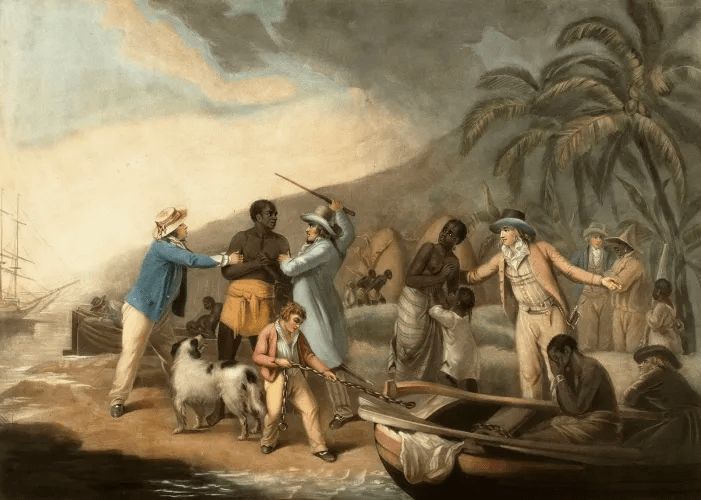
Despite strong temptation and great relief to vent our anger at the behaviour of past racists and colonialists by pulling down their statues, the answer to this and past examples of racism and arrogance is not to engage in acts of demolition and try to erase the past. There must be a better way of tackling the root causes of all that injustice.
It can be argued that by removing the statues of racists and imperialists one has done them a great favour, because with their removal their memory also fades gradually and people forget about their crimes. Far better to keep them where they are but add a plaque to them explaining what they did. The other problem is where one draws a line and how many statues should be pulled down or names changed. As a Persian proverb says “If order is given to detain all the sinners, no one will be left in town”. There is such a long list of people in the past whose behaviour we cannot tolerate at present that one does not know where to stop.
A nation that demolishes its history cuts its own roots and dims its memory. In fact, it is impossible to erase the past and pretend that it did not exist. We are the products of our past and we must accept it for good or ill. As the American novelist William Falkner said: “The past is not dead, it is not even past.” Even if we remove some statues and change some names our past will still haunt us, until we come to terms with it, admit our past mistakes, learn from them and try to make amends for all the wrongs that our ancestors committed. In the words of Omar Khayyam
The Moving Finger writes; and, having writ,
Moves on: nor all thy Piety nor Wit
Shall lure it back to cancel half a Line,
Nor all thy Tears wash out a Word of it.
One of the ways that unjust governments have perpetuated past injustices has been by passing unfair statutes and giving legal legitimacy to their racist behaviour. It’s well past time for changing the laws that discriminate against black and ethnic groups and on the whole the poorer classes of society, and to introduce new legislation. One such area is systemic police reform.
American politicians have been aware of police bias but have done little to address it. As early as 2006, an FBI report revealed that law-enforcement forces had been “infiltrated” by White Supremacists, and in fact, it called it an epidemic.[1] It is appalling that black people are 40 times more likely to be subjected to “Stop and Search” than white people. The rate of incarceration and death under detention is proportionately much higher for black people than for whites.
This means that one of the first steps that needs to be taken is to fundamentally change the culture of policing and make it more accountable. The racist policy of stop and search must be ended, and policemen who engage in racist behaviour must be severely punished.
The issue of violence and the militarization of the police is closely connected with the issue of America’s growing militarization abroad. The United States spends nearly as much on its military as the rest of the world combined, and it is by far the largest exporter of deadly weapons. It also has hundreds of bases in some 80 countries. Militarism abroad will be reflected in militarism at home, as can already be seen by the equipment and weapons that US police use. They normally receive some of the excess military equipment and weapons and consequently subject the American people more or less to the same treatment that is meted out to the poor victims of US wars of aggression abroad. The same attitude of military impunity has also been passed on to police forces.
To reduce this excessive reliance on military force at home and abroad, it is necessary to implement massive cuts in the budgets of both the Pentagon and the police, and instead spend the money on removing economic disparity. Even if the Pentagon’s budget is cut by half, the United States would still have by far the largest military spending in the world.
The United States spends tens of billions each year on its numerous bases abroad. Even if in the past where the nature of warfare was different such bases performed a useful role, today with the development of new technologies when America can dispatch forces to anywhere in the world in a matter of days or hours or engage in military actions from afar, these bases are provocative and cause more hostility and insecurity than peace and stability. There is a need for a new military posture that results in closing the majority of these bases.
On the whole, one of the major drivers of militarism and the desire for global hegemony is the belief in US exceptionalism and uniqueness that leads to unilateralism and the temptation to interfere anywhere in the world with the excuse of spreading democracy and human rights. The record of the past few decades of exporting democracy through waging wars and regime changes has been completely negative and counterproductive. One can see the result of such policies in Afghanistan, Iraq, Libya, Syria, Yemen and many other countries where American involvement has resulted in failed states, the rise of terrorism and greater regional and international instability. These arrogant attitudes need to change, and the United States should act within the constraints of international law and the United Nations.
One can think of dozens of other measures that can be taken in the United States and in the West as a whole, which are more effective than pulling down some statues. Those measures would have a permanent effect and would make America and the West much more humane, more equal and more desirable places for their citizens to live.
[1] “White Supremacist Infiltration of Law Enforcement”, 17 October 2006, http://s3.documentcloud.org/documents/402521/doc-26-white-supremacist-infiltration.pdf

