

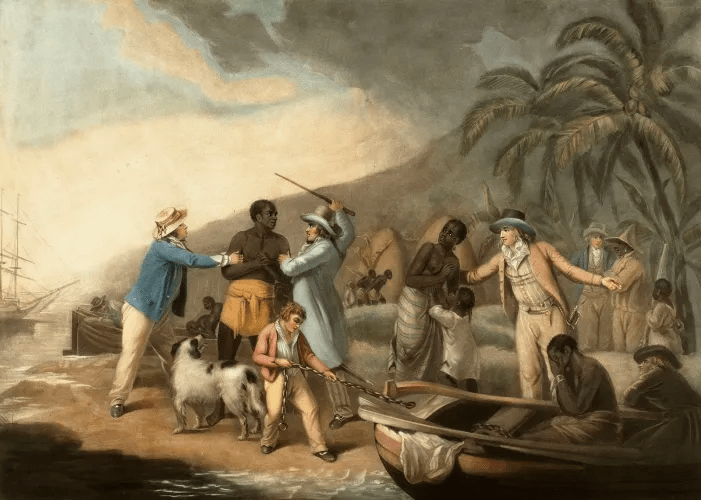
The protests to the cruel killing of George Floyd and many others before him and even some after him have not remained confined to the United States or among black people alone, but have given rise to a global movement for change and an end to racism and discrimination. This worldwide awakening and uprising should not be wasted by limiting the protests to symbolic acts or engaging in violence that can provide an excuse for various governments to use greater force to suppress these movements.
Many protestors in the United States have called for the toppling of the statues of Confederate generals and for the names of places and institutions named after them to be changed, while in many European countries, demonstrators have called for the toppling of statues of those who are symbols of racism, imperialism and white supremacy.
Clearly, toppling a few statues may give temporary satisfaction to those who have been the victims of racism, but is it the best or a lasting solution? There is a difference between “feel good politics” and “do good politics”. What is needed is not to vent our anger against a few statues, but to think of long-term solutions to the phenomenon of racism and discrimination.
When I first arrived in Britain as a young student in 1960, I caught a taxi at the then BOAC terminal in London and asked the driver to take me to an inexpensive hotel. He dropped me off at the Cromwell Hotel on Cromwell Road, Kensington.
Oliver Cromwell was the leader of the Puritan Movement who led the Parliament’s armies against Charles I during the English Civil War and signed the warrant for the execution of King Charles I in 1649. On 20 April 1653, he dismissed the Rump Parliament by force, setting up a nominated assembly known as Barebone’s Parliament before being invited to rule as Lord Protector.
The Puritans also engaged in a great deal of artistic vandalism, destroying many beautiful religious buildings and artefacts. Because of this background, it seemed very strange to me that the British would forget Cromwell’s misdeeds and even name various places after him. In fact, later I learned that this road in London was actually named after Cromwell’s son who once owned a house there. There is a prominent statue of Oliver Cromwell right in front of the House of Commons.
Having come from what was then royal Iran and being partly familiar with British history, I found it odd that the British people were so forgiving towards a man who had tried to abolish the monarchy and who had killed a king.
The following day I asked a British friend of mine about why Cromwell’s name had not been erased from all records after the Restoration of the monarchy and why various monuments commemorated him. He replied, “Because he was a part of British history”.
I found that attitude a much more mature approach compared to the practice of many third-world countries where every new regime tries to eliminate the traces of the previous one. This also happened in Iran. The Pahlavi Dynasty (1925-79) that succeeded the Qajar Dynasty (1789-1925) tried to erase or undermine all the achievements of the previous dynasty.
Cities, buildings and roads changed their names to new names associated with the Pahlavis. The ancient city of Urumiyyeh was renamed Rezaiyyeh after Reza Shah, Anzali Port became Pahlavi Port, Tehran’s longest street was called Pahlavi Street, and many statues of both Pahlavi kings were erected all over the place.
The same pattern was followed after the fall of the Pahlavis. One of the first things that the leaders of the Islamic Republic did was to try to erase the monuments and statues of the Pahlavi dynasty. The “hanging judge” Ayatollah Khalkhali led the crowd towards Reza Shah’s mausoleum and raised it to the ground. The monument that the Shah had built in the middle of Tehran to commemorate Iran’s 2,500 years of monarchy, but most specifically to perpetuate his own name, called Shahyad, was renamed “Freedom Square”, and Tehran’s longest thoroughfare, the Pahlavi Street built by Reza Shah, was renamed Valiasr Street (after the so-called Hidden Imam). No doubt, when the Islamic Republic is replaced with a new regime, new rulers will also try to destroy Khomeini’s huge mausoleum and will change many names associated with the Islamic regime.
The toppling of the monuments associated with an old era may be tempting and may provide some momentary emotional relief, but they also destroy a part of history, and a nation without history is like a tree which has had its roots cut off.
One can easily understand the depth of anger of those who have been the victims of racism in the past or at present, and their desire to remove the statues of some slave owners or colonialists that remind them of the period of their oppression.
How can one learn about the background of those monsters and not sympathise with those who wish to remove the stain of shame from their cities? Tens of thousands of mainly peaceful demonstrators took to the streets in different parts of Britain demanding racial justice. In Bristol, demonstrators pulled down the statue of Edward Colston from its pedestal, reminiscent of American soldiers pulling down Saddam Hussein’s statue in Baghdad, and threw it into a canal.
Colston, who became a major benefactor to the city of Bristol and whose name honours/shames many streets and buildings, built his enormous fortune on slavery. He transported more than 80,000 African men, women and children across the Atlantic, many of them to their deaths during transit or on the plantations.
Thousands of demonstrators gathered outside Oriel College in Oxford demanding the removal of the statue of imperialist Cecil Rhodes. The growing demands for the removal of Rhodes’ statue forced the governing body of Oriel College to vote on 17th June to remove Rhodes’ statue, although only days earlier the university chancellor and many government officials had opposed that move.
Rhodes was an ardent believer in British imperialism who founded the southern African territory which was named Rhodesia after him (renamed later as Zimbabwe when it achieved independence after nearly 70 years as a British colony). Rhodes could be regarded as one of the authors of apartheid in South Africa. His primary motivation in politics was based on his professed belief that the Anglo-Saxon race was “the first race in the world”, adding that “the more of the world we inhabit the better it is for the human race.”[1]
Sadly, such sentiments do not only belong in the past but are repeated in different forms by some arrogant politicians right up to the present time. During his Senate hearing, US Secretary of State Mike Pompeo said that America was not only exceptional but unique. Pompeo, a US Army veteran, addressing The American Legion 101st National Convention on 27 August 2019, boasted: “Americanism means recognising America as ‘an exceptional nation’”.
After referring to the US’s “achievements” in Afghanistan and Venezuela, galvanising international support for sanctions on North Korea and Iran, etc., he told his military audience: “It’s very simple: you have contributed mightily to proud American achievements. By doing so you, your organization, each of you as individuals, is a proud American achievement unto itself.” He added: “In fact, America itself – the idea of America and her promise – is at the core of everything that you do.”[2]
This is the language of all past imperialists and colonialists who made use of high-sounding ideals to invade and suppress other nations. But no government has acted in a more parochial and racist manner than the administration of which Pompeo is a member.
From banning Muslim immigrants to savagely separating children from their parents at US borders in the south, selling huge volumes of deadly weapons to dictatorial regimes that are engaged in genocidal wars in Yemen and elsewhere, imposing illegal sanctions on numerous countries including Iran, Venezuela, Cuba, etc., organising clumsy coup attempts against Venezuela and Bolivia, violating international law and granting Jerusalem and parts of the occupied territories to the apartheid Israeli regime, withdrawing from several international treaties such as the Paris Climate Accord, the nuclear deal with Iran, the Start Treaty with Russia, undermining various vital UN organisations such as the WHO in the middle of a pandemic, or UNESCO or International Criminal Court, etc. the current US administration has a terrible record, hardly matched by any previous administration.
It requires an exceptional, indeed a unique, degree of arrogance and blindness to ignore this unenviable record of aggression, violation of international law and human rights, and talk about US exceptionalism for allegedly spreading freedom and democracy throughout the world.
[1] William Thomas Stead, ed. “The Last Will and Testament of Cecil John Rhodes, London, 1902, p. 58.
[2] See Steven B. Brooks, Pompeo: Americanism means recognising America as an ‘exceptional nation’, American Legion, Aug 27, 2019. https://www.legion.org/accountable/246899/pompeo-americanism-means-recognizing-america-exceptional-nation

