

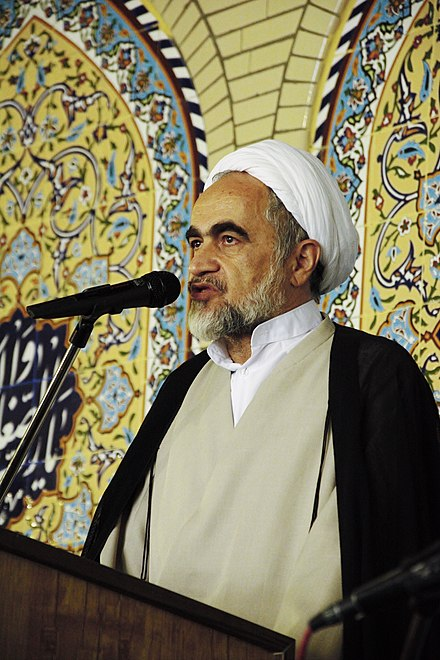
Ayatollah Hossein Ali Montazeri
By Farhang Jahanpour
Ayatollah Montazeri (1922-2009), Khomeini’s designated successor until his fall from grace in 1989, was the chief architect of the political formulation of the concept of Velayat-e Faqih and its inclusion in the Iranian constitution of 1979. As the chairman of the Assembly of Experts that drew up the constitution, he formulated the idea of Velayat-e Faqih as the foundation stone of the Islamic Republic. However, towards the end of Ayatollah Khomeini’s life, Montazeri grew disenchanted with the many excesses of the Islamic regime, and openly criticised some of its policies and practices, including the summary execution of a large number of dissidents who had been previously given jail sentences.
As a result of his outspoken criticism of Ayatollah Khomeini’s growing autocratic powers, especially his ideas concerning the Velayat-e Motlaqe-ye Faqih (the absolute guardianship of the jurisconsult), Ayatollah Montazeri was dropped as Khomeini’s heir apparent only a few months before the latter’s death.
After Ayatollah Khomeini’s death, Ayatollah Montazeri remained as the main critic of the supreme leader, Ayatollah Ali Khamene’i, questioning his qualifications for holding such a high office right to the end of his life. Montazeri’s opposition to Khamene’i resulted in political and physical attacks on him, and he spent many years under house arrest.
Montazeri not only challenged Khamene’i’s credentials but also stressed that it was never intended that the leader would be unaccountable and above the law. The original constitution stipulated that the leader must be chosen through general popular recognition of his outstanding merit. As Montazeri emphasised:
“It is certain that the legitimacy of this post is acquired through popular election. In reality, there is a social contract between the people and the Leader, and the Constitution was drafted on that basis. Accordingly, his term may be limited and temporary, like that of the president or a member of parliament. And given that the Leader is accorded responsibility by the people, he is not infallible. He must accept criticism and be responsible for his actions.”[1]
The ideas of the above reformers – and many others that cannot be referred to here – have had a great impact upon the educated classes in Iran. Their works have been disseminated widely through lectures and articles, and their books are frequently reprinted. A more moderate interpretation of Islam would have enormous repercussions throughout the Islamic world.
Notes:
[1] Hoseyn Ali Montazeri, Dirasat fi Vilayat al-Faqih va fiqh al-Dowlat al-Islamiyya [Lessons on Velayat-e faqih and religious views concerning Islamic government]. These lessons were taught between 1363 and 1368 [1984-1989] at Qom religious seminary.

