

In the long history of clerical involvement in politics, they have generally played a very negative and reactionary role. Believing in revelation and regarding the Koran and the Shari’a as superior to any manmade laws, they viewed any political developments initiated by reformers outside strict religious rules with suspicion, especially as most reform movements in Iran and the Middle East as a whole led to secularism, which diminished the power and influence of the clerics. However, on a few occasions, either due to the rivalry between the clerics and the monarchs or due to a genuine desire for reforms, there were some clerics who adopted progressive stances and sided with the reformers. This topic is complex and requires a much deeper study, as it often involves the special relationships between certain clerics and the rulers. However, one can find a few clerics who have often been regarded as more open-minded and progressive, and who have contributed to the cause of democracy. Here are just a few examples of leading Muslim thinkers who tried to advocate freedom and democracy the way they saw it.
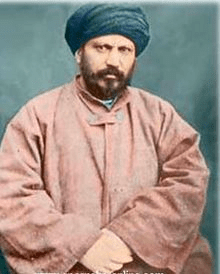
Jamal al-Din Asadabadi
Jamal al-Din Asadabadi, better known as Afghani (1838–97), was a very influential Iranian cleric and reformer. He was a precursor to Ayatollah Khomeini, already demonstrating an example of the dual role of the Shi’a clergy, both as religious leaders and as political agitators. He travelled extensively in India, the Middle East and Europe, and wherever he went, he agitated against the British and Russian domination of Islamic countries. He was fluent in Arabic and some European languages and was a fiery preacher. For a time, he served as a professor of Islamic philosophy at the prestigious Al-Azhar University in Cairo.
Ironically, Afghani has a reputation as a champion of Islam and the founder of Pan-Islamism, but this was only a political ploy for mobilising the masses against foreign domination. Although he couched his political message in Islamic terms, at heart he seems to have been quite hostile to Islam. When he travelled to the countries under Ottoman rule, he campaigned to strengthen the Islamic caliphate’s role and organise opposition against the Russians. In India, he agitated against British rule, while in Iran, he urged Nasir al-Din Shah to expel the British and the Russians from the country.
However, despite his Islamic pretences, he was basically a political animal and was using Islam only to achieve his political ends. For example, when he was visiting Europe, he engaged in a series of dialogues with many orientalists and corresponded with the famous French philosopher and orientalist Ernest Renan.
Responding to a pamphlet by Ernest Renan, the French orientalist and philosopher (1823-1892), in which he had been critical of negative Christian influences in Europe, Jamal al-Din argued that these negative influences were not limited to Christianity. He maintained that all religions, including Islam, were fundamentally against reason and civilisation. He blamed Islam for being responsible for the backwardness of Muslim countries. In an overtly anti-Islamic passage. He argued that the problem did not lie with “unscientific Arab mentality”, but with Islam itself:
“It is permissible to ask oneself why Arab civilization after having thrown such a live light on the world, suddenly became extinguished, why this torch has not been lit since, and why the Arab world remains buried in profound darkness. Here, the responsibility of the Muslim religion appears complete. It is clear that wherever it became established, this religion tried to stifle science and was marvellously served in its design by political despotism. Al-Siuti tells us that Caliph al-Hadi put to death in Baghdad 5,000 philosophers in order to extirpate science in Muslim countries up to their roots… I could find in the past of the Christian religion analogous facts. Religions, whatever names they are given, all resemble one another. No agreement and no reconciliation are possible between these religions and philosophy. Religion imposes on man its faith and its belief, whereas philosophy frees him of it totally or in part.”[1]
Jamal al-Din led a strong campaign against Nasir al-Din Shah from exile, and it was one of his pupils and associates who assassinated the Shah in 1896 while he was visiting a shrine near Tehran at the beginning of celebrations to mark the fiftieth anniversary of his reign. The bullet that killed Nasir al-Din Shah also marked the beginning of the end of the Qajar regime, and the start of the Constitutional Movement (1905–11).
Sheykh Muhammad ‘Abduh
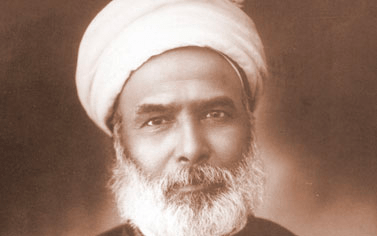
Muhammad ‘Abduh (1849-1905), who became the Grand Mufti of Egypt and a professor at the prestigious Islamic University of al-Azhar, was one of the first Islamic reformers to try to incorporate Western democratic ideas into Islam. ‘Abduh was a friend and disciple of Jamal al-Din Asadabadi, and like him, campaigned for the revival of Islamic countries.
Making extensive use of some Koranic doctrines such as shura (consultation), ijma’ (consensus), maslaha (expediency), etc., ‘Abduh formulated an Islamic basis for representative democracy and government by consent.[2] He was a leading advocate of the supremacy of reason over religious dogma and stressed, “In case of disparity between reason and what has been transmitted by tradition, reason predominates. The tradition is then either re-interpreted in order to attune to what is rational or to affirm its genuineness while affirming one’s inability to discern God’s intent.”[3]
Sheykh Muhammad Husain Na’ini
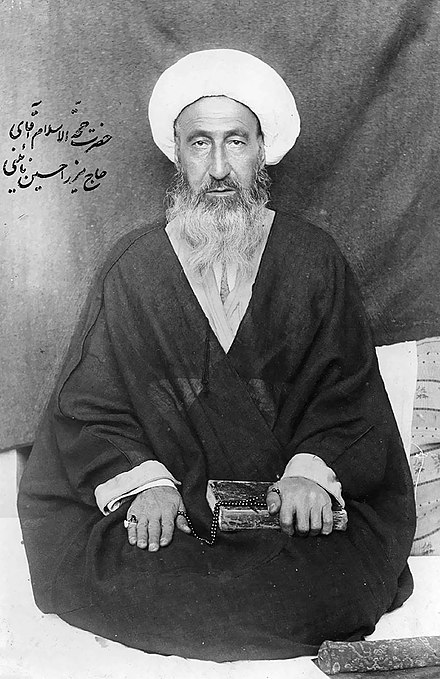
Sheykh Muhammad Husain Na’ini (1850-1936), the pro-constitutionalist cleric in Iran, argued in favour of a representative and democratic government based on a constitution.[4] He believed that such a government would be the best possible form of government in the absence of a government led by the Prophet or the Hidden Imam. He maintained that a tyrannical and despotic ruler was guilty of idolatry (shirk), the cardinal sin in Islam, because he arrogated to himself the power that belonged to God and to the people as God’s vicegerents on earth.
Abd ar-Rahman al-Kawakibi
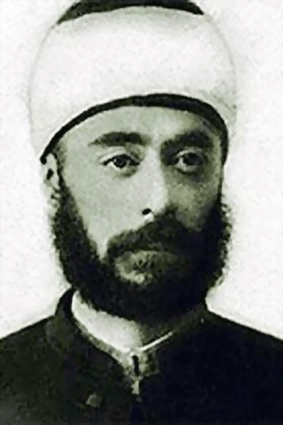
Abd ar-Rahman al-Kawakibi (1854-1902), the Syrian scholar and cleric, was most outspoken against the tyranny of Ottoman sultans. In his book Tabay’ al-Istibdad (The Characteristics of Despotism), he argued that any government was prone to despotism, unless it was responsible to the people and was put under their direct supervision and control. He believed that Muslim despots had always misused Islam as a crutch to exercise their arbitrary rule.[5]
Iqbal Lahuri
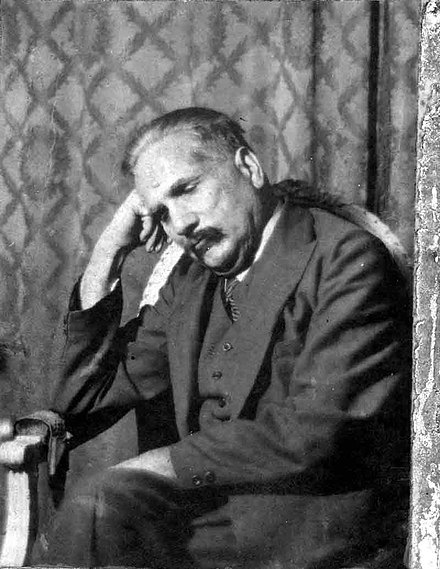
Muhammad Iqbal Lahuri (1877-1938), the famous Indian poet, scholar and reformer, was very much influenced by Mowlavi Rumi, the famous Persian mystical poet. He criticised both the Western and the Islamic civilisations of his time. He believed that the West had given birth to two inhuman and spiritually bankrupt systems, capitalism and imperialism. Islam, on the other hand, had fostered obedience and submission.[6] In his book The Reconstruction of Religious Thought in Islam, he called on his fellow believers to turn to the “real”, mystical Islam that would provide the means for their political and spiritual liberation.
A Fundamentalist Backlash
However, after these and a long line of other scholars who were advocating the reform of Islam on rational and democratic principles, as Muslims began to fight against foreign and domestic tyrants, their struggle took a religious form. Movements such as the Ikhwan al-Muslimun (Muslim Brothers), founded by Hasan al-Banna (1906-1949), Jama’at-e Islami, founded by Sayyid Abu’l-Al’a Mawdudi (1903-79), and Al-Jama’at al-Islamiyya, inspired by the teachings of Sayyid Qutb (1906-66) and others, adopted a more radical view of Islam. They preached a militant, politicised and radical Islam that had to fight its enemies both at home and abroad and establish Islamic societies based on the Shari’a as they interpreted it. As the old regimes were replaced with new governments and neither pro-Western nor pro-Communist regimes delivered either democracy or economic development, and instead created a great deal of superficial Westernisation accompanied by rapid social and economic upheaval, the earlier hopes were dashed, and people turned for their salvation towards radical Islamic movements. Islamic fundamentalism appealed to socially, politically and economically disinherited masses, and particularly to the young, educated classes
Footnotes
[1] Quoted in N. Keddie, Sayyid Jamal ad-Din ‘al-Afghani’ (Berkeley and Los Angeles, 1972), 193.
[2] Malcolm H. Kerr, Islamic Reform: The Political and Legal Theories of Muhammad ‘Abduh and Rashid Rida (Berkeley: University of California Press, 1966).
[3] Muhammad ‘Abduh, Al-Islam wa’l-Nasraniyya (Cairo: al-Manar, 1938, pp. 54-5) quoted by Yvonne Haddad in Rahnema, op cit, p 45.
[4] Muhammad Husain Na’ini, Admonition to the Nation and Exposition to the People (1909).
[5] See: Rahnema, op cit, p 3.
[6] See: Rahnema, op cit, PP 3-4.

