

Iranian Islam
Right from the start of the spreading of Islam to Iran, Iranian Islam was expressed in the language of mysticism, and Iranian Sufi poets and writers, both at the time when the majority of Iranians were the followers of one of the Sunni sects, as well as after the establishment of the Safavid dynasty when Shi’ism became the official religion of Iran, created some of the most spiritual and mystical poetry ever written in any language.
A large number of great Sufis, including Mansur Hallaj (executed 922 A.D.), Ain al-Quzat Hamadani (executed 1131), Suhrawardi Maqtul (executed 1191) and others were put to death or were forced to flee due to the opposition of fanatical clerics and rulers.
Nevertheless, there is no doubt that the vast majority of Sufis regarded themselves as faithful and sincere Muslims who had, in fact, achieved the inner truths of Islam which lay beyond the ken of the superficial clerics and the mob. As the following lines attributed to the great Iranian mystic Rumi said:
ما ز قرآن مغز را برداشتیم
پوست را نزد سگان بگذاشتیم
We have taken the kernel from Islam
We have thrown its skin to the dogs
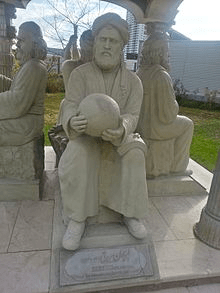
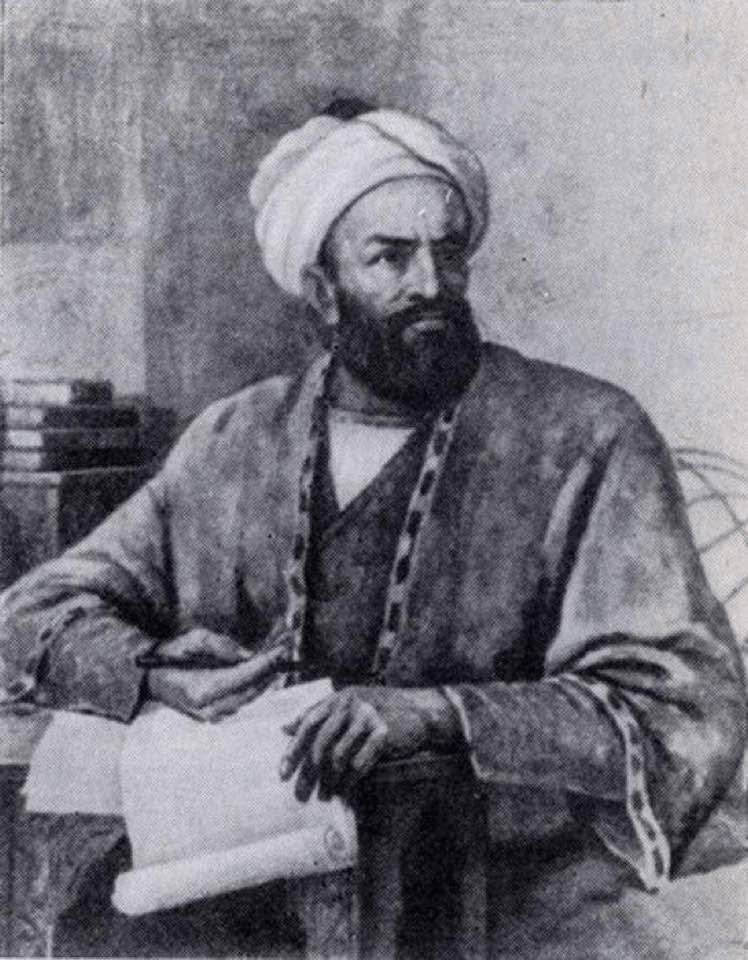
Biruni (973-1048)
Early Iranian scholars, such as Abu-Reihan Biruni (973-1048), even introduced many Hindu and Buddhist concepts into Islam and Sufism and created a synthesis that influenced later Muslim scholars, but also had an influence on Hinduism and Buddhism. Biruni travelled to India, studied Sanskrit and made a profound study of Hindu ideas. His monumental works that dealt with Indian philosophies included his Kitab Fi Tahqiq Ma Li’l-Hind (A Book of Research on India),[1] and Al-Athar Al-Baqiya ‘An Al-Qurun Al-Khaliya (Remaining Traces of Past Centuries).[2]
Contrary to many orthodox Muslims who regarded the Hindus as Mushrik (Polytheists), Biruni repeatedly asserted that Hindu philosophies were based on monotheism. He strongly admired the pure theories of the Bhagavad Gita and was very sympathetic to the idea that all religions were basically one and that different paths to God ultimately led to the same goal. He even went so far as speaking of Hindu scholars as “enjoying the help of God,” or being guided by divine inspiration.
It is important to remember that this was done many centuries before anyone had heard of the concept of comparative religion, or before anyone was open-minded enough or learned enough to be able to study and compare different religions together in the expert manner that Biruni did.
Biruni translated the Samkhya by Kapila and the Book of Patanjali into Arabic. He was perhaps the first Muslim to introduce the Bhagavad Gita and the Puranas to Muslim readers. In his chapters on theology and philosophy, he also referred to the Mahabharata and the Ramayana, and quoted many verses from Manu’s Dharmasastra. Thus, by the beginning of the 11th century, he introduced some of the greatest gems in Hindu literature to the Islamic world.
Islam was taken to the Sub-Continent, China and other countries in the Far East not by Muslim conquerors but by Iranian merchants and especially Iranian Sufis. The Persian became the language of Islamic learning and communication in Asia and even in the Ottoman Empire, in the same way that Arabic had become the language of Islam in most of the Middle East and North Africa. Thus, a Persianate world was created that stretched from the Mediterranean to China. This is why the Islam of the Sub-Continent and the Far East is mainly based on various Sufi orders that originated in Iran.
It was as a result of the pioneering work of Biruni that Dara Shukoh, the eldest son and heir-apparent of the fifth Mughal Emperor Shah Jahan, also acted as a link between Hinduism and Islam. He was the follower of the Persian mystic Sarmad Kashani, and through him and also through his familiarity with Hinduism, he tried to develop a common mystical language between Islam and Hinduism. Towards this goal, he completed the translation of fifty Upanishads from Sanskrit into Persian, which was the lingua franca of the Mughal Empire. His most famous book, Majma-ul-Bahrain (The Confluence of the Two Seas), was devoted to showing the affinities between Sufi and Vedantic speculation.
Many Iranian philosophers, scientists and mystics, such as Muhammad ibn Zakariya Razi, Muhammad ibn Musa Kharazmi (usually spelt al-Khwarizmi), Omar Khayyam, Esma’il Esfezari, Abu-Nasr Farabi, Ibn Sina (known in the West as Avicenna), Mir Mohammad Baqer Mir Damad, Nasir al-Din Tusi, and many others, have enriched Islam’s intellectual and cultural life. As the renowned Cambridge scholar E. G. Browne wrote: “Take from what is generally called Arabian sciences – from exegesis, tradition, theology, philosophy, medicine, lexicography, history, biography, even Arabic grammar – the work contributed by Persians, and the best part is gone.”[3]
A long line of Iranian poets, including Ferdowsi, Sana’i, Attar, Rumi, Sa’di, Hafiz, Jami and others, have written eloquently about human unity and the need for religious tolerance. Since the Islamic revolution, with its hostility towards the ancient glories of Iran and its emphasis on the Islamic period, there has been a renewed interest in Ferdowsi’s Shah-Nameh in the same way that Shah-Nameh itself revived the interest in ancient Persian civilisation.
Footnotes:
[1] Published in Hyderabad, 1958
[2] Translated by E. C. Sachau, The Chronology Of Ancient Nations (London, 1879). also see: E. C. Sachau, Alberuni’s India (London, 1910).
[3] The Legacy of Persia, ed. by A. J. Arberry (Oxford University Press, 1989), p 204

