

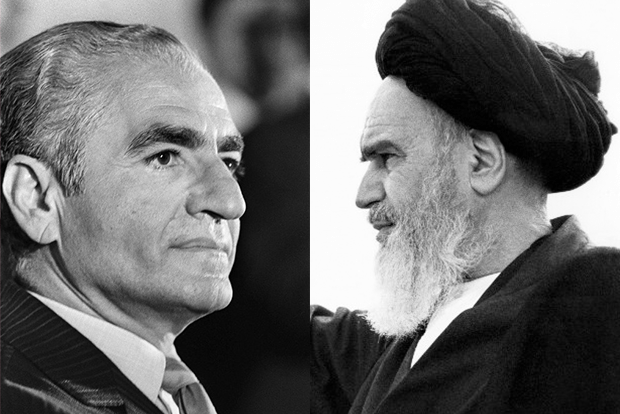
Lecture 4 in a series of lectures given to a group of British and American journalists at the BBC Monitoring on 11 March 1999
Iran has had one of the longest histories of attempts at democratisation in the Middle East. After centuries of acting as a great power in the region and beyond – the last phase being the Safavid dynasty (1501-1722) and Nader Shah’s foreign conquests – during the whole of the 19th century, the country had fallen prey to foreign domination and exploitation.
The impact of the West started from as early as 1800, when Iran came under increasing military pressure, first by Russia and later by Britain. The Russians, equipped with modern artillery, moved through Central Asia and the Caucasus and conquered vast territories in northern Iran. These exploits ended in the humiliating treaties of Gulistan (1813) and Turkamanchai (1828), as a result of which Iran lost Georgia, Armenia and the territories north of the Arax river that are now part of the Republic of Azerbaijan, and gave up all claims to Afghanistan. Iran was also forced to pay an indemnity of £3,000,000 to the tsar. Most significant of all was the continuous Russian and British involvement in Iran’s internal affairs, as well as being forced to grant a series of commercial capitulations to those countries.
However, these humiliations at the hands of foreign powers convinced the Iranians of the need for change. Iran had less contact with the West than either the Ottoman Empire or Egypt, and initially Iran lagged behind the other two, although one can find similar developments in all three countries. The first attempts at modernisation in Iran started under the Crown Prince Abbas Mirza, who was the governor general of Azerbaijan province at the beginning of the 19th century. The defeats at the hands of the Russians convinced him of the need to modernise the Iranian military and to equip Iran with modern industries. He made use of French and British instructors to introduce Western-style education and training under what he called Nezam-e Jadid, or the New Order. As a result of these reforms, some traditionalist elements began to spread rumours that the crown prince was heretical, and even a “secret unbeliever.”[1] Abbas Mirza died young in 1833 before he could take the throne.
After his death, there was a break in the pace of modernisation until the reform-minded Mirza Taqi Khan Amir Kabir became prime minister in 1848 under Naser al-Din Shah (1831-1896). Up till that time, all education and most forms of judicial and legal activities were carried out by the ulema or Muslim clerics. Amir Kabir established the Dar al-Fonun, Iran’s first modern Technical College or University. The Dar al-Fonun offered its students classes in foreign languages and political sciences, as well as several technical subjects. He also founded the country’s first official newspaper, the Ruzname-ye Vaqa-ye-e Ettefaqiyeh (Newspaper of Current Affairs). His reforms also weakened the power of the clergy and the traditional classes that intrigued against him, and he was eventually murdered on the orders of Naser al-Din Shah in 1852.
Although Naser al-Din Shah executed Amir Kabir and tried to stop the program of modernisation, he did not succeed in destroying the desire for change and reform. Meanwhile, a large number of foreign companies vied with each other to hunt for lucrative concessions from a weak and incompetent government. Chief among these was the concession granted to Baron Julius de Reuter, a British citizen, of the Reuter’s fame. For £40,000 and 60 per cent of the profits he purchased a concession for the exclusive right to finance a state bank, farm out the entire customs, exploit all minerals (except gold, silver, and precious stones), build railways and tramways for seventy years, and establish all future canals, irrigation works, roads, telegraph lines, and industrial factories. “The agreement,” Lord Curzon commented, “contained the most complete surrender of the entire resources of a kingdom into foreign hands that has ever been dreamed of, much less accomplished, in history.”[2] This wholesale auctioning of the entire resources of the country aroused so much opposition in Iran and in Russia, Britain’s regional rival, that it had to be cancelled.
Reuter was paid indemnity, although he retained mining and banking privileges that developed later into the Imperial Bank of Persia. Meanwhile, the Russians received similar, although smaller, concessions in the north. One Russian company received a concession for the construction of roads, and another Russian company obtained a monopoly over the fishing industry in the Caspian Sea. The court, meanwhile, received several very expensive loans from Britain and Russia to finance the extravagant trips of the shah and his entourage to Europe.
There was hardly any possibility of political or religious dissent. Although some oppositional newspapers were published abroad and secretly sent to Iran, no political activity or opposition to the ruling dynasty was tolerated. The same was true about any religious or intellectual dissent. The clerics who had a monopoly on education and the judiciary enjoyed great power over the pious masses and opposed any movement that challenged their monopolistic power. The religious reform movement started by Seyyed Ali Muhammad, the Bab, and followed by Baha’u’llah, who founded the Baha’i Faith, was suppressed at the instigation of the mullahs. Bab himself was executed, and thousands of his followers were also hunted down and massacred.
The corruption of the court and the government, the poverty and weakness of the country, the humiliation at the hands of foreign powers and the lack of any form of freedom led to demands for change. One of the leading reformers who helped mobilise the masses against the court and its foreign backers was Seyyed Jamal al-Din Asadabadi, “al-Afghani”. Afghani, who was a precursor to Ayatollah Khomeini, already showed the dual role of the Shi’i clergy, both as religious leaders and as political agitators.
Jamal al-Din was born in the late 1830s to a small landowning family in a village outside Hamadan in Iran. He began his religious education in Qazvin and later moved to the prestigious seminary in Najaf. In his youth, Jamal al-Din became interested in Sheykism and Babism, but after moving to India and witnessing the Indian Mutiny against British rule, he became interested in political activism. He travelled extensively in India, the Middle East and Europe, and wherever he went, he agitated against the British and Russian domination of the Islamic countries. He changed his name from Asadabadi to Afghani, which in the eyes of the majority Sunni populations in the Middle East would distance himself from Shi’ism and pretend that, like most Afghans, he was a Sunni.
It is ironic that Jamal al-Din has a reputation as a champion of Islam and the founder of Pan-Islamism, because although he couched his political message in Islamic terms, at heart, he seems to have been quite hostile to Islam. In the Ottoman Empire, he campaigned for the strengthening of the role of the Islamic caliphate and organising opposition against the Russians, while in Iran, he urged Naser al-Din Shah to expel the British. However, despite his Islamic pretences, like Ayatollah Khomeini, he was basically a political animal and was using Islam only to achieve his political ends.
When he was visiting Europe, he engaged in a dialogue with Orientalists and corresponded with the famous French philosopher and orientalist, Ernest Renan and in Britain, he established contacts with Professor E. G. Browne, the renowned scholar of Persian literature at Cambridge University. Responding to a pamphlet by Renan in which he had criticised the negative influence of Christianity in Europe, Jamal al-Din argued that these evils were not limited to Christianity and that all religions, including Islam, were fundamentally against reason and civilisation. He blamed Islam for being responsible for the backwardness of the Muslim countries. In an incredible passage, he argued that the problem did not lie with “unscientific” Arab mentality, but with Islam itself:
“It is permissible to ask oneself why Arab civilisation after having thrown such a lively light on the world, suddenly became extinguished, why this torch has not been lit since, and why the Arab world remains buried in profound darkness. Here, the responsibility of the Muslim religion appears complete. It is clear that wherever it became established, this religion tried to stifle science and was marvelously served in its design by political despotism. Al-Siuti tells that Caliph al-Hadi put to death in Baghdad 5,000 philosophers in order to extirpate science in Muslim countries up to their roots… I could find in the past of the Christian religion analogous facts. Religions, whatever names they are given, all resemble one another. No agreement and no reconciliation are possible between these religions and philosophy. Religion imposes on man its faith and its belief, whereas philosophy frees him of it totally or in part.”[3]
Jamal al-Din led a strong campaign against Naser al-Din Shah from exile, and it was one of his pupils and associates who assassinated the shah in 1896 while he was visiting a shrine near Tehran at the beginning of celebrations to mark the 50th anniversary of his reign, according to the Hegira calendar. The bullet that killed Naser al-Din Shah also marked the beginning of the end of the Qajar regime. Therefore, we see that the involvement of the mullahs in politics, as well as the use of terror and assassination to gain their ends, has a long history in Iran. On his deathbed in 1897, Jamal al-Din expressed to a friend both hope and sorrow. Hope, because the “stream of renovation” flowing from the West to the East would inevitably destroy the “edifice of despotism.” Sorrow, because he had wasted so much of his precious ideas on the “sterile soil” of royal courts: “would that I had sown the seeds of my ideas on the fertile ground of the people’s thoughts.”[4] This was a lesson that was learned well by Ayatollah Khomeini.
The Iranian Constitutional Revolution
The ideas of people like Jamal al-Din and scores of secular reformers, including Mirza Malkam Khan, Ali-Akbar Dehkhoda, Hassan Taqizadeh and many others, gradually prepared the way for a revolution against despotism. In this short paper, it is not possible to elaborate on the ideas of the chief secular reformers about the Qajar dictatorship.[5] Reading the numerous newspapers and magazines that sprang up inside and outside Iran at the end of the last and the beginning of the present century, and many books, articles and poems that were published, one is struck by the profound desire for change and a very deep understanding of the benefits of democracy over despotism. The Iranian Constitutional Revolution of 1905-1911 was a popular and nationwide movement that enjoyed the support of both the intellectuals as well as the ordinary people in the streets.
Like the Islamic Revolution over 70 years later, the Constitutional Revolution too achieved success as the result of a combination of the reformist ideas of secular intellectuals, supported by the religious backing of some members of the clergy who helped to mobilise the masses. However, both revolutions were eventually subverted by the clergy, who outmanoeuvred and overshadowed the intellectuals and robbed the revolutions of their essentially democratic ideals. There seems to be a catch-22 situation, both in Iran and in nearly all other Islamic countries that are fighting against despotism and unpopular governments. As societies are essentially religious, if one wishes to win the support of the masses, one has to enlist the help of the clerics and appeal to religious symbols against despotism. However, by doing so, one plays into the hands of the mullahs, and the democratic nature of the reforms is diverted from their original course. This problem is more acute in Iran, as Shi’ism attaches greater importance to the role of the clerics in society as the representatives of the Hidden Imam than is the case in Sunni countries.
Although nearly all the reform movements in Iran in the nineteenth and twentieth centuries were started by Westernised intellectuals who wished to bring about democratic reforms, in order to confront the enormous weight of the ruling elite and to change the conservative attitudes among the masses, they enlisted the help of some disenchanted members of the clergy. At the time of the Constitutional Revolution, the reformers were not only faced with the opposition of the court and the traditional elite, but their modernist ideas were also strongly opposed by the leading clerics of the time.
The most prominent cleric of the time, Sheykh Fazlollah Nuri, sided with the royal court and condemned democratic reforms as heretical ideas borrowed from the West. Instead of supporting the Mashruteh, or constitutional form of government, he advocated the Mashru’eh, or a system based on the Shari’a. In other words, an Islamic government. In order to counterbalance the influence of Sheykh Fazlollah Nuri, the Constitutionalists enlisted the support of two mujtahids living in the capital, Sayyid ‘Abdullah Behbahani and Sayyid Mohammad Tabataba’i.
Behbahani, who had a reputation of being pro-British and who had earlier supported the granting of the notorious Tobacco Concession to a British company, opposed the court partly due to animosity toward the ministers, and partly due to the increasing Russian influence at the court. Tabataba’i, however, was a moderate reformer who had worked closely with Jamal al-Din and had opened one of the first modern schools in Tehran. In fact, the title of Ayatollah was first invented by the reformers for these two pro-Constitution clerics in order to enhance their reputation and their status against the more senior Sheykh Fazlollah Nuri. However, after the success of the Constitutional Movement, the influence of the clerics and the attempts to ward off the accusation that the movement was anti-Islamic resulted in the growing influence of the clerics in political affairs and the deviation of the course of democratic reforms.
In the original document that was written in October 1906 and came to be known as the “Fundamental Laws”, the Majlis-e Shura-ye Melli or the National Consultative Assembly was granted extensive powers as “the representative of the whole people.” It had final determination over all laws, decrees, budgets, treaties, loans, monopolies, and concessions. The radicals demanded more secular reforms and tried to keep the mullahs out of politics altogether. In practice, the reverse happened.
The Supplementary Fundamental Law, which was completed on 7 October 1907, declared Islam as the official religion of the country and empowered a committee composed of five mujtahids to ensure that the laws passed by the parliament conformed to the laws of the Shari’a. The clerics comprised only 20 per cent of the membership of the first assembly. The rest of the members came from among the reformist intellectuals, merchants and guild elders. The number of clerics in the second Majlis was much larger than in the first, and they tried to dominate the agenda. Nevertheless, despite all its faults, the Constitution was a major step forward compared to the despotic Qajar regime.[6]
Mozaffar al-Din Shah (1853-1907) ratified the Fundamental Laws on 30th December 1906, only five days before his death. Mohammad Ali Shah (1872-1925), who succeeded his father, tried to reverse the course of the Constitutional Movement. In this, he was supported by Sheikh Fazlollah Nuri and many other reactionary clerics. He eventually bombed the parliament building and abrogated the Fundamental Law. He is alleged to have said that he had no objection to the parliament and the constitution, provided that the deputies did not interfere in national affairs.
The abrogation of the Constitution led to many strikes and eventually to a civil war that lasted from June 1908 to July 1909. There was a general uprising throughout the country, and many forces from different parts of the country marched on Tehran. The Shah’s forces lost, and Mohammad Ali Shah fled to Russia. On August 5, 1909, exactly four years after Mozaffar al-Din Shah consented to convene the Constituent Assembly, the new cabinet decreed the calling of the Second National Assembly.
Iran’s chief problem remained its finances and the need to establish a sound economic system for the whole country. Anxious that the treasurer general was not connected to either Britain or Russia, the Iranians looked to the Americans as the possible saviours of their country, but the United States was uninterested. “Our interest in Persia”, wrote the Assistant Secretary of State, “seems about as near nothing as our interests anywhere can be … and it would be the veriest [sic] folly to irritate any government over the Persian questions.”[7]
However, Iran obtained permission to recruit a young American expert, Morgan Shuster, to control and reform the finances. Shuster devised a new taxation system and planned to set up a tax-collecting gendarmerie. However, both Britain and Russia were unhappy about the role that Shuster was playing in organising the Iranian economy. In November 1911, the Russians sent an ultimatum demanding the dismissal of Shuster and the agreement that Iran would not engage foreigners without British or Russian consent. The Majlis refused the ultimatum, but Russian troops advanced toward Tehran, and the government was forced to dismiss Shuster in December 1911.[8] In 1912, Russian forces brutally suppressed a rising in Tabriz and bombarded and invaded the most sacred spot in Iran, the shrine of Imam Riza in Mashhad. By 1914, Russia controlled most of the northern provinces of Iran.
In July 1914, the last Qajar ruler, Ahmad Shah (1898-1930), was crowned at the age of 17, and in the following month, Europe went to war. Iran declared its neutrality on 1 November, but the north of the country was turned into a battleground between the Ottoman and the Russian forces. Just as Iran was trying to consolidate its fledgling democracy in the face of stiff foreign opposition, the country was unwillingly involved in a world war. The third Assembly met in December 1914, but Britain and Russia kept interfering in the selection of a government that they wished to be to the liking of the Allies. In November 1915, Russia advanced its troops to within thirty miles of Tehran and later advanced south to Isfahan. Meanwhile, the south of the country was under the control of South Persia Rifles, an Iranian force under British control organised by Sir Percy Sykes. In 1919, under the Anglo-Iranian Agreement, Britain tried to turn Iran into a British protectorate. This agreement was rejected by the Iranian parliament.
The Reign of the Pahlavis
It was as a result of the post-war chaos and the weakness of the central government that nearly the whole country welcomed Reza Khan (1921-1941), the commander of the Iranian Cossack Brigade, who staged a coup against the incumbent government on 21 February 1921. Five years later, the Qajar dynasty was deposed by the parliament, and Reza Khan was crowned as Reza Shah and the founder of the Pahlavi dynasty.
Ironically, the clerics prevented Iran from becoming a republic after the downfall of the Qajar dynasty. Reza Khan was initially interested in replacing the Iranian monarchy with a republic and running as a presidential candidate. However, the leading clerics, nervous about the repetition of Atatürk’s experience in Iran, wrote to Reza Khan saying that Islam was against the concept of a republic and that he should put himself forward as the founder of a new dynasty. By that time, he did not need too much persuasion, and he consented.
The reign of Reza Shah initiated the founding of a New Order. He started the task of nation-building out of the chaos that he had inherited from the Qajar dynasty. Reza Shah’s first task was to rebuild the army and suppress many separatist and foreign-inspired movements that had sprung up in different parts of the country. He strengthened government bureaucracy. It was the first time since the fall of the Safavids in 1722 that the state was able to control the whole of the country through extensive instruments of administration, regulation and domination.
Reza Shah paid special attention to education. He founded many state schools for boys and girls throughout the country and founded Iran’s first modern university. His educational reforms were the most impressive of his other civilian reforms. Between 1921 and 1941, the annual allocations for education increased in real terms by as much as twelvefold. In 1925, there had been no more than 55,950 children in modern primary schools administered by the state or by the mosques. By 1941, there were more than 287,245 children in 2,336 modern primary schools.[9] He started Iran’s first modern industries, and with the revenues of a tax levied on tea, he constructed the Trans-Iranian railway system linking the Caspian Sea to the Persian Gulf. He renegotiated the oil agreement with the Anglo-Iranian Oil Company and greatly increased Iran’s share of the oil income.
Like Ataturk in Turkey, Reza Shah was strongly against the interference of religion in politics. He curtailed the power of the mullahs and decreed that only those who could complete a course of studies in theology and receive the appropriate qualifications could act as mullahs. In some ways, he went beyond Atatürk in that he abolished the use of the veil in public and for the first time, he appeared with his wife and daughters without wearing the Islamic hijab. He abolished the aristocratic titles and tried to create a new nation out of the almost feudal system that existed before. As a result of his secular and anti-religious reforms, Reza Shah earned the intense opposition of the religious establishment, including the influential clerical member of parliament, Seyyed Hasan Modarres, and a young cleric, Ruhollah Khomeini.
In order to improve the financial situation of the country, Reza Khan, like the early Constitutionalists before him, again turned to the United States. He offered a concession to the Sinclair Oil Company and appointed Dr Arthur Millspaugh of the State Department as the treasurer-general of Iran. Negotiations with Sinclair reached fruition in 1923, but Russian and British opposition caused Sinclair to drop the concession. Millspaugh signed a contract with the Iranian government by which he had full control over the Iranian budget and financial administration. Several Americans accompanied Millspaugh. His main mission was to introduce a progressive income tax bill, increase the efficiency of tax collection and attract more foreign investment.
Once again, Britain and Russia were unhappy about the influence of the Americans on the Iranian government. Millspaugh tried to prevent the Russo-Iranian agreement on the Caspian fisheries and implement a new tariff law. However, Russia was not prepared to give way, and Millspaugh resigned in 1927. Millspaugh was called upon again in 1942 to return to Iran, and this time he achieved greater success than the first time. He was urged by the State Department to accept the Iranian invitation: “I was informed… that the United States after the war was to play a large role in that region with respect to oil, commerce, and air transport, and that a big program was underway.”[10]
Unfortunately, towards the end of his reign, Reza Shah became more autocratic, and the parliament became subservient to his will. He became very greedy and amassed great wealth, including some 3,000,000 hectares of land. Despite all the reforms and developments that he introduced, he failed to put in place democratic institutions that would have ensured their continued success and perhaps his own chances of holding the country together under foreign invasion.
Nevertheless, it is undeniable that when he came to power, he found an impoverished, backward, disunited country on the verge of complete collapse and disintegration, and he left it as a united country with many elementary bases of modernization, such as industrialization, national administration, a standing army, much higher level of education, and great advances in the development of economic infrastructure, such as roads and railways.
Once again, an era of reform in Iran was interrupted as a result of foreign intervention. With the start of the Second World War after Russia joined the Allies, there was an Anglo-Soviet invasion of Iran in August 1941. The Allies had given an ultimatum to Reza Shah to expel all the Germans who were working in Iran, but this was more of an excuse rather than the real reason behind the invasion, which took place before the Iranian government had time to consider the ultimatum. The Allies invaded Iran not only to eliminate German agents but mainly to open a new corridor to Russia and to safeguard Iranian oil installations. More than five million tons of weapons and ammunition were transported on the recently completed Iranian railway from the Persian Gulf to the Soviet Union, and the Allies also made use of cheap Iranian oil. Churchill called Iran the “bridge of victory” for the role it played in creating a link between the Allies and Russia.
Mohammad Reza Shah’s Reign
Reza Shah was forced to abdicate in favour of his young son, Mohammad Reza Shah, and was sent into exile. The war years and foreign occupation of the country again plunged Iran into chaos and political turmoil. At the same time, the new climate of freedom unleashed the pent-up social grievances of the latter years of Reza Shah’s reign. Dozens of political parties were formed, the most popular party being the pro-Moscow Tudeh Party. One of the first challenges the young Shah faced on the domestic front was how to deal with severe economic problems and even starvation resulting from foreign occupation and the diversion of the national economic resources to feed and provide for the foreign forces stationed in Iran. The national economy was devastated as a result of very high inflation. Using 1939 as equal to 100, the indices of wholesale prices increased to 461, and the cost of living increased to 696 by 1945, or nearly 700 per cent increase in the cost of living in six years.[11]
Throughout the war, the number of Americans in Iran increased, as did their influence. Several high-level military and administrative advisors arrived – Timmerman for the police, and Colonel H. Norman Schwarzkopf for the gendarmerie.[12] Schwarzkopf reorganised the internal security force along American lines. General Ridley was made advisor to the Intendant-General’s Department of the Iranian Ministry of War. The financial mission of Dr Millspaugh, who had previously served in Iran as Financial Advisor 1922-27, was resumed.
Unlike Russia and Britain, which sought special economic privileges in Iran, the United States’ policy towards Iran was more political and mainly determined in the general context of policy towards Russia, which, after the end of the war, involved the upholding of the independence of the countries threatened by the Soviet threat. For the political and strategic defence of American interests in the Middle East, it was necessary to prevent Iran from falling under Soviet domination. In order to strengthen the government inside the country, the United States was also committed to spreading the principles of democratic reforms in Iran. It was a common assumption by many American politicians that Islam provided the best bulwark against communism, and they advised the Shah to strengthen Islam in order to weaken the Soviet appeal. However, the Shah realised that poverty and misery were greater factors that would make the people turn towards communism.
In 1945, Wallace Murray, US ambassador in Tehran, wrote of a conversation that he had with the Shah:
“… he is today of a mental maturity that belies his 25 years. He is deeply distressed over the poverty and disease among his people, their low standard of living and bad working conditions and appreciative of the fact that if Iranian patriotism is to be revitalized in order to stem the tide and appeal of communism, drastic and urgent steps must be taken to relieve the misery in his country. It is not true, he says, that Islam can be counted on to be immune to communism when hunger, disease and misery are left unchecked.”[13]
On the international front, the country was again faced with Russian plans to impose communism on Iran and to annex the northern parts of the country. The Allies had repeatedly given assurances guaranteeing the independence of Iran. They had pledged that they would respect her territorial integrity, and had promised that foreign troops would be withdrawn within six months after the end of the war. On 1 December 1943, Roosevelt, Churchill and Stalin took part in the Tehran Conference, and signed the Tehran Declaration confirming that their governments were ‘at one with the Government of Iran in their desire for the maintenance of independence, sovereignty and territorial integrity of Iran.’
However, during the war years, Russia steadily tightened its hold in its zone and set up puppet regimes in Iranian Azarbaijan and Kurdistan. In October 1944, the Russians demanded an oil concession in the north of the country. The Iranian government took the decision on 2nd September 1944 not to grant such concessions until after all foreign troops had left the country. Russia’s domestic allies, the Tudeh Party, organised demonstrations in favour of closer links with Russia and the granting of oil concessions.
On 22nd October 1944, Russian troops were on the streets in Tehran, and some were near the Majlis. A popular politician, Dr Mohammad Mosaddeq, presented a bill with triple urgency to the Majlis, banning the government from signing any oil agreements with any “neighbouring Governments, or other Governments, or with representatives of oil companies or other persons.” Although later, under international pressure and astute diplomatic efforts by the Iranian Prime Minister Ahmad Qavam, the Russians were forced to withdraw their forces from Iran, they intensified their propaganda offensive against the Iranian government, and especially the Shah. On 4th February 1949, the Shah faced an assassination attempt during a ceremony at Tehran University. The assailant who posed as a photographer was allegedly a member of the Tudeh Party. The Shah escaped with minor injuries.
Meanwhile, throughout 1949 and 1950, Dr Mosaddeq and his National Front campaigned for the nationalisation of the oil industry. In this venture, Mosaddeq sought and received the support of an influential cleric, Ayatollah Abol-Ghassem Kashani. Once again, secular Iranian politicians felt that they had to enlist the support of the mullahs to advance their plans.
The government of Prime Minister Ali Razmara presented a bill on the Supplemental Agreement to improve Iran’s share of oil revenue, but the bill was opposed by the National Front and the Majlis and had to be withdrawn. Before the bill was presented to the Majlis, Ayatollah Kashani organised public demonstrations against it and in favour of oil nationalisation. As Professor Lambton has observed: “It was not until the movement was interpreted by the religious classes in terms of Islam that it received wide support.”[14] On 7th March 1951, on his way into a mosque, Razmara was shot by a member of Feda’iyan-e Islam (the Devotees of Islam), a terrorist group affiliated to Ayatollah Kashani, and later to Ayatollah Khomeini.
After Razmara’s death, there was a marked deterioration in the political atmosphere. Once again, the extreme left and the Tudeh Party joined hands with the extreme right and various religious groups, including the Muslim Fellowship and Feda’iyan-e Islam, against the Shah and against Western presence in Iran. A few days later, Dr Zanganeh, who had been minister of education under Razmara, was also assassinated just outside Tehran University by another member of Feda’iyan-e Islam. The terrorists demanded the release of Razmara’s assassin, and Ayatollah Kashani declared that if other “traitors” arose, they would be struck down. The Shah appointed Hoseyn Ala as the new prime minister, but he only stayed in office until 27 April, and under the pressure of popular demand, Dr. Mosaddeq became prime minister on 29th April 1951.
As a result of Mosaddeq’s uncompromising attitude regarding oil nationalisation, the foreign staff of the Anglo-Iranian Oil Company (AIOC) left the country, and Iran found it difficult to find any buyers for its oil. The decline in Iranian oil output helped Iran’s rivals to catch up and later overtake Iran’s oil production. In 1951, for the first time, Saudi Arabia surpassed Iran’s peak production, and Kuwait did so by January 1952.
The internal situation grew from bad to worse, and the loss of Iran’s main source of revenue caused enormous economic hardship. The movement that had started as the nationalisation of the oil industry turned into an “anti-imperialist” campaign, with huge demonstrations organised by the Tudeh Party and other militant organisations. The oil crisis was not resolved until after the downfall of Mosaddeq’s government as a result of a coup on 19th August 1953, planned and executed by the British and American governments that had grown fearful of the communist takeover of Iran.
In order to tide things over until the oil began to flow again, and also to stem the tide of communist advances in Iran, the United States extended generous financial aid to Iran. The sums on this account were $60 million for fiscal year 1954, $53 million for 1955, and $33 million for 1956. At the same time, the old British Oil Company was replaced with a consortium in which American companies held 40 per cent of the shares, to match the 40 per cent of the British interest. The rest of the shares went to some European companies. From then on, the United States became a major player in Iranian affairs.
In order to improve the economic situation of the country and to regain popularity, the Shah initiated some economic and political reforms. These reforms attracted the hostility of most of the mullahs and the leftist forces that were opposed to change and to the modernisation of the country. Ayatollah Khomeini’s active opposition to the Shah’s regime dates from 1962, when the government of Prime Minister Asadollah Alam approved a cabinet decree which provided for the election of local councils throughout the country. This measure was intended for the expansion of democracy at the local level and greater participation of the people in their own affairs. The law allowed women to vote for the first time, and it was also specified that elected councillors would take their oath of office on “their holy book”, and not solely on the Koran, thus opening the way for the participation of the members of religious minorities in the election.
Ayatollah Khomeini’s Opposition to Mohammad Reza Shah’s Reforms
Both measures were strongly opposed by the reactionary members of the clergy, led by Ayatollah Ruhollah Khomeini. In emotional speeches and declarations, he aroused the masses against giving votes to women, describing it as a measure “to corrupt our chaste women,” and against the participation of religious minorities in the elections, alleging that it was a move to undermine Islam and allowing the Baha’is and other religious minorities to hold office.[15]
He sent personal messages to the Shah and the prime minister, saying that the new measures violated the Constitution and Islamic Law, and had to be repealed. In wild statements aimed at whipping up public emotions, he charged that the local council law was “perhaps drawn up by the spies of the Jews and the Zionists… The Koran and Islam are in danger. The independence of the state and the economy are threatened by a takeover by the Zionists, who in Iran have appeared in the guise of Baha’is.”[16] Under the weight of clerical opposition and public protest, the government was forced to suspend the local council law.
In the same year, the Shah announced a series of reforms for the modernisation of Iran, which came to be known as the “White Revolution.” One of the main principles of the White Revolution was land reform, based on which the huge estates of rich, absentee landlords would be purchased from them by the state and distributed among the farmers who previously did not own any land. The land reform was aimed at removing a grave historical injustice against the majority of the Iranian population that lived in abject poverty and oppression in villages, and transforming a feudal society into a modern, industrialised one. The provisions of the land reform law included the crown lands, as well as religious endowment properties, which constituted a large portion of fertile land and provided a major source of income for the clerical establishment.
This aroused the anger of the mullahs, who denounced the land reform as contrary to Islamic principles. Ayatollah Mohammad Behbahani, a prominent clerical leader, made a direct appeal to the prime minister to exempt the religious endowments, but his plea was rejected. On 26 January 1963, the Shah submitted land reform and five measures, including the Literacy Corps plan for sending conscripts as teachers to villages, and measures for the nationalisation of forests and pastureland, to a national referendum. The government announced a 99.9 per cent “yes” vote in the referendum, and there is no doubt that the land reform was highly popular in the villages and in the country at large.
Due to its great popularity, Ayatollah Khomeini was careful not to attack the land reform openly, but he continued his anti-government agitation, dismissing the entire reform program as a fraud and declaring the new Iranian year starting on 21st March as “a time for mourning, not celebration.” He continued inciting the masses against the government, and on 3rd June 1963, on Ashura, at the height of mourning ceremonies on the anniversary of the martyrdom of Imam Hussein when religious feelings ran high, he made a strong speech against the Shah, calling him an agent of Israel bent on the destruction of Islam. Having been previously warned not to continue his personal attacks against the Shah and Israel in his sermons, Khomeini remarked, “What connection is there between the Shah and Israel? … Mr Shah! Perhaps they want to depict you as a Jew, so that I should declare you an infidel, and they [the people] should throw you out of Iran.”[17]
These inflammatory speeches led to a great deal of anti-government unrest in the country, and the government felt obliged to detain Khomeini and transfer him from Qom to Tehran. The news of his detention led to violent demonstrations in several Iranian cities, and some demonstrators were killed by the security forces. Khomeini was kept in detention for ten months, but as soon as he was released, he resumed his anti-government campaign.
In October 1964, the Iranian Parliament approved a bill, called “The Status of Forces Law”, which extended diplomatic immunity to the personnel of the American military advisory mission in Iran. Khomeini issued a declaration and also preached a sermon denouncing it as “a document for the enslavement of Iran.” The parliament, he alleged, had “acknowledged that Iran is a colony; it has given America a document attesting that the nation of Muslims is barbarous.”[18] He again called on the people not to permit these scandalous events to occur in Iran and to rise up to topple the government. This time, Khomeini was arrested and quietly banished to Turkey, from whence he moved to Najaf in Iraq and continued his anti-government activities from exile until shortly before the revolution, when he moved to Paris for a short time prior to his triumphant return to the country.
The Shah’s Achievements
The revolt instigated by Khomeini against the Shah subsided soon after Khomeini’s exile to Turkey, and he was no longer regarded as a serious threat until the events of 1978 brought him back to prominence. Meanwhile, the White Revolution, augmented by many new reforms, ushered in a long period of unprecedented economic and social progress, accompanied by a large measure of political stability in Iran. Between 1963 and 1978, Iran was transformed from a relatively poor, semi-feudal society to a prosperous, progressive and semi-industrialised nation.
In order to give some indication of the enormous achievements of those years, it is well to make a few comparisons between 1963, when the White Revolution started and 1978, when the forces of destruction and fanaticism became active and black reaction set in. In 1963, about 2,000,000 pupils were attending primary and secondary schools throughout Iran. In 1978, more than 11,000,000 children were receiving free education and free meals in Iranian schools. In 1963, the total number of university students did not exceed 13,000. In 1978, there were nearly 200,000 students in modern Iranian universities, over a third of them girls and over half of them from rural areas, the vast majority of whom received generous government grants and subsidised food and housing. In addition, there were nearly 100,000 Iranian students in foreign universities, many of whom received government grants.
During this period, the illiteracy rate had fallen from 85 per cent of the population to 55 per cent. There was a great improvement in the standard of health and hygiene, and steps had been taken toward the formation of a comprehensive national health service. The income per capita had risen from $195 in 1963 to about $2,400 at the time of the Shah’s downfall. From 1963 to 1974, Iran achieved one of the highest, sustained rates of economic growth in the world. Vast industrial projects such as steel mills, engineering complexes, petrochemicals and mining were already completed or were in the process of completion. For the first time in its history, Iran was acquiring a fairly large and growing industrial labour force.[19]
During the reign of the two Pahlavis, Iran progressed and prospered. After the end of the clerical rule in Iran, history will judge the Pahlavi era much more favourably than is the case now. In a letter addressed to the Iranian nation on 27th July 1999, the 19th anniversary of the passing of Mohammad Reza Shah in Egypt, the Shah’s twin sister, Ashraf Pahlavi, enumerated some of the achievements of his reign. The figures that she quotes were not far from the truth of what had been achieved during that time. She wrote: “Between 1925, when Reza Shah founded the Pahlavi dynasty, and 1978, when the Pahlavi regime collapsed, Iran’s GNP grew 700 times, per capita income 200 times, domestic capital formation 3,400 times and imports almost 1,000 times. Between 1963 and 1976, the average annual industrial growth exceeded 20 per cent. The GNP increased 13 times from $4 billion in 1961/62 to $53.5 billion in 1975/76. Per capita income went up eight times from $195 to $1,600 in the same period, and it exceeded $2,400 in 1978. In the meantime, women achieved political rights and peasants were emancipated.”[20]
Perhaps even more important than economic advances was the degree of social change that was achieved under the late Shah. Women, who constitute half of the population, were emancipated from their age-old bondage, and Iran’s family protection laws of 1967 were among the most progressive in the world. The old class structure based on the old feudal order broke down, and Iran began to acquire a large and growing professional middle class. Most of the government officials and high-ranking army officers were the children of poor parents who had come up in society as a consequence of new educational opportunities and their own personal merit. All these were positive and enlightened policies, and no degree of vilification and false accusation by the mullahs can hide the tremendous progress that Iran achieved under Muhammad Reza Shah’s reign. His success is even more impressive in hindsight when compared to the miserable record of failure and oppression that came about under the mullahs.
The Gathering Storm:
However, despite all these positive factors, the regime was beset by many serious problems and suffered from many mainly self-inflicted wounds. The Shah’s growing autocratic tendencies, his unrealistic ambition for transforming a largely poor and conservative society into one of the world’s six most industrialized economies, his indifference and even contempt towards the feelings of his fellow countrymen, his impatience with any form of opposition, the unnecessary and arbitrary harshness of his secret services, and his serious illness that had sapped all his energies and destroyed his willpower, combined to undo all that he had laboriously achieved over a thirty-seven-year reign. Iran fell victim to its success and became a prey to the forces of darkness and ignorance that had been biding their time for an opportune moment to inflict their deadly blow.
Iran’s real problems started in 1974 when its oil revenue quadrupled overnight. That sudden jump in money that had not been generated by the economy and was in the form of unearned income put the economy into a spin and created many economic, social, political and even psychological dislocations. It further inflated the Shah’s ego and fed his already excessive ambitions. It set the country on a course for which it was not ready and created unrealistic expectations that could never be satisfied. It further widened the gap between the super-rich and the poor. It also introduced a new dimension of greed, materialism, vulgarity and corruption that further weakened the foundations of the society. When the short-lived economic boom gave way to a recession in the late seventies, and people’s dream of unending horizons was rudely shattered by a sudden return to cold reality, there was nothing that could hold a fractured nation together.
The short-lived boom had created a vast army of uprooted and alienated urban underclass that had swelled the poorer quarters of the cities. Tehran’s population, which was about one and a half million in 1956, had tripled during the next twenty years and was approaching nearly five million at the time of the revolution. The same story was more or less repeated in many other big cities. Most of the new influx to urban areas was composed of rural people who had flocked to cities in search of gold that they failed to find. They had lost their roots and were in search of a new identity and a new cause. They were ready raw material for a demagogue to mould them into a revolutionary force. Khomeini was perfectly suited to perform that task.
A Year of Protest and Liberalisation
The Shah, who was aware of the emerging problems, tried to speed up the pace of liberalisation. Greater press freedom, allowing a measure of political dissent, less repressive security operations, and a more open intellectual climate were among the first fruits of the new liberalisation. Secular opposition forces, sensing a change in the political climate, made demands for greater freedoms. In May 1977, fifty-three prominent lawyers addressed a letter to the imperial court demanding an independent judiciary. In June of the same year, three leaders of the National Front, a coalition of parties that had supported the government of Dr Mosaddeq, wrote directly to the Shah calling for complete press freedom and an end to all censorship. There were many more open protests and petitions to the shah and the prime minister, calling for the release of political prisoners, the curbing of the activities of secret services, the establishment of independent political parties, and many other liberal demands.
The oft-repeated allegation that President Jimmy Carter’s administration had forced the shah to liberalise his regime is clearly false. However, it can be argued that Carter’s election, with his emphasis on human rights slogans, certainly emboldened the Iranian opposition and weakened the Shah’s regime by extracting too many concessions from it too quickly. Moves for greater liberalisation had started in the early seventies, although the introduction of a one-party system in 1975 was a major setback and reversed many earlier policies.
Since 1973, a group of writers, poets, intellectuals and mainly university lecturers, whose number runs into hundreds, formed an association under the chairmanship of Dr Hooshang Nahavandi, the chancellor of Tehran University, called “The Group for the Investigation of Iranian Problems.” Members of the group in Tehran and the provinces met regularly and discussed a variety of issues in committees set up by the organisation. There was an annual conference at the University of Tehran where the chairpersons of various committees from the capital and the provinces submitted their reports, followed by an audience with the Shah when a summary of the debates and resolutions was provided by the chairman of the group.
In these meetings, many social and political issues were openly discussed, and government ministers, including at least once Prime Minister Amir Abbas Hoveida, and many other leading politicians were subjected to critical interrogation. Indeed, a few high-ranking officials, including some ministers, were forced to resign their posts due to strong criticism voiced by the group. One report of the group in 1973 criticised the dirt of books on controversial political and social issues. This led to the translation and publication of hundreds of books from various languages, including on formerly taboo subjects such as Marxism and socialism, as well as on Western liberal ideas.
While this process of liberalisation was going on, there was another alignment of extreme left-wing and right-wing forces that were opposed to liberal democracy and advocated total revolution. That coalition was made up of Khomeini’s followers, as well as the most militant Marxist and left-wing groups, including the pro-Moscow Tudeh Party and the armed Mojahedin-e Khalq and Feda’iyan-e Khalq guerrilla groups. Most left-wing forces, having failed to topple the Shah’s regime through their guerrilla activities, decided that the only way they could achieve their aim was through a coalition with the reactionary religious extremists.
Nourredin Kianouri, a grandson of Shaykh Fadlallah Nuri, the most prominent cleric opposed to the 1906 Constitutional Movement, who later became the First Secretary of the Central Committee of the Tudeh Party, in an important article in World Marxist Review (February 1976) admitted the failure of the leftist forces to pose a serious threat to the shah’s regime and called for an alliance with the petty bourgeoisie, the clergy and some elements within the armed forces. Kianouri argued that “the revolution in Iran is at its initial, i.e. anti-imperialist and democratic state,” and that the Tudeh Party should include in its alliance “social forces in Iran which, though far removed from the left, even from anything democratic, are eager to see the present regime done away with.”
It was this tactical and opportunistic alliance that brought the hard left and extreme right together in their common quest to topple the Shah. The shah, caught between these opposing tendencies, was unable to follow a clear and coherent policy, because any concession that he made to the liberal and democratic elements – something which he desired to do – was seized upon as a sign of weakness by the revolutionary elements and was used as a weapon against him. This led to a series of contradictory policies and unforgivable blunders by both the regime and the liberals that ensured the success of the revolution that toppled both groups.
Khomeini’s achievement was not only to enlist the support of the leftist parties and guerrilla groups but also to present himself as the mouthpiece of the disaffected middle classes and moderate political parties, or at least to beat them into submission. Gradually, through a campaign of terror and intimidation, the entire opposition was caught up in the frenzy of the revolution. A movement that had initially started as a bid for greater freedom and democracy ended up as a terrorist campaign that had also assumed strong religious overtones. The outcome was a violent counter-revolution, using revolutionary jargon.
Since the revolution, the mullahs have claimed that the clergy or Islamist groups had played the biggest role in the success of the revolution. However, this is not quite accurate. Most of the armed attacks against the Shah’s forces were carried out by radical leftist movements that wished to create a Marxist state in Iran, and most of the political opposition was led by liberal intellectuals who wished to force the system to abide by the constitution and to grant greater freedoms. The arrival of the Islamists on the scene was relatively late. However, when the leftist forces tried to enlist the support of the Islamists to achieve mass support, they lost the initiative to the radical supporters of Ayatollah Khomeini.
According to the existing statistics, out of a total of 341 people from various groups that were killed in the course of armed struggle against the shah’s regime before the victory of the revolution, 172 of them belonged to the Marxist group, Fada’iyan-e Khalq, or the Devotees of the Masses, 73 of them belonged to the Islamic Marxist group, Mojahedin-e Khalq, 38 of them belonged to smaller Marxist groups, and 30 belonged to the Marxist Mojahedin. In 1975, Mojahedin-e Khalq split into two groups, the Islamic Mojahedin and the Marxist Mojahedin. Both groups had Marxist ideas, but the Islamic Marxists made more use of Islamic terminology. Only 28 of those killed in anti-Shah struggles before the revolution belonged to small Islamic terrorist groups that later joined the Islamic Coalition Groups.[21]
After having joined the struggle against the shah, Khomeini’s army of mullahs, numbering over 150,000, preaching in thousands of mosques throughout the country, began to mobilise the devout masses against the regime.[22] They organised huge rallies on religious holy days and turned them into political occasions, while groups of terrorists set fire to cinemas, banks and shops. In one incident of arson by Muslim fanatics at the Rex Cinema in Abadan, more than 470 spectators were burnt alive, and the blame for that ghastly crime was placed at the door of the shah’s security forces, further infuriating the unsuspecting mob against the regime.[23]
Not a single trick of deception was missed by these so-called divines to create tension and animosity between the population and the government. In the final stages of the revolution, the organisers used to place loudspeakers on rooftops that echoed the sound of tape-recorded machine gun fire, intensifying hatred and tension among the public. They used to splash animal blood on walls and ditches to antagonise the public against the security forces. There were even a large number of professional mourners placed around Tehran’s main cemeteries who would use every coffin that was brought for burial as that of a martyr of the revolution. Mosques became centres for the distribution of arms and for organising demonstrations, arson and acts of sabotage. Seldom has there been such a vicious and cynical use made of religion for political purposes.
The Shah’s 37-year reign ended as a result of massive protests backed by a combination of leftist and Islamic groups. Thus ended a period of rapid change and modernisation dominated by the two Pahlavi monarchs. Although history may judge the Pahlavi rulers more positively than is the case at the moment, nevertheless, their failure to introduce democracy to Iran contributed to their downfall and the end of nearly 3,000 years of Iranian monarchy.
The history of the past century in Iran has seen great attempts at constituting democracy and representative governments, but this process has faced many obstacles, from foreign interference in Iranian affairs during the two world wars, the 1953 coup against Dr Mohammad Mosaddeq’s government, and the tendency of the two Pahlavi monarchs to rely on despotism and an iron fist to rule the country, rather than strengthening democracy and the rule of law. However, it is unlikely that the reactionary clerical regime can prevent the Iranian people’s desire for greater freedom and democracy. No matter how long this regime might last, the Iranian people’s desire for democracy will outlast it.
Notes
[1] J. Malcolm, Sketches of Persia (London, 1859), pp 160-161.
[2] G. Curzon, Persia and the Persian Question (London, 1892), I, 480.
[3] Quoted in N. Keddie, Sayyid Jamal ad-Din “al-Afghani” (Berkeley and Los Angeles, 1972), p. 193.
[4] Quoted by Ervand Abrahimian, Iran between Two Revolutions (Princeton, 1982), p 65.
[5] For an excellent study of some of the main currents that led to the Constitutional Revolution, see E. G. Browne, The Persian Revolution of 1905-1909 (London, 1910). For a study of both that revolution and the Islamic Revolution, see Ervand Abrahimian, Iran between Two Revolutions (Princeton, 1982).
[6] For a translation of the constitutional laws, see E. G. Browne, The Persian Revolution of 1905-1909 (London, 1910), pp. 354-400.
[7] Quoted by Yeselson, The United States-Persian Diplomatic Relations 1883-1921 (Rutgers, 1956), p 109.
[8] For a good description of the pitiful state of Iran at that time and the constant interference of Britain and Russia in its domestic affairs, see M. Shuster, The Strangling of Persia (London, 1912).
[9] See: Ervand Abrahimian, Iran between Two Revolutions (Princeton, 1982), pp 144-145.
[10] A. Millspaugh, Americans in Persia (Washington, D.C., 1946), p. 47.
[11] See: Hossein Amirsadeghi and R. W. Ferrier, eds., Twentieth Century Iran, (Heinemann, London, 1977), p 54.
[12] Colonel H. Norman Schwarzkopf was the father of General Norman Schwarzkopf Jr., the Allied Commander during the Gulf War. Norman Schwarzkopf Jr. was born in Iran.
[13] FR (1947), VIII, pp 384-6. Murray to the Secretary of State, 26 June 1946. Quoted in Twentieth Century Iran, p 65.
[14] A. K. S. Lambton, ‘Impact of the West on Iran’, International Affairs, (January 1957), p 24.
[15] Shaul Bakhash, The Reign of the Ayatollahs (I. B. Tauris and Co. Ltd., London, 1985), p 25.
[16] Ibid, p 26.
[17] Khomeini va Jonbesh (Khomeini and the Movement) (Muharram Publications, 1352/1973), pp 6-7. The recording of this speech is still broadcast annually on Tehran Radio and television on the anniversary of the day when it was first preached.
[18] Quoted in Bakhash, op. Cit., pp 33-34.
[19] For a study of the Pahlavi period, see George Lenczowski, ed. Iran Under the Pahlavis (Hoover Institution Press, Stanford University, Stanford, 1978).
[20] Open letter to the Iranian people entitled “In Memory of My Brother Mohammad Reza Pahlavi, the late Shahanshah of Iran.”
[21] Nejati, Tarikh-e Siyasi-ye 25 Saleh [The Political History of the past 25 Years], volume 1, p 377. Quoted in Iran-e Farda, No 57, 8th September 1999, pp 29-32.
[22] Professor Eric Hoogland, who made a study of the clergy in Iran before the revolution, estimated that there were between 150,000 and 180,000 mullahs in Iran. See The Islamic Revolution and Islamic Republic, (Middle East Institute, Woodrow Wilson International Centre for Scholars, 1982), p 30.
[23] Before the fire at the Rex Cinema, at least thirty other cinemas and nightclubs had been set on fire. A caretaker died in a fire in Mashhad, and two cleaners were killed in a fire at a cinema in Shiraz, but most other fires were started when the cinemas and nightclubs were empty.


how have various social, economic, and political forces influenced the evolution of Iranian governance and society over time?
LikeLiked by 1 person